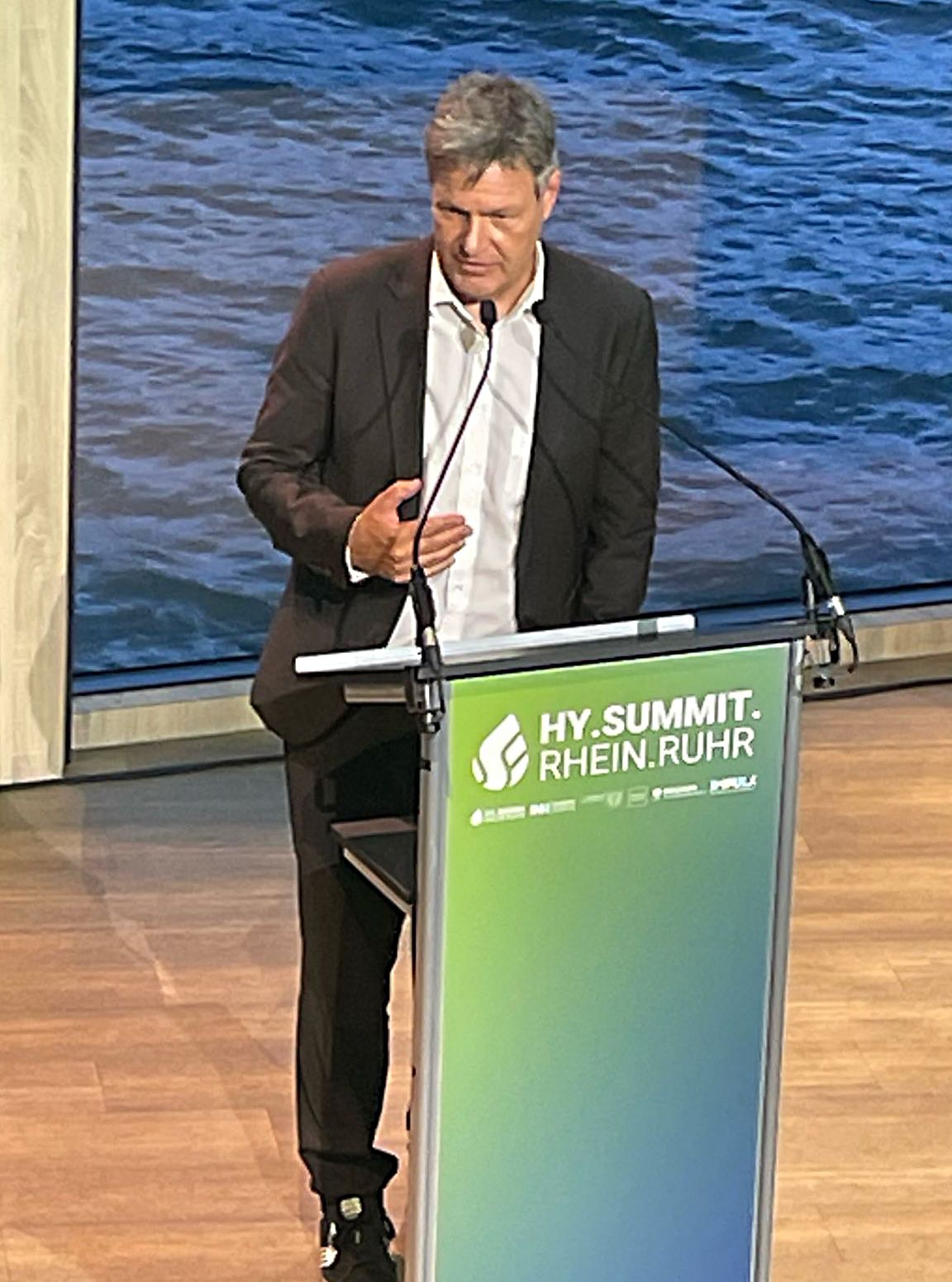
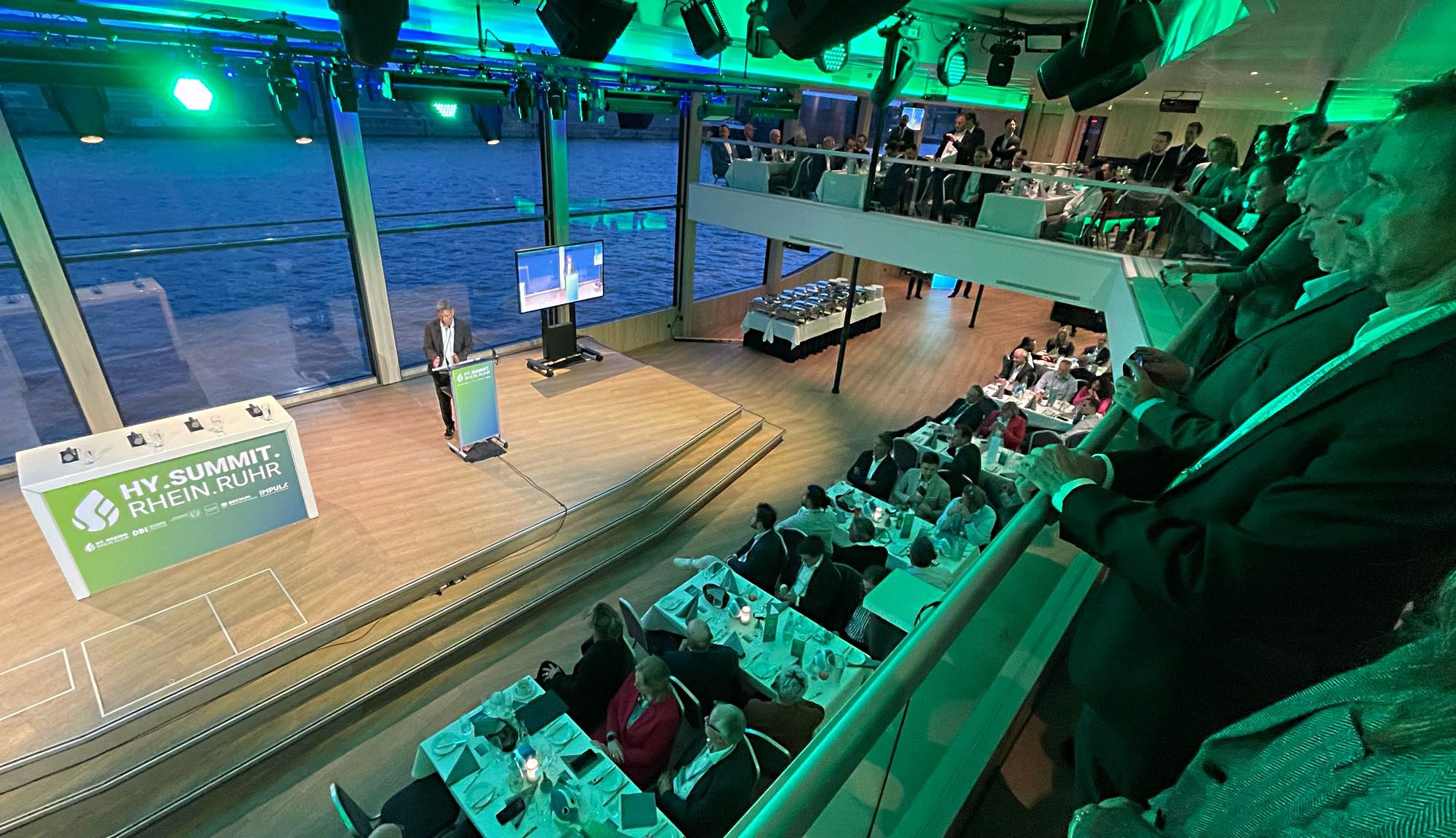
The Hy.Summit.Rhein.Ruhr 2024 kicked off with a festive gala in Duisburg, which was attended by key players from politics and business. Among the guests were Federal Minister of Economics and Vice Chancellor Robert Habeck, NRW Minister of Economic Affairs Mona Neubaur, Duisburg’s Mayor Sören Link and the Regional Director of the Ruhr Regional Association, Garrelt Duin. In their speeches, the politicians emphasized the urgency of moving away from fossil fuels and highlighted the Ruhr region as predestined for the ramp-up of a hydrogen economy.
The gala on the MS Rheingalaxie ship not only provided an impressive backdrop, but also a platform for high-caliber discussions. Industry representatives such as Markus Bangen (duisport), Dr. Peter Biele (Hüttenwerke Krupp Mannesmann), Dennis Grimm (thyssenkrupp Steel) and Andreas Reichel (Iqony) reported on specific projects for implementing the energy transition. Gunnar Groebler, President of the German Steel Federation, added to the discussion on the role of the steel industry in this transition.
Further important impulses were provided by prominent guests such as Bundestag President Bärbel Bas and Member of the Bundestag Felix Banaszak, who compared the challenges of change to the image of a marathon: “We are at kilometer 1.5.” Rasmus C. Beck, Managing Director of the Duisburg Economic Development Agency, also emphasized the importance of cooperation for a successful transformation of the region.
After kicking off in Duisburg, the HySummit continued with a business forum in Dortmund before concluding with the science forum in Essen on the third day. In Essen, Prof. Dr. Manfred Fischedick from the Wuppertal Institute opened the event with a keynote speech in which he presented the current status of the hydrogen ramp-up and pointed out the challenges of achieving climate neutrality by 2045.
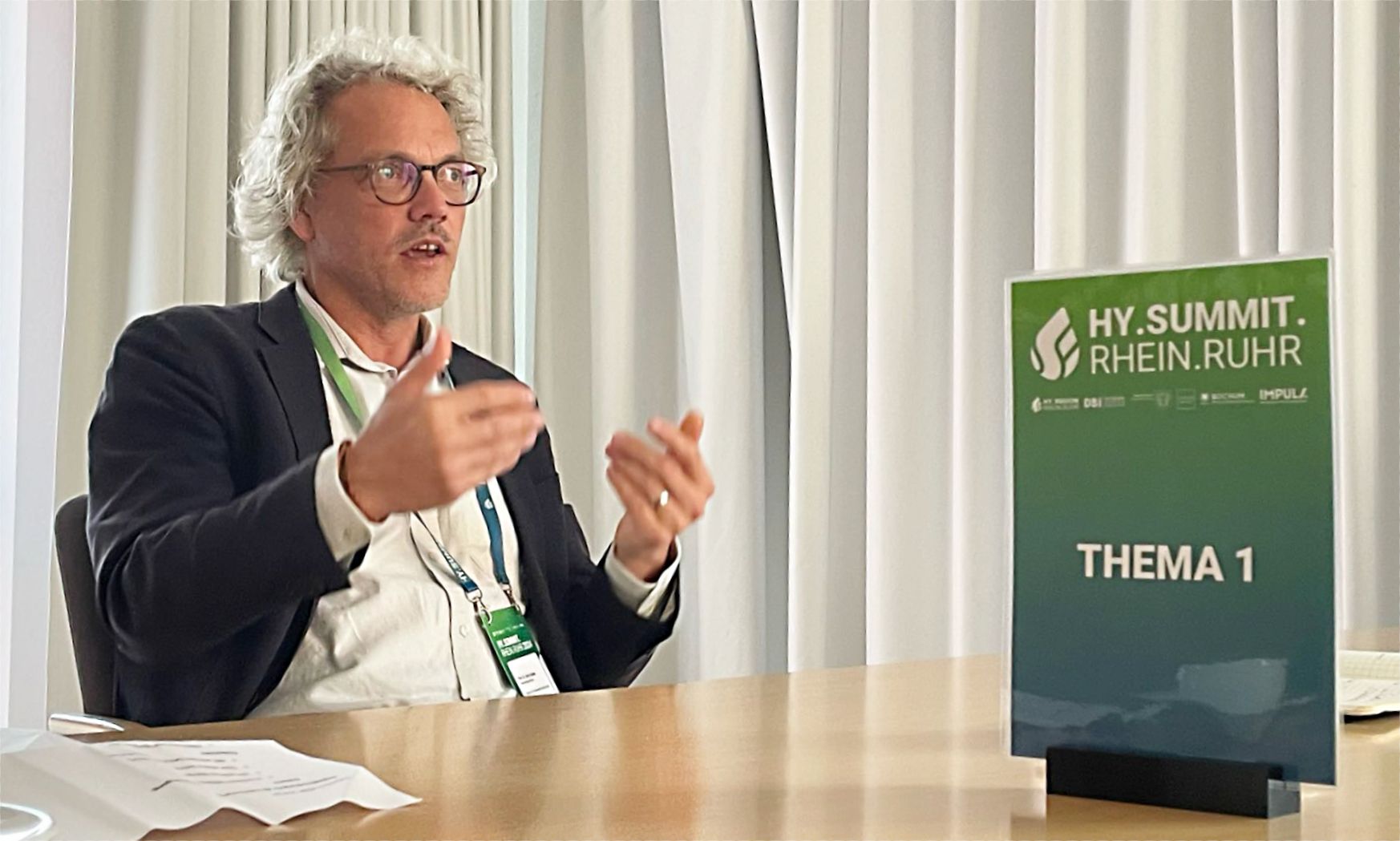
There were lively discussions at the round tables, especially at the table moderated by Prof. Harry Hoster, Scientific Director of the ZBT, where the discussion was actually supposed to be about accompanying research for the hydrogen ramp-up. In fact, however, the political and economic framework conditions for the ramp-up of the hydrogen economy became the focus of the discussion. Despite the focus on the framework conditions, the conclusion was clear: research is ready to provide solutions at an early stage and accompany the transition.
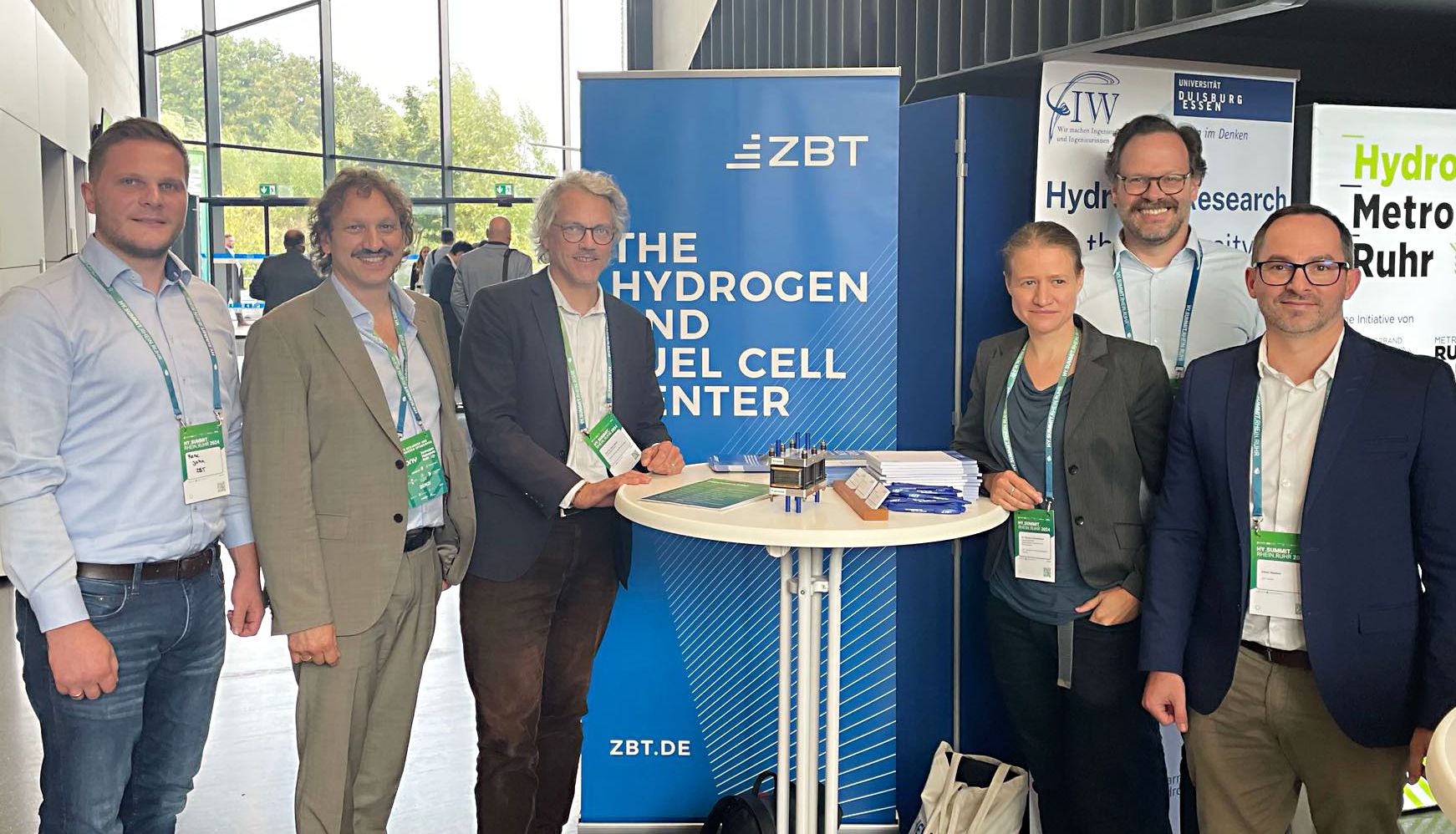
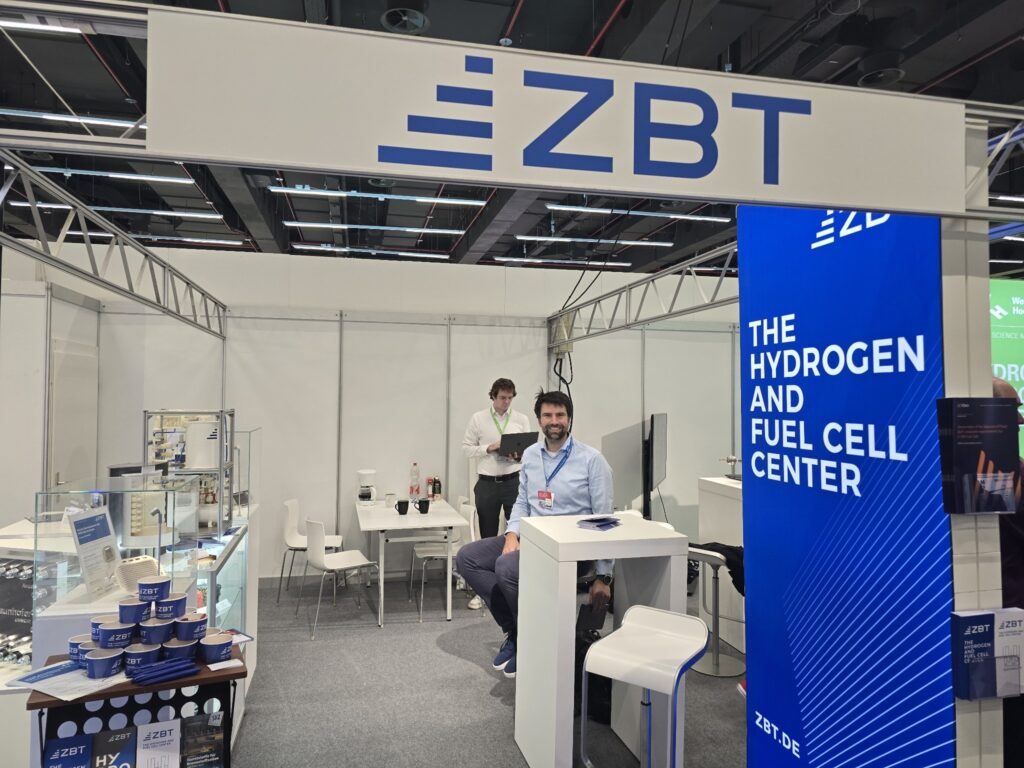
The forum was accompanied by a poster exhibition in which ZBT scientists also presented their research on topics such as the effects of freeze-thaw cycles on fuel cells, ammonia cracking and AEMWE technology.