NiSkali – Scalable electrodes for AEM electrolysis

In the newly launched project, the partners are developing scalable Ni-S electrodes for alkaline membrane water electrolysis (AEM-WE). The aim is to develop robust, performance- and cost-optimised electrodes for the anode and cathode side.

NiSkali continues to develop precious metal-free Ni-S catalyst layers for the anode and cathode of alkaline membrane water electrolysis (AEM-WE) – with a focus on performance, stability and industrial feasibility. The focus is on optimising electrodeposition, controlled S-leaching/NiOOH structure formation and scaling up electrode production to larger areas.
What is the NiSkali project about?

NiSkali is pursuing a clear goal: to further develop Ni-S catalyst layers electroplated on stainless steel fleece in such a way that they can be produced robustly, reproducibly and over large areas for industrial use in AEM electrolysers.

In the previous project, electrodeposition was proven to be a particularly promising approach for optimising costs and performancefor both electrode sides (cathode and anode).

Why Ni-S? Advantages of precious metal-free electrodes in AEM electrolysis

The Ni-S approach offers several key advantages over uncoated stainless steel fleece (anode) and Pt/C (cathode):

  • Higher electrochemically active surface area & catalytic activity
    Proven by capacitance measurements and lower charge transfer resistance.

  • Better contact between electrode and AEM diaphragm
    Visible in a reduced ohmic resistance.

  • Lower material and production costs
    Through the use of faster, more precisely controllable and more economical electroplating processes and precious metal-free electrodes.

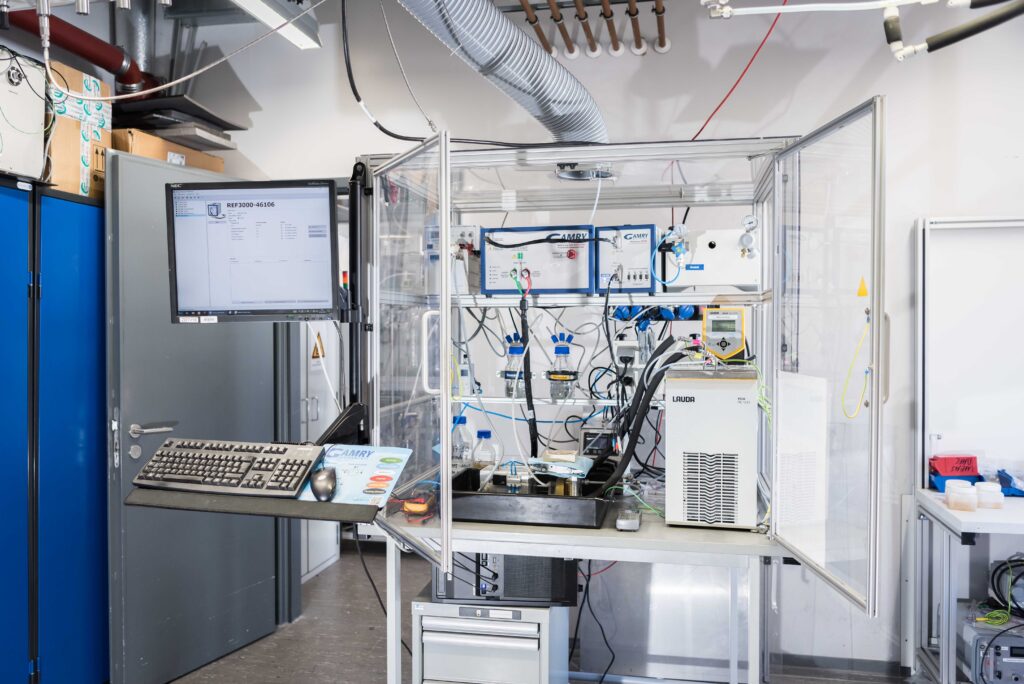
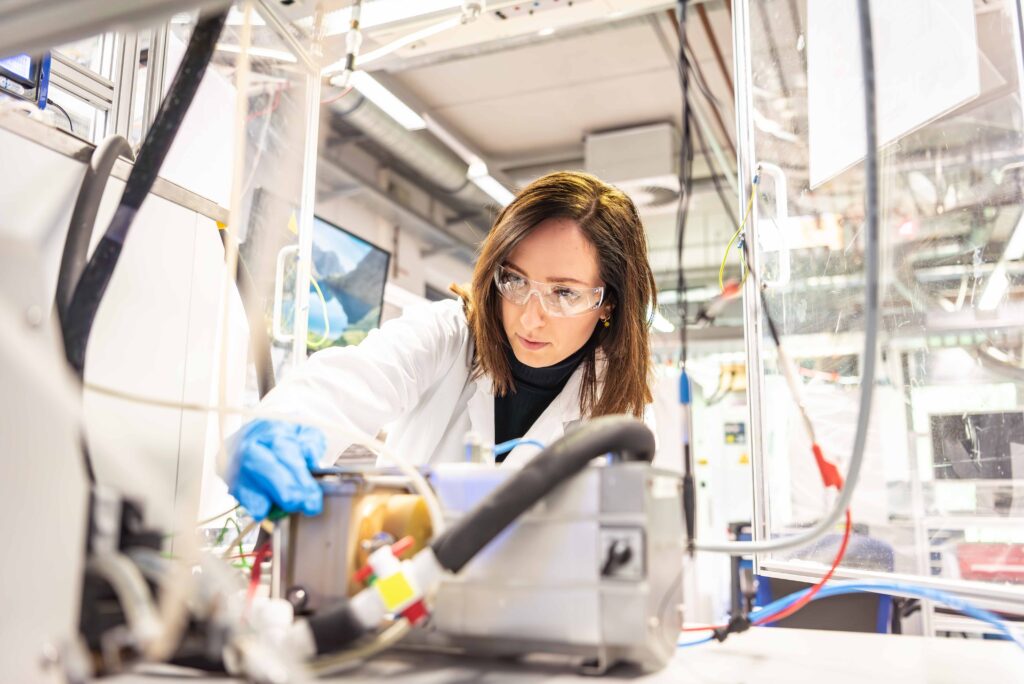
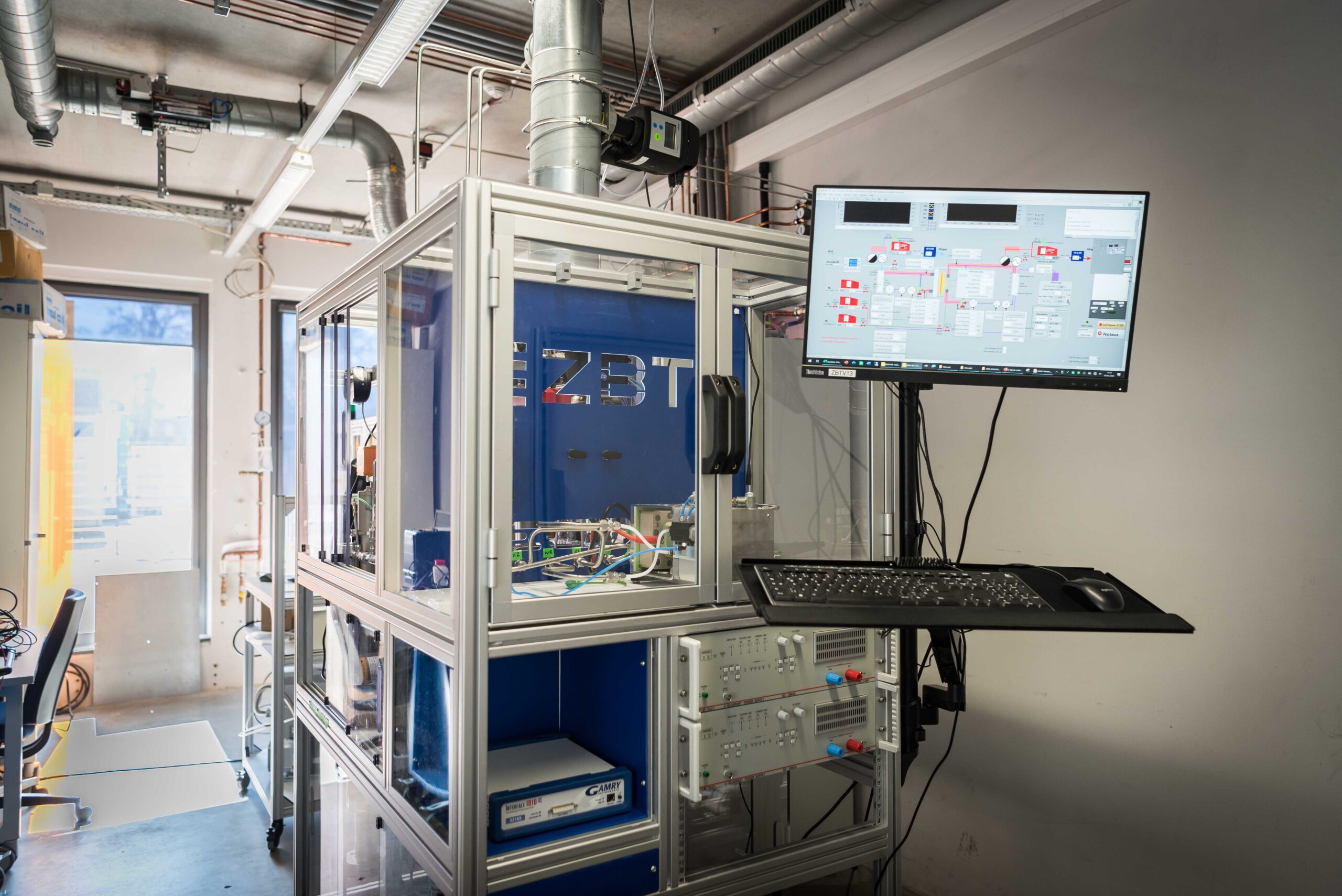
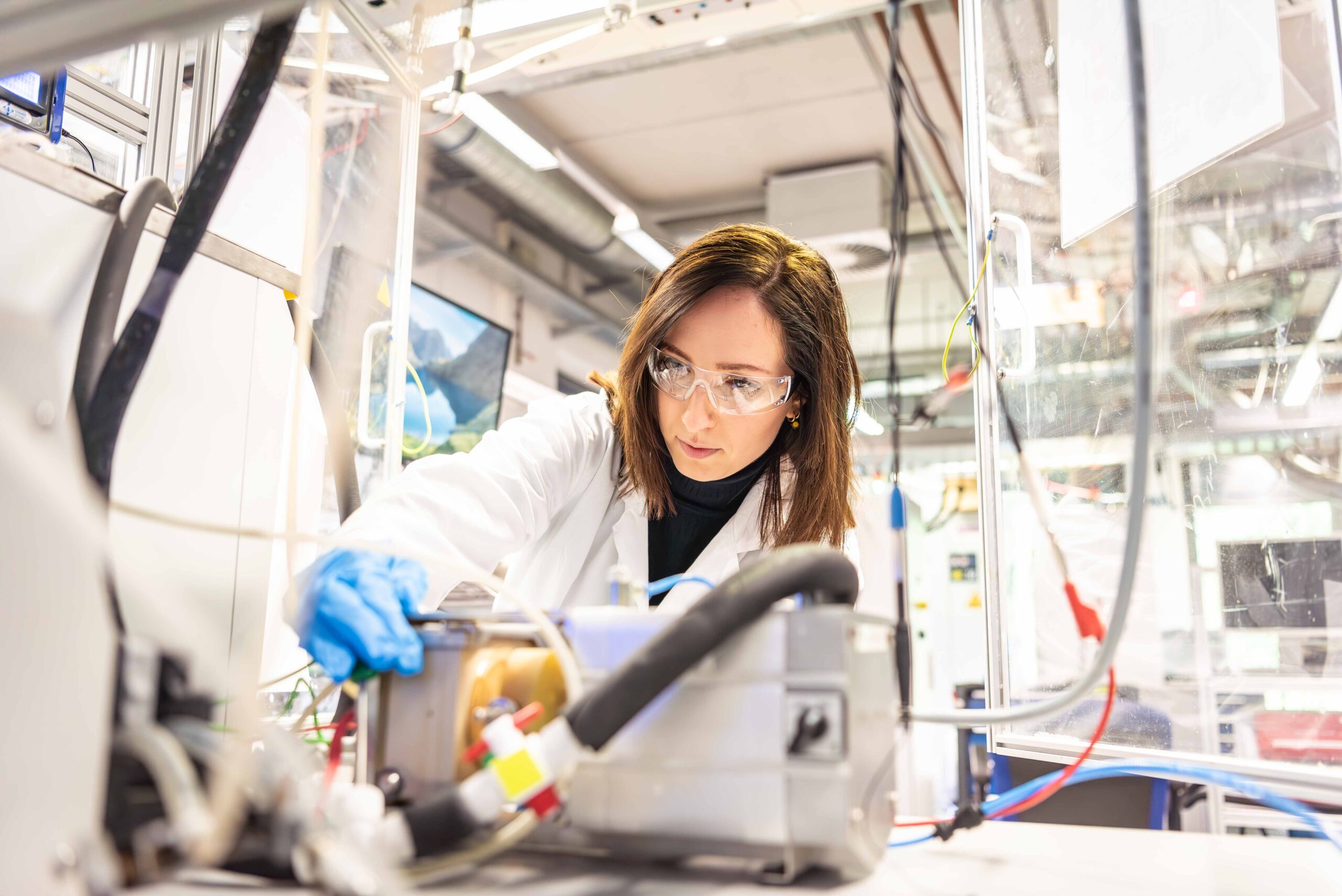
Miriam Hesse, Elektrolyseteststand

Strong performance in hydrogen development

Especially at the cathode, Ni-S shows a significantly better AEM-WE performance in the Hydrogen Evolution Reaction (HER) than the commercial Pt/C catalyst: Ni-S vs. Pt/C: 2.5 A-cm-² vs. 2.0 A-cm-² at 2.0 V.

This underlines NiSkali’s potential to enable high power densities without precious metals and to further reduce system costs.

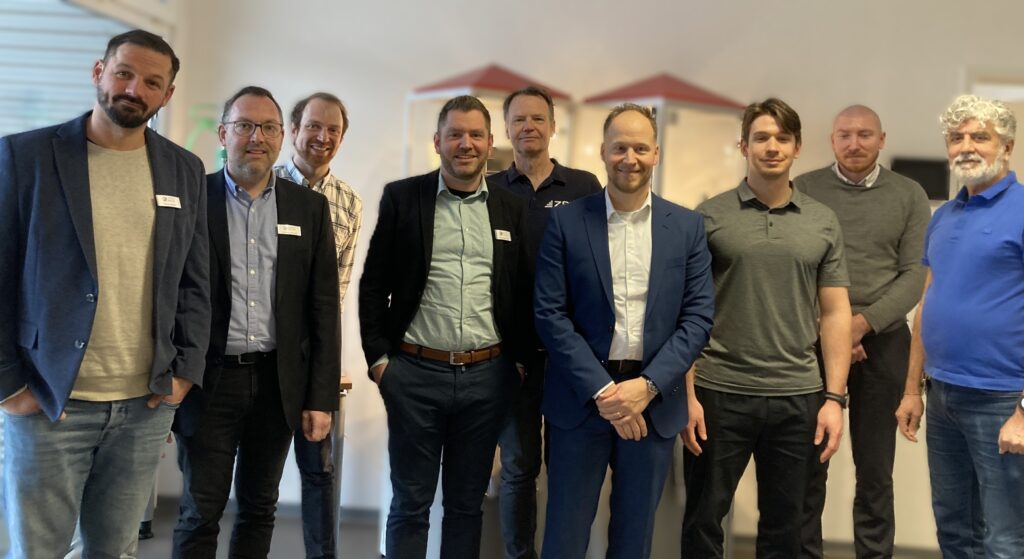
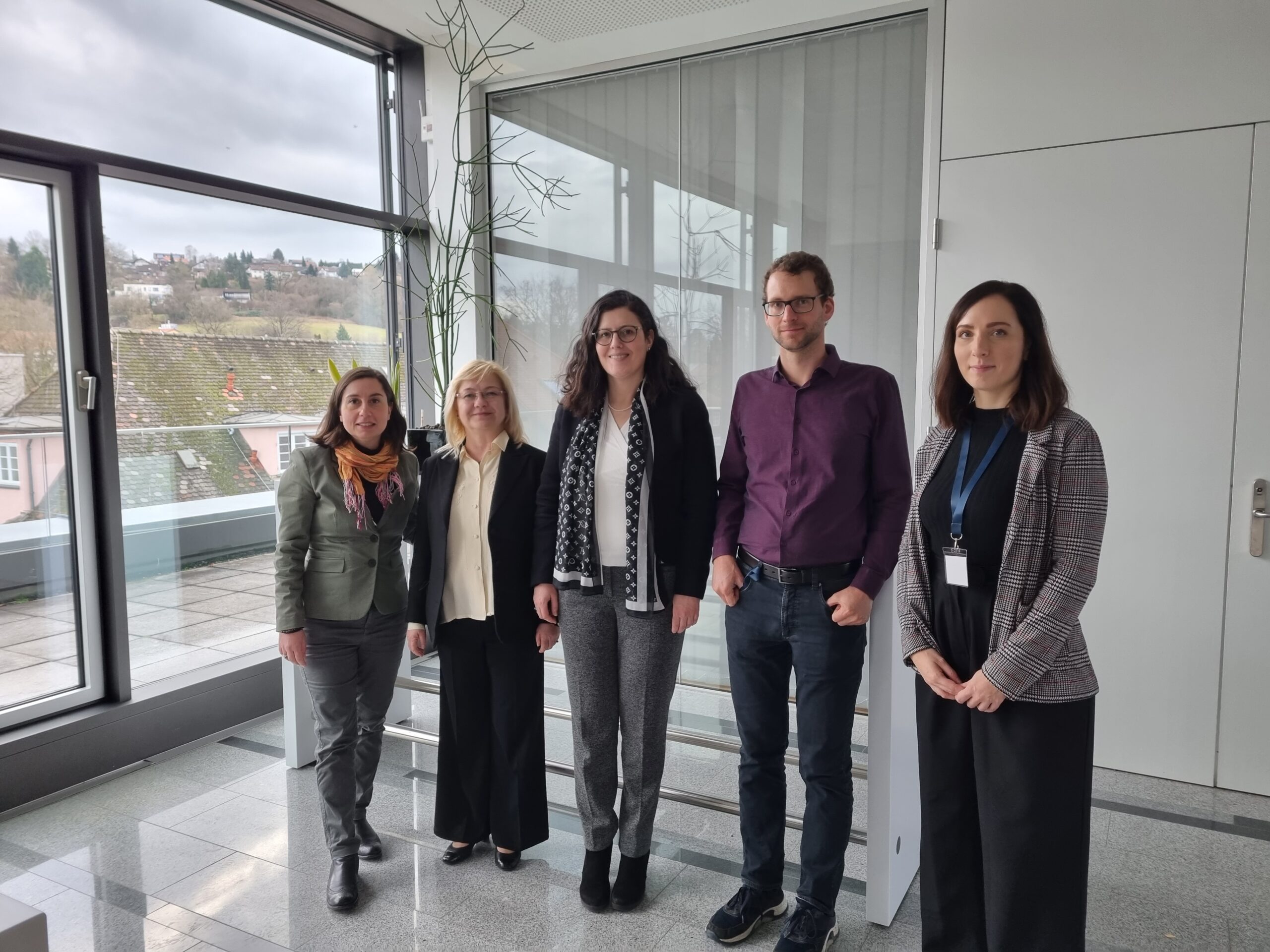
Gruppenbild mit vier Frauen und einem Mann

Goals and main areas of work in NiSkali

Based on the promising N-AEMEL results, NiSkali addresses the optimisation needs that are crucial for an industrial application:

  1. Optimisation of electrolyte stability & deposition process
    The electrolyte currently used only has a shelf life of around one day, as insoluble complexes form between manganese sulphate and thiourea. NiSkali is optimising the formulation and process parameters in order to increase the efficiency and industrial scalability of the deposition process.
  2. Understanding and controlling S-leaching
    S-leaching has a significant influence on lamella morphology and therefore on catalytic performance. A detailed analysis should shed light on the mechanisms and enable targeted control.
  3. Pre-treatment by controlled S-leaching
    To avoid sulphur entering the electrolysis circuit, it is being tested whether a defined pre-treatment of the electrodes before electrolysis has advantages.
  4. Scaling up electrode production
    Large-scale, reproducible production is essential for industrial use. The plan is to increase the surface area by a factor of around 10.
  5. Long-term stability & stress tests
    Long-term measurements (≥ 100 h) or suitable accelerated ageing tests and post-mortem analyses are planned to validate the industrial suitability.

Project information

NiSkali – Optimisation and process scaling for the production of precious metal-free nickel-sulfur catalyst layers for anode and cathode in alkaline membrane water electrolysis

Project duration: 1. January 2026 – 30. June 2028

Project partners:

  • fem Research Institute
  • ZBT – The Hydrogen and Fuel Cell Center

Core innovation: Electroplated Ni-S catalyst layers on stainless steel fleece (anode & cathode)

Focus: process and electrolyte stability, controlled S-leaching/NiOOH structure formation, scaling (≈ factor 10), long-term stability (≥ 100 h)

Context/pre-project: IGF project N-AEMEL (IGF 01IF22519N)

Funded by the BMWK on the basis of a resolution of the German Bundestag. IGF project: 01IF24616N

Much more…

…knows about the project

Miriam Hesse
+49 203 7598-3131
Portrait einer jungen, dunkelhaarigen Frau

Other current projects