LHYVE-Cycle – Intelligent maintenance concepts for hydrogen-bearing systems

The partners in the LHYVE-Cycle project are developing an innovative system for flushing hydrogen tanks to make the commissioning and decommissioning of hydrogen systems safer, faster and more economical.

The use of hydrogen systems in applications such as heavy-duty vehicles, but also for the transportation of hydrogen, requires safe and economical processes for maintenance and repair. In particular, the handling of hydrogen storage tanks and fuel cell systems presents workshops, operators and manufacturers with new technical challenges.
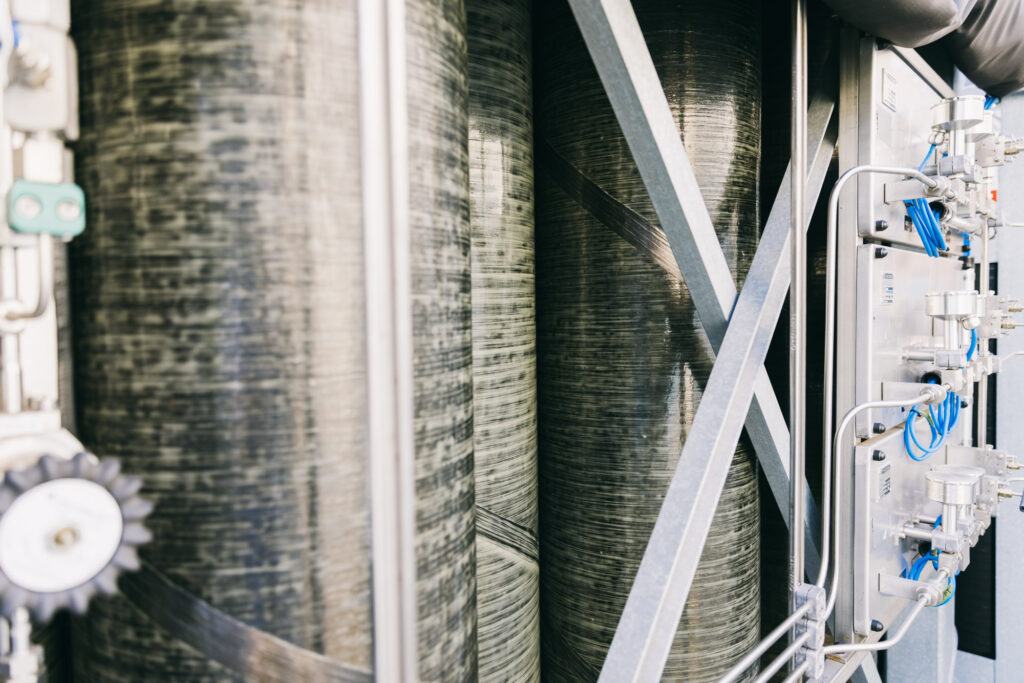
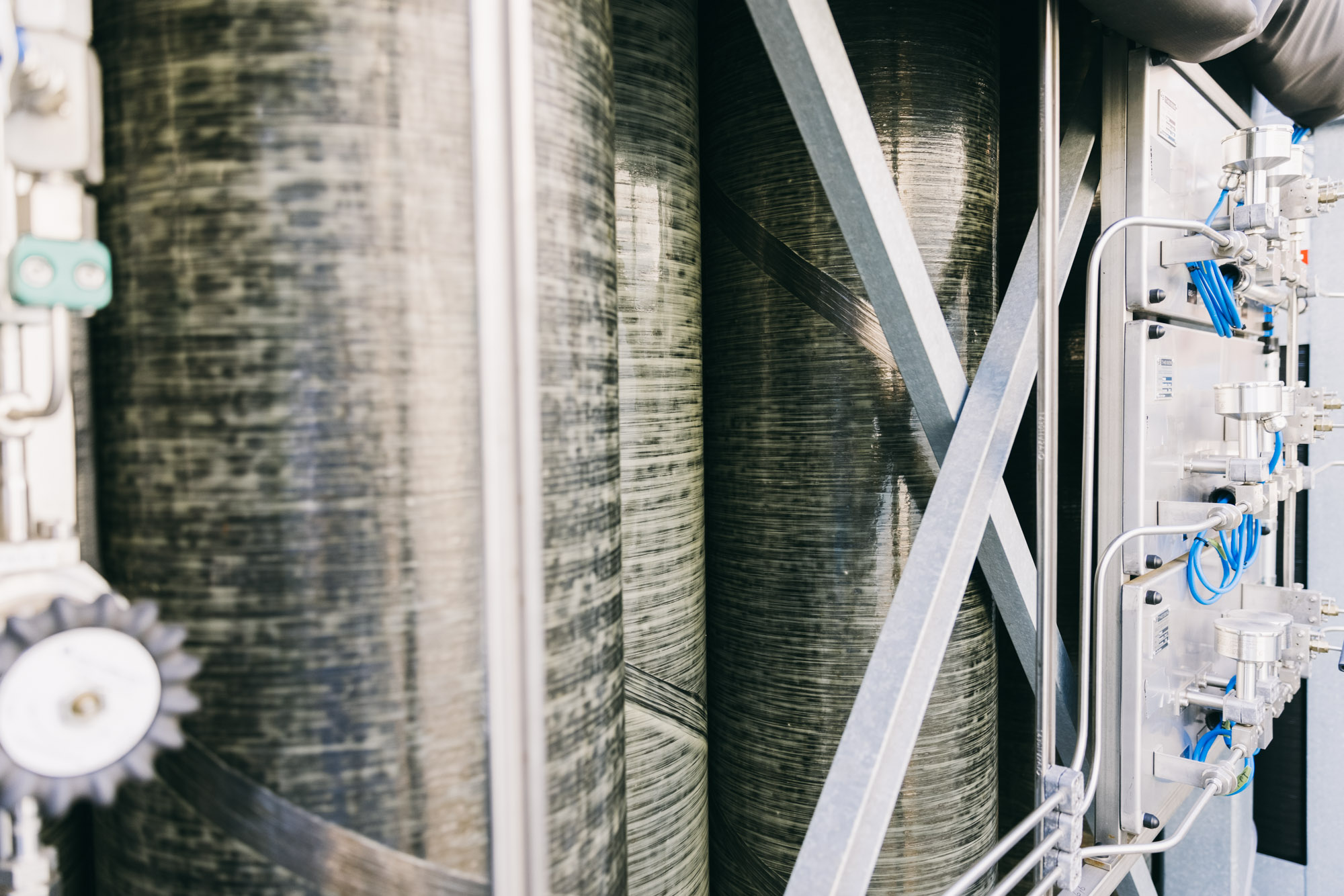
Wasserstoffbehälter und Armaturen

For maintenance and repair work, hydrogen-bearing systems have to be taken out of operation and then put back into operation. Up to now, this has been very time-consuming, and depressurising and flushing the storage tanks in particular consumes a lot of nitrogen (N2) and hydrogen (H2). In the new LHYVE-Cycle project, a new type of flushing unit for hydrogen tanks is now being developed with an innovative simulation and AI-supported concept. This should make the commissioning and decommissioning of hydrogen systems safer and faster and consume less gas.

Flush out tanks with nitrogen

Hydrogen storage tanks must be depressurised for every maintenance or repair and then flushed in a controlled manner. During decommissioning, the hydrogen in the tank is displaced with nitrogen until the concentration is safely below the explosion limit.

When (re)commissioning, the oxygen in the ambient air must first be removed from newly installed or opened storage tanks using nitrogen before the storage tank can be filled with hydrogen. In order to comply with quality specifications, the nitrogen must be completely removed from the tank by flushing with hydrogen.

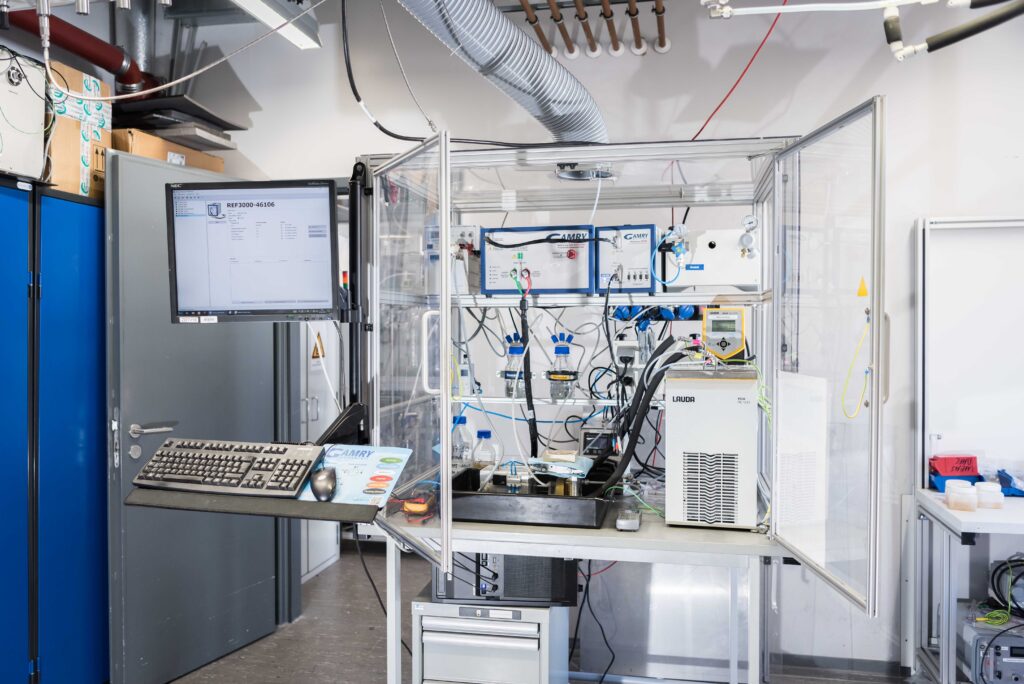
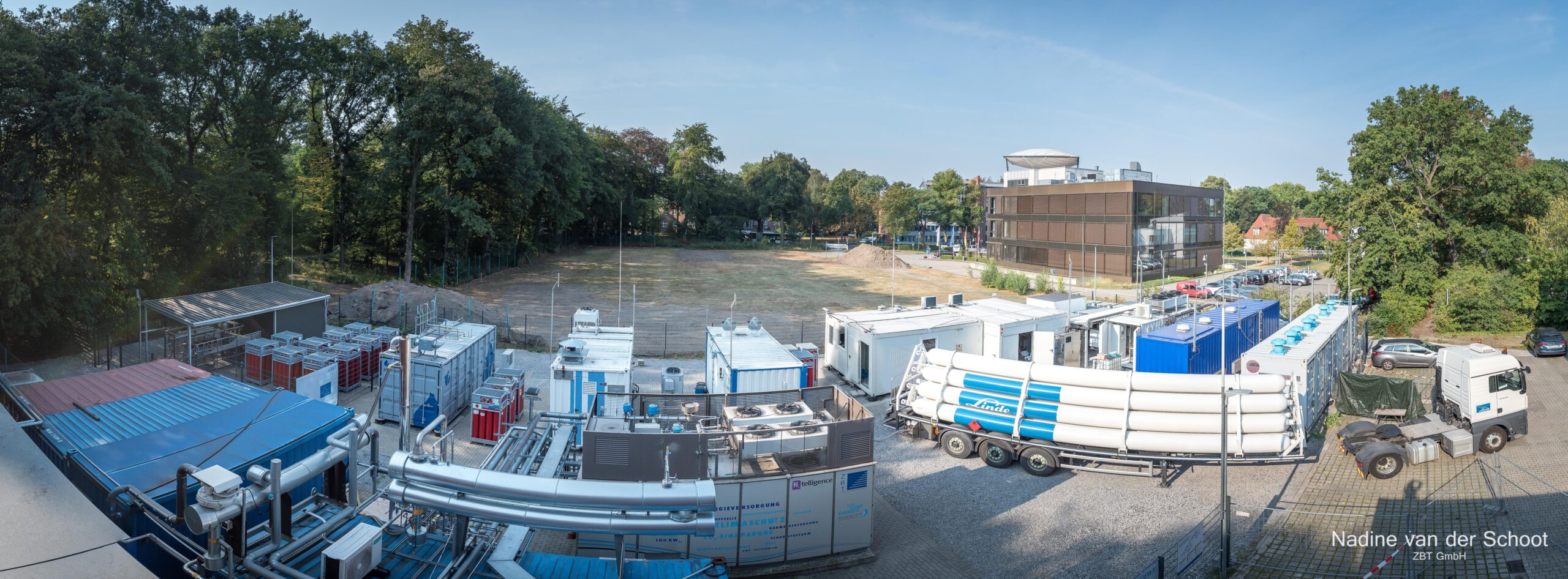
Wasserstoff-Testfeld des ZBT mit zahlreichen Aufbauten und Containern

Until now, these steps have been carried out using manually controlled pressure change cycles, which are based on highly simplified assumptions, are hardly monitored or checked and consume large quantities of gas – with limited process reliability and reproducibility at the same time.

Automated flushing unit

This is precisely where the newly launched LHYVE-Cycle project comes in, developing an innovative overall concept that combines modern simulation, intelligent data processing and new technical solutions to create an integrated maintenance approach. At the heart of the project is the task of replacing previously manual, gas-intensive pressure change flushing of hydrogen storage tanks with a controlled, reproducible and resource-efficient process.

A holistic system consisting of a gas dynamic stratification model, a digital knowledge base with AI support and an automated system for commissioning and decommissioning is being developed for this purpose. This should enable operators to work safely, faster and with significantly lower gas consumption in the future – both stationary in workshops and mobile in the field.

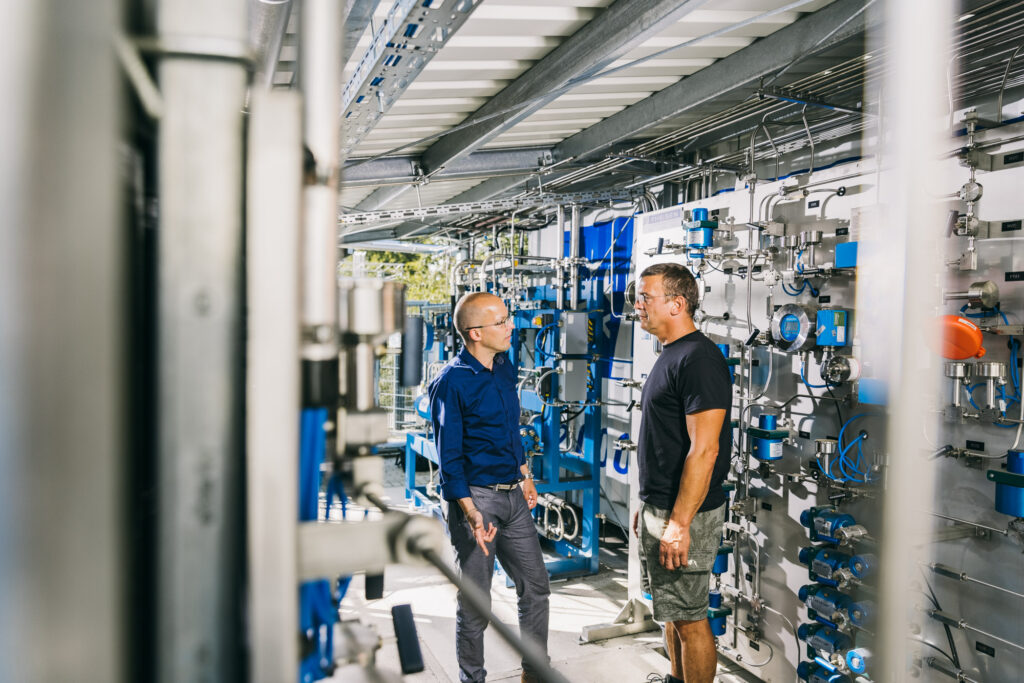
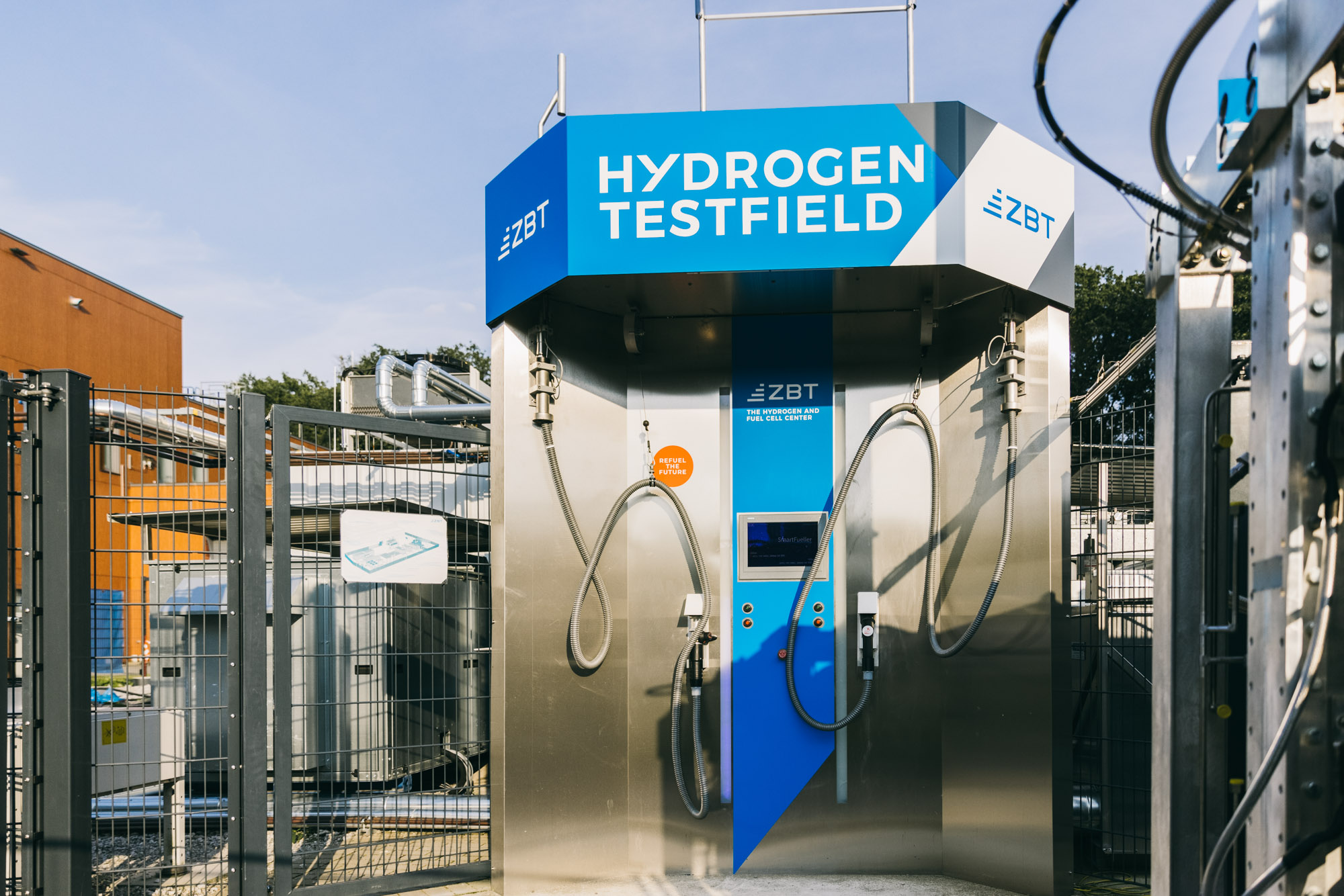
Hauptdispenser der Wasserstoff-Testtankstelle am ZBT

The project is being implemented by an interdisciplinary consortium:

  • BHFM Technologies is developing the technical core system, consisting of a new type of flushing module, a secondary gas treatment system and a modular service unit for zero-emission vehicles.
  • Amperias is implementing the digital infrastructure, including the database, AI model, cloud connection and a user-oriented user interface, which is used to control, document and further develop all maintenance processes.
  • The ZBT is responsible for the scientific and technical groundwork and creates the modeling, supplies the measurement technology and carries out the validation.
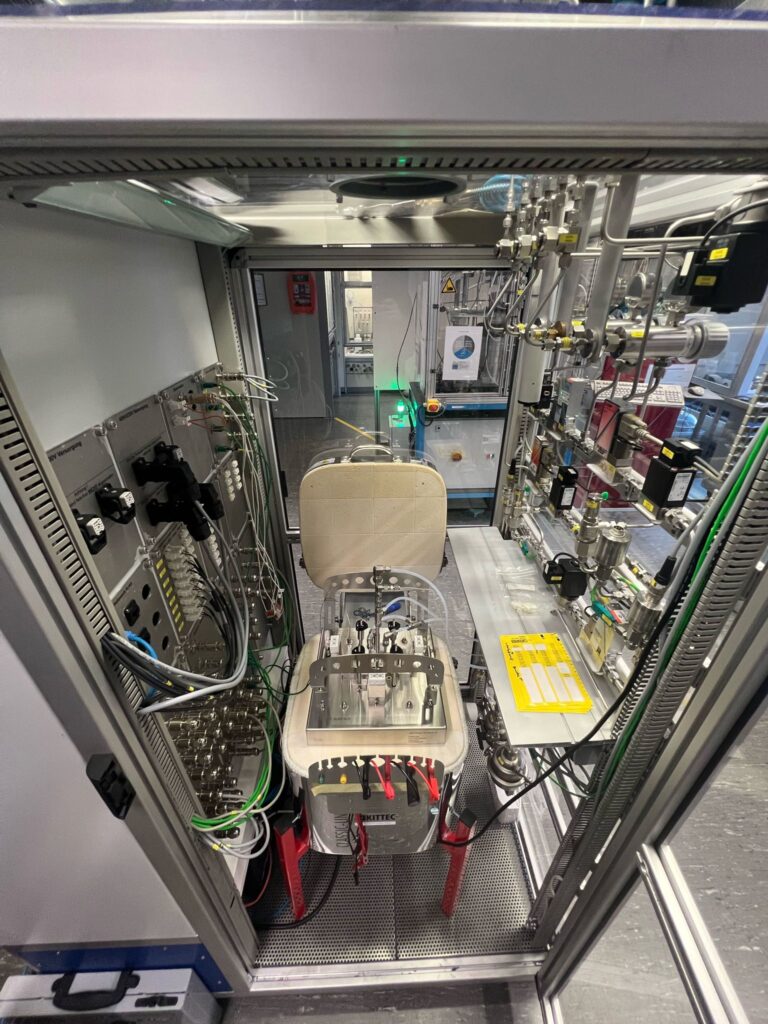
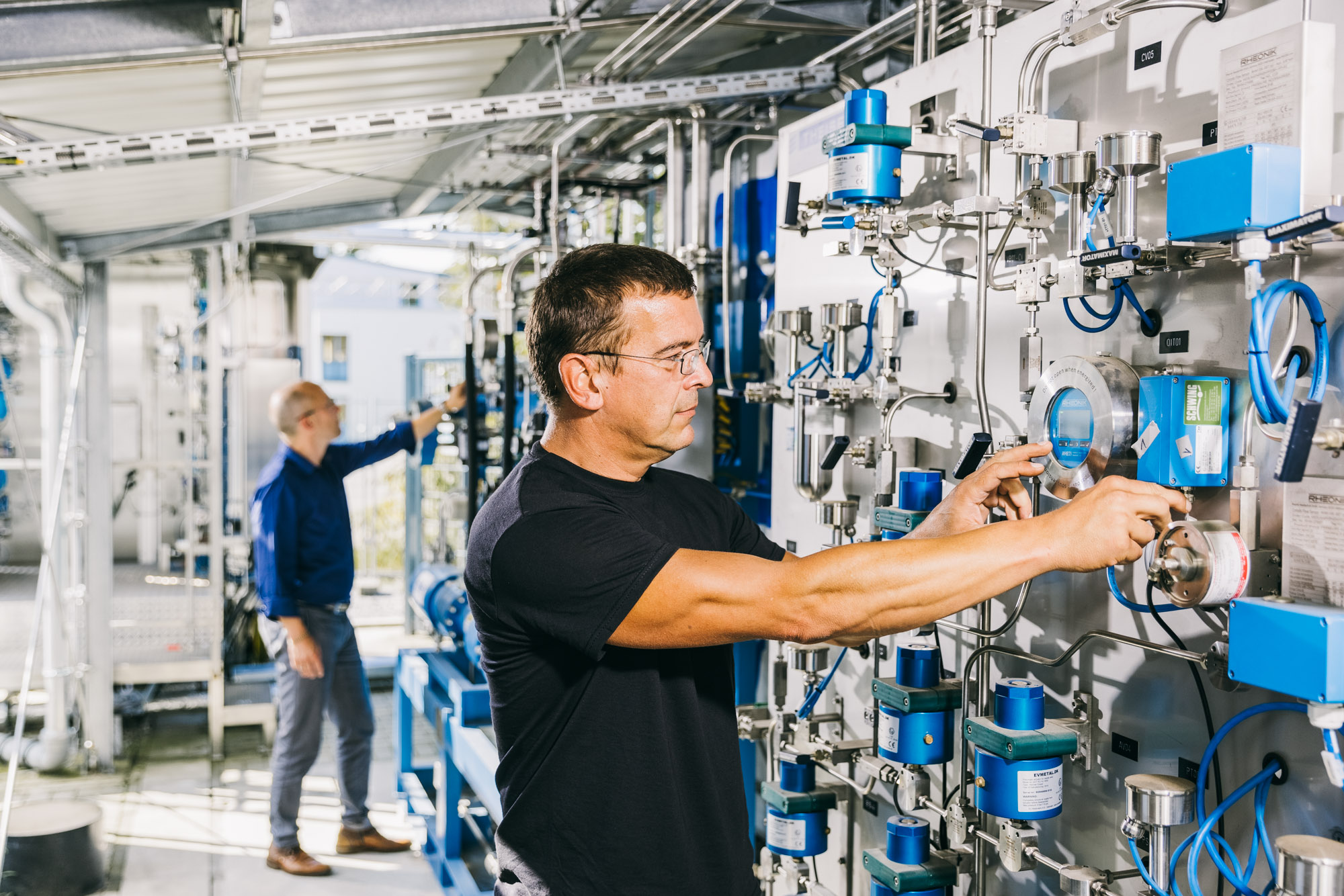
zwei Personen an der großen Schalttafel der Wasserstoff-Testtankstelle des ZBT

Over the course of the three-year project, the partners will carry out simulations, measurement campaigns, prototype construction and field tests. The ZBT is focusing on

  • the development of the CFD-based stratification model (CFD = Computational Fluid Dynamics),
  • the construction of a test stand that will be integrated into the hydrogen test field,
  • the instrumentation and analysis of high-pressure vessels
  • as well as the validation of the model and process parameters under realistic conditions.

The data obtained is continuously fed into the digital maintenance concept and forms the basis for scalable, safety-relevant applications along the entire hydrogen value chain. LHYVE-Cycle thus makes an important contribution to the technical maturity, availability and cost-effectiveness of future H₂ mobility.

Project information

Project title: LHYVE-Cycle – Development of a maintenance and repair concept supported by artificial intelligence

Project partners:

  • Amperias, Cologne
  • BHFM Technologies, Willich (project coordination)
  • ZBT, Duisburg

Project duration: 1. October 2025 – 30. September 2028

Project volume: approx. € 3.2 million

Funding: GreenEconomy.IN.NRW (ERDF/JTF program NRW 2021-2027)

The project is funded by the European Union.

Contact

Project manager

Lukas Willmeroth
+49 203 7598-2190
Portrait eines Manns mit Bart und grauem Jacket vor Bäumen

Media

Auf dem Wasserstoff-Testfeld des ZBT wird im Rahmen von RHeaDHy eine Wasserstofftankstelle zu Testzwecken und zur Validierung des Betankungsstrangs aufgebaut.
Auf dem Wasserstoff-Testfeld des ZBT wird im Rahmen von RHeaDHy eine Wasserstofftankstelle zu Testzwecken und zur Validierung des Betankungsstrangs aufgebaut.
Other exciting projects

Discover more content