3D-4-H2 – Further development of 3D printing technology for H₂ applications

3D printing for qualified hydrogen and fuel cell components

Additive manufacturing is intended to make H₂-compatible components faster, cheaper and safer – through the integrated development of material, process and quality assurance.

Why are we doing this?

Hydrogen and fuel cell systems need components that are leak-proof, hydrogen-resistant and reliable – and can be produced economically at the same time. Additive manufacturing can be a decisive lever here because complex, functionally integrated components can be developed and iterated more quickly. At the same time, there has often been a lack of systematic qualification of 3D printing materials and components for use in H₂ environments. This is precisely the gap that 3D-4-H2 addresses.

In a nutshell

  • 3D printing has great potential for electrolysis / FC components, but: Proof of suitability is often lacking.

  • The aim is a safe, fast transition from R&D → prototype → application.

What exactly do we do?

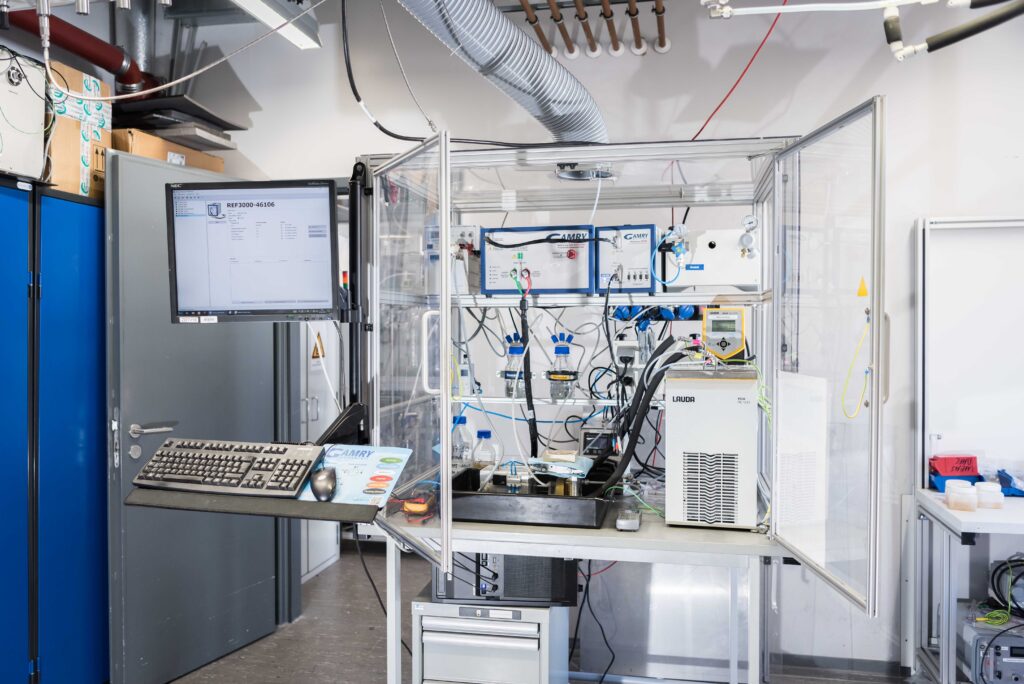
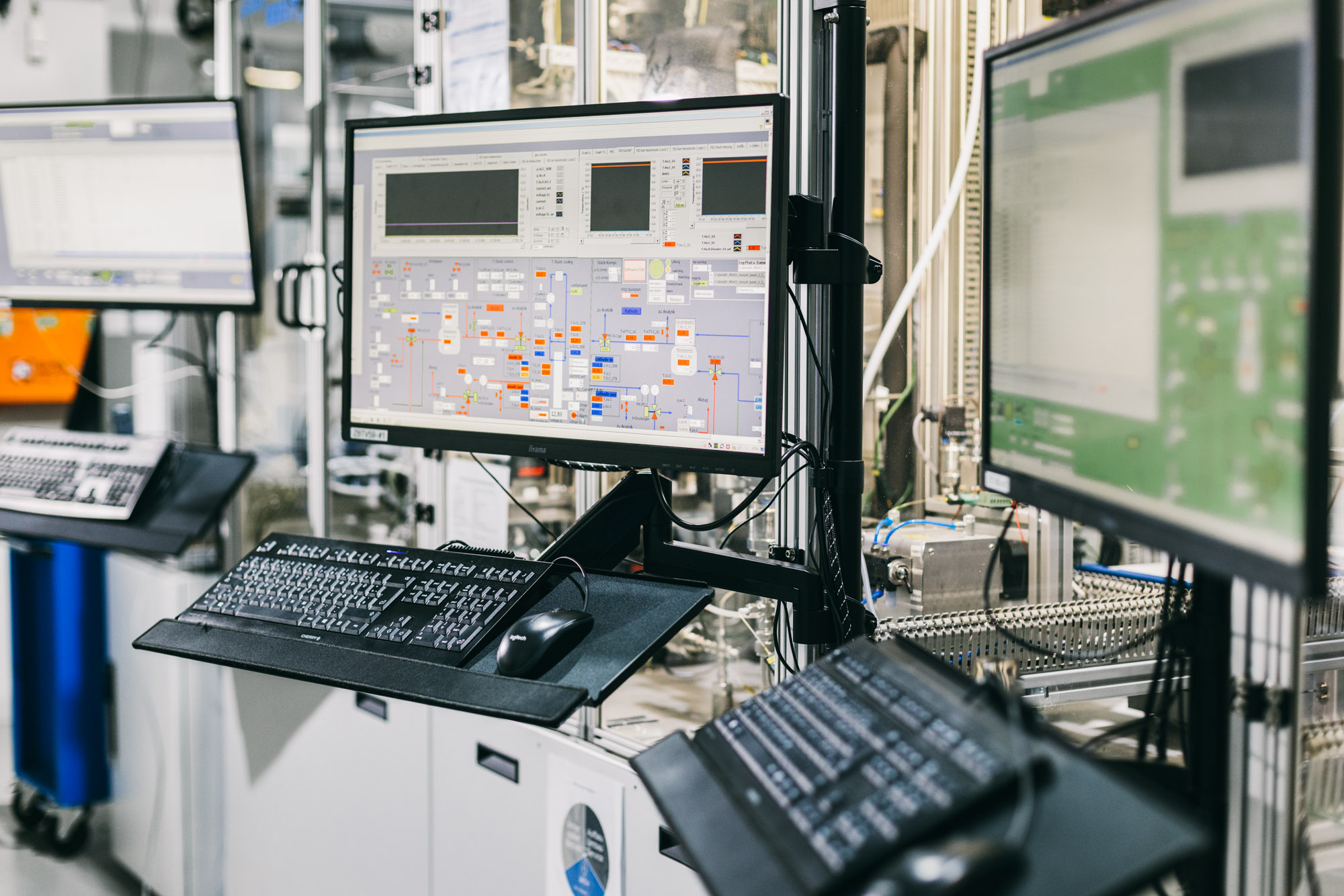
In the project, we are developing and qualifying 3D printing solutions specifically for hydrogen and fuel cell applications – integrated across material, manufacturing process and quality assurance. A central component is the establishment and further development of testing and analysis methods in order to be able to reliably evaluate 3D-printed components (e.g. with regard to permeation and emissions of volatile degradation products).
Concrete work packages

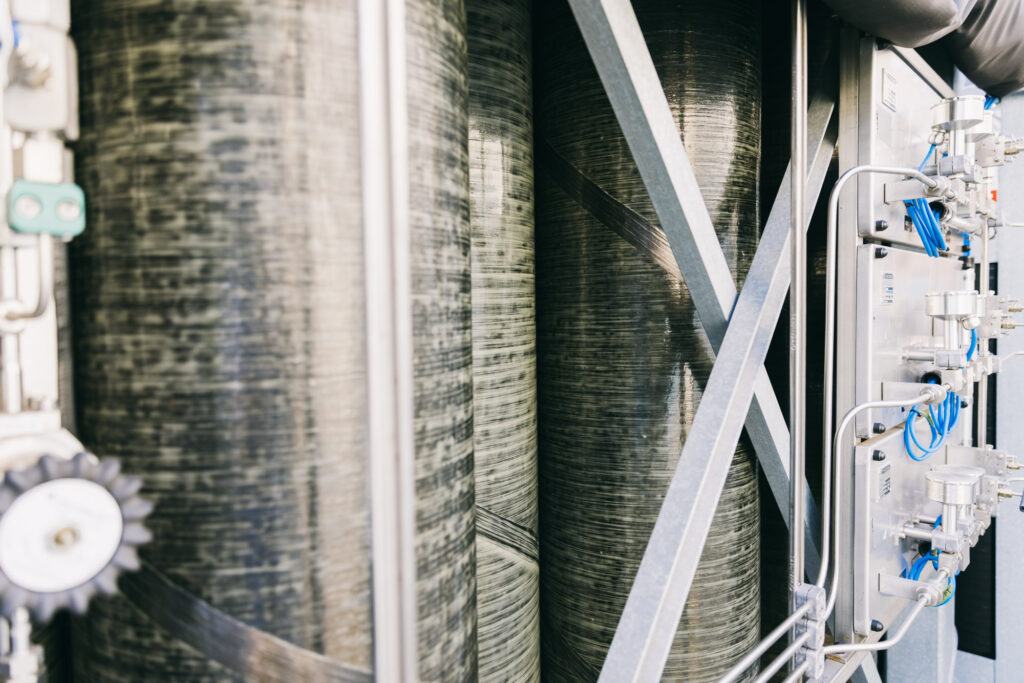
  • Material and component qualification (including H₂ permeation, VOC emissions, structure)

  • Quality assurance during and after printing

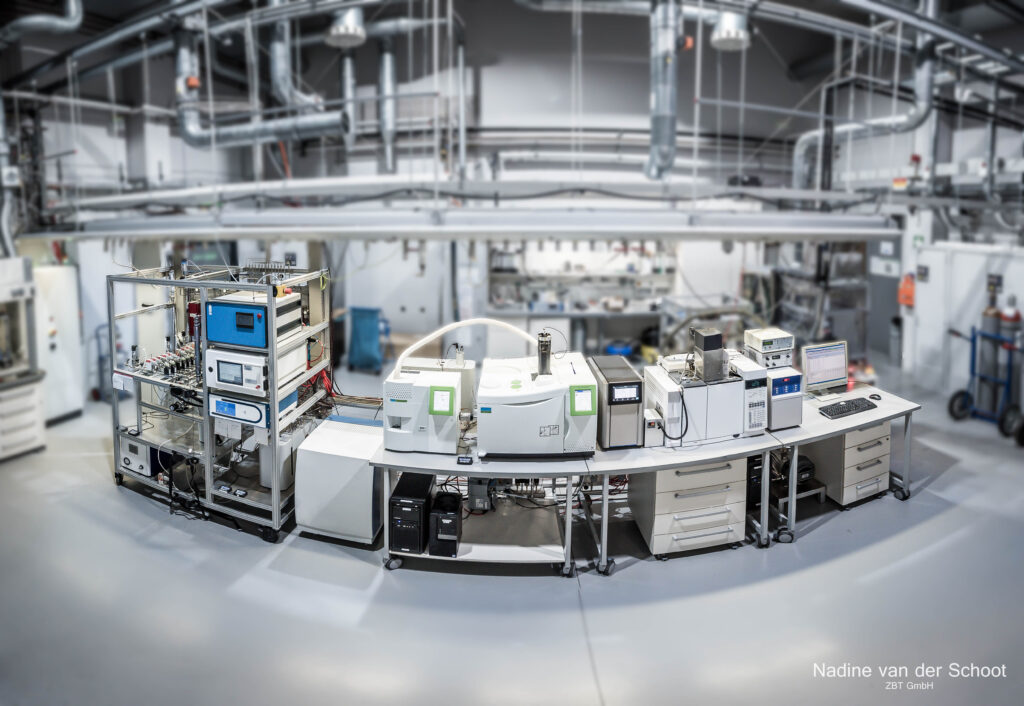
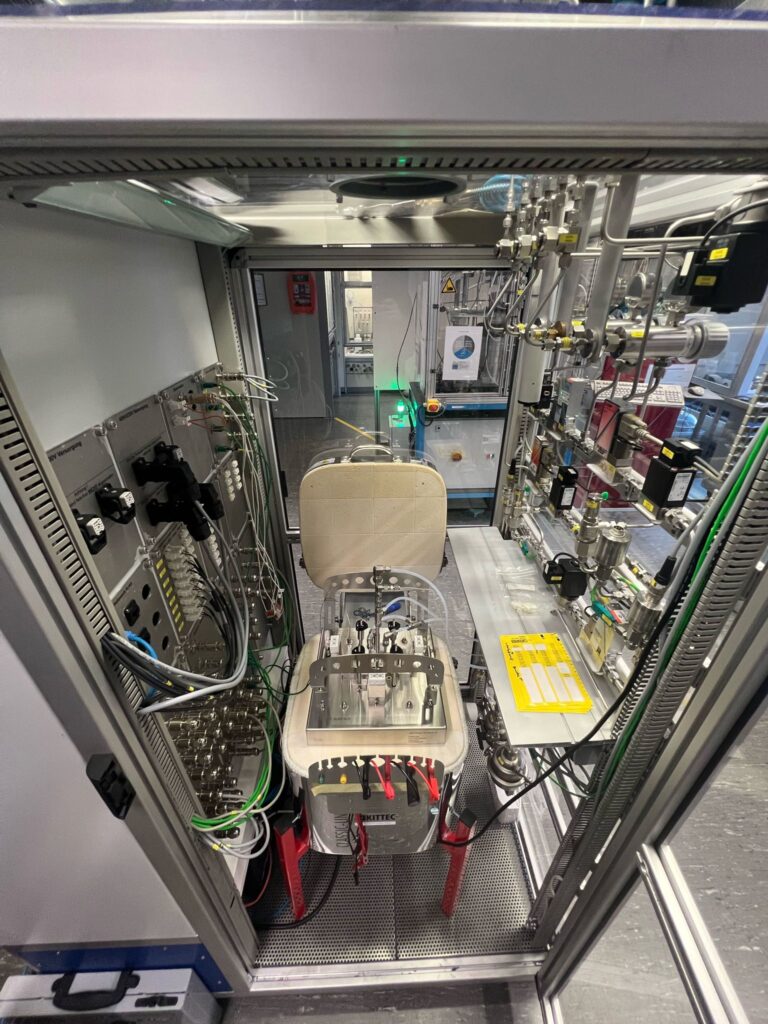
  • Expansion of the testing and laboratory infrastructure as a basis for future testing and consulting services

  • Contribution to the development of a regional, qualified supply chain for fuel cell components

Project information

  • Project acronym: 3D-4-H2

  • Project title: Further development of 3D printing technology for H₂ applications
  • Project duration / term: 3 years

  • Funding amount (ZBT share): € 800,000

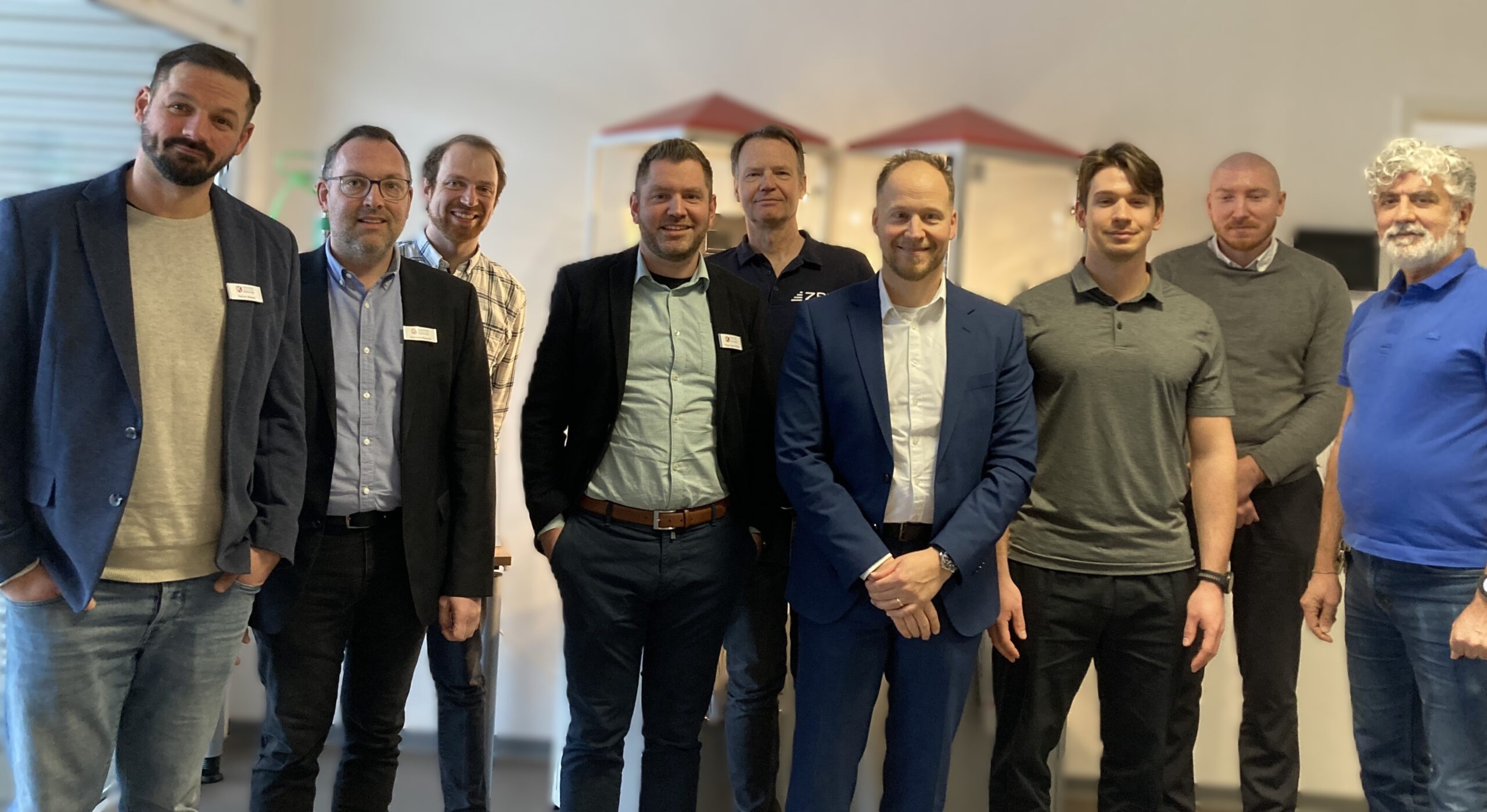
  • Consortium management: Kunststoff-Institut für die mittelständische Wirtschaft NRW GmbH

  • Project partners:

    • STURM® INDUSTRIES (Duisburg)

    • Kunststoff-Institut für die mittelständische Wirtschaft NRW GmbH (Lüdenscheid)

    • SITRAPLAS GmbH (Bünde)

    • ZBT – The Hydrogen and Fuel Cell Center GmbH

This project is funded by the European Union.

Förderlogo Europäische Union EFRE/JTF NRW

Much more…

…know about the project

Christian Heßke
+49 203 7598-4283
Portraitfoto von Christian Heßke

and

Denis Grün
+49 203 7598-4288
Businessfoto von jungem Mann mit Polohemd

Other current projects