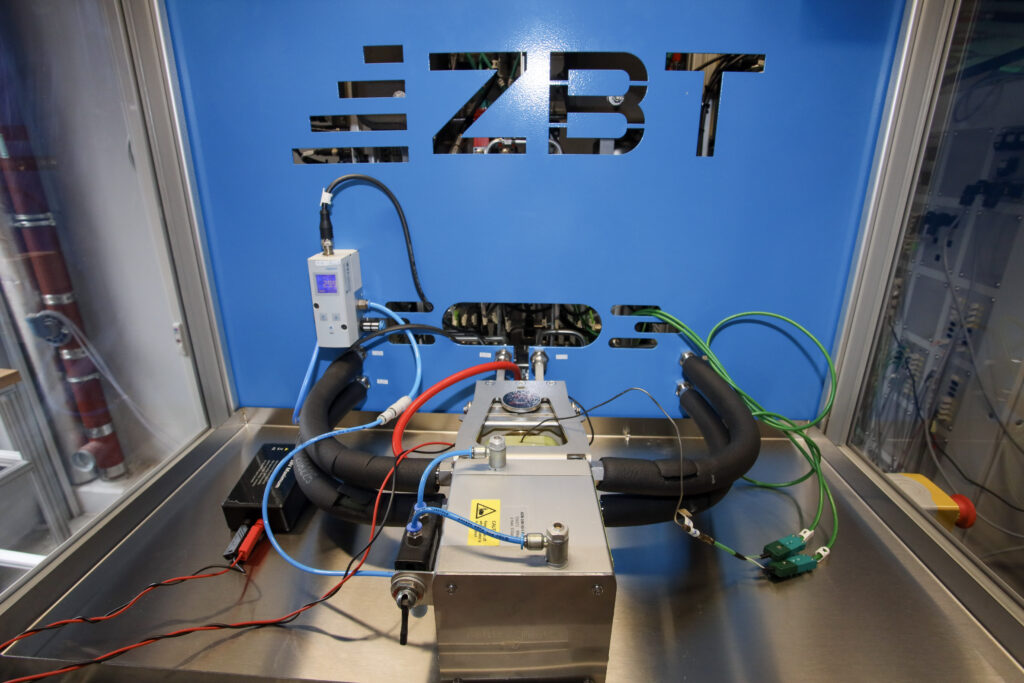
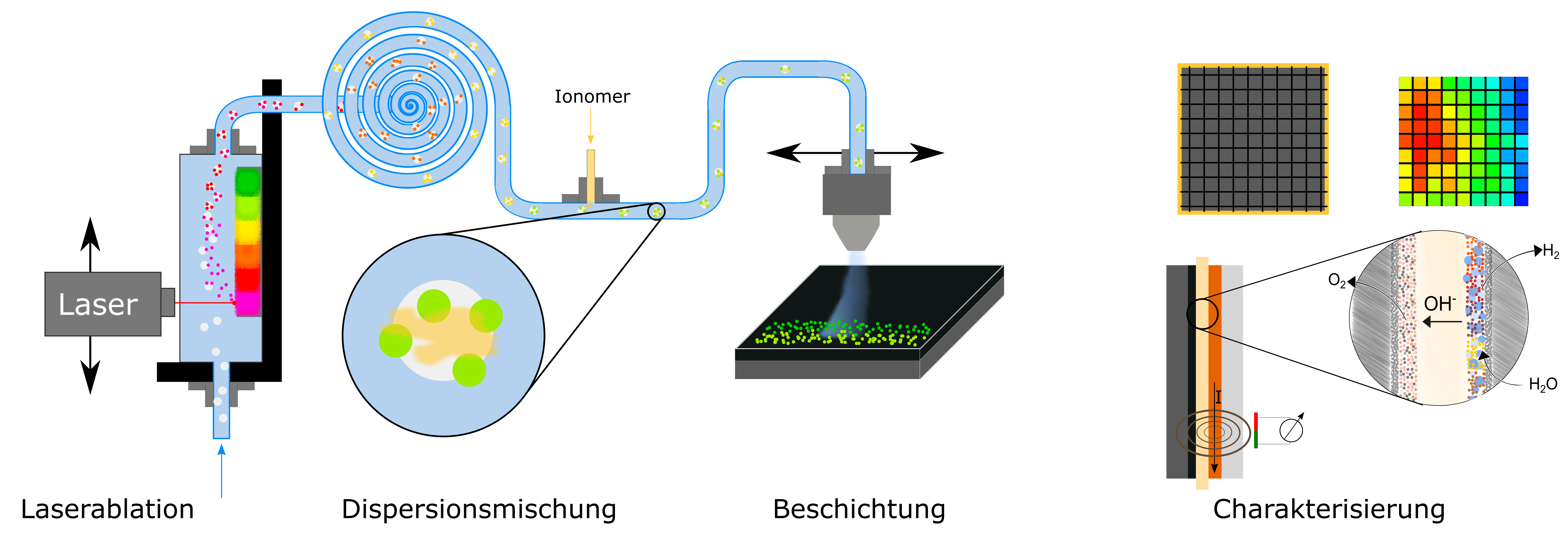
In order for AEM technology to develop its full potential, high-performance and cost-effective catalysts are required. Up to now, screening methods have been time-consuming and only capture individual compositions. In the HOLMES-AEM project, we are therefore pursuing an innovative approach: laser-based synthesis produces catalysts from high-entropy alloys. Using targets with many different sectors, the composition of the nanoparticles is to be specifically varied during the ongoing ablation process.
Innovation
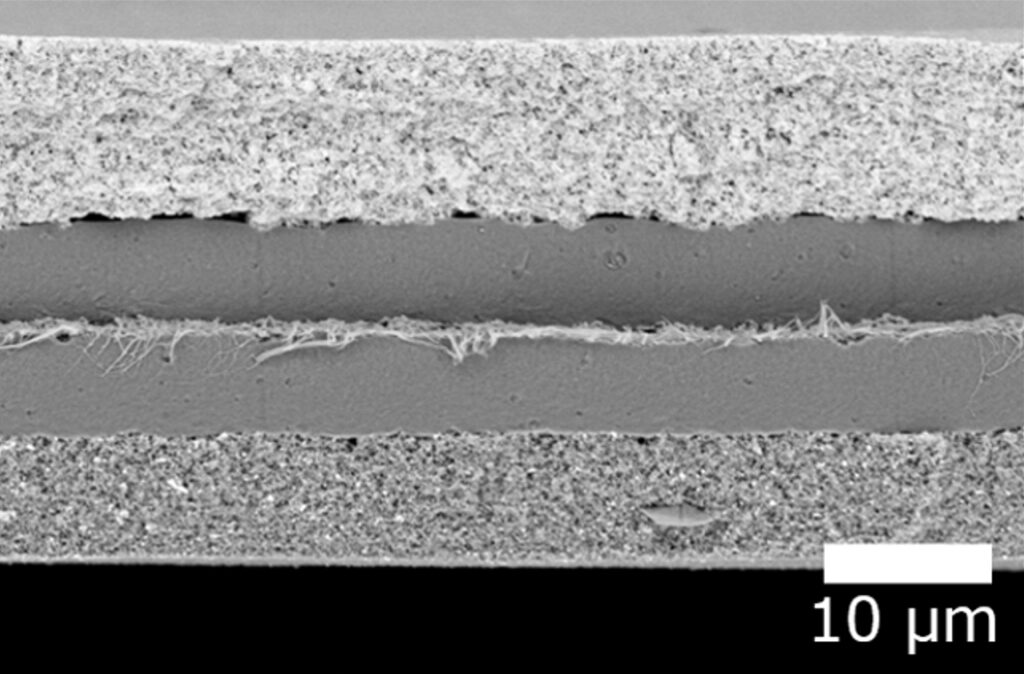
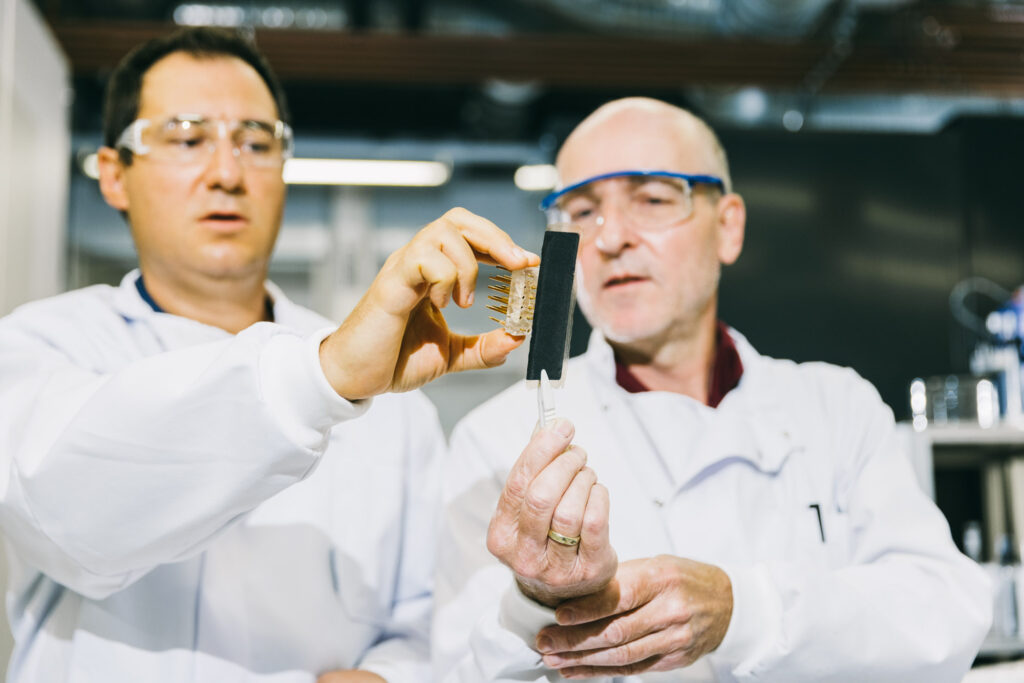
A key unique selling point is the combination of this laser ablation with a spraying process for the production of graded membrane electrode assemblies (MEAs). This creates cells in which up to ten different catalyst compositions can be tested simultaneously – in just one experiment. The subsequent magnetic field-based operando analysis makes it possible to record the local activity of the individual areas non-invasively and under real operating conditions.
Importance for SMEs
The results create new opportunities for companies along the entire value chain – from catalyst production and electrode manufacturing to measurement technology. SMEs in particular benefit from simplified access to newly developed materials and analytical methods that can be used for quality control and optimisation of electrolysers.