CleanH2Shipping –
Development of a hydrogen ecosystem for inland shipping

What do inland waterway vessels need to be able to travel safely and cleanly in Europe using hydrogen as fuel? One possibility: a standardised fuel system with interchangeable hydrogen tankers. In the CleanH2Shipping project, a multinational consortium is working on the technology, regulation and safety of such a system.

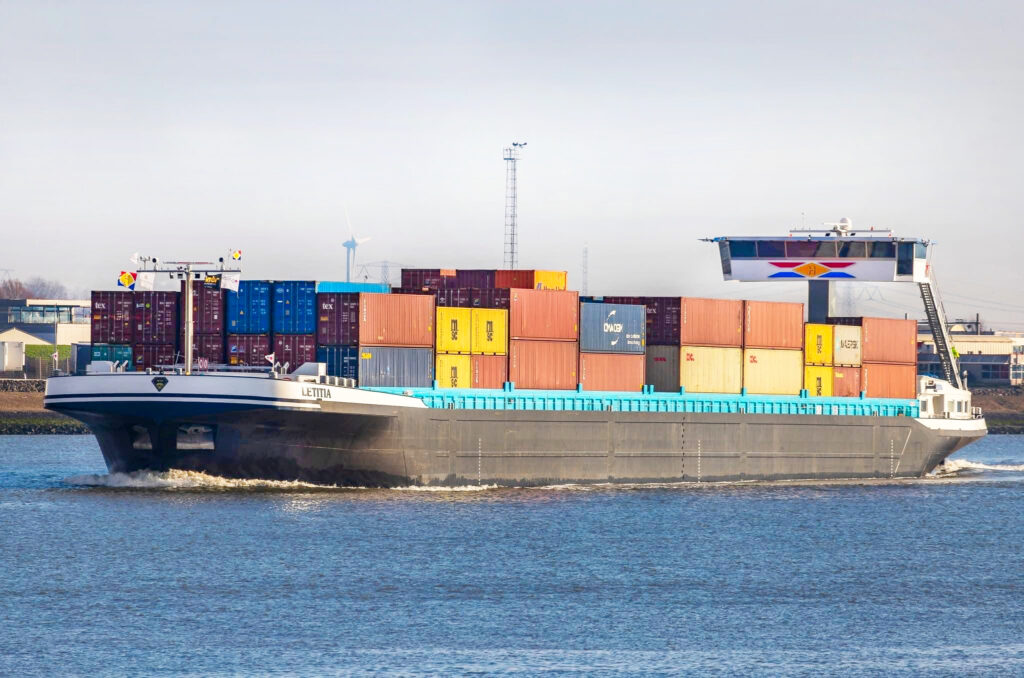
Inland container vessel

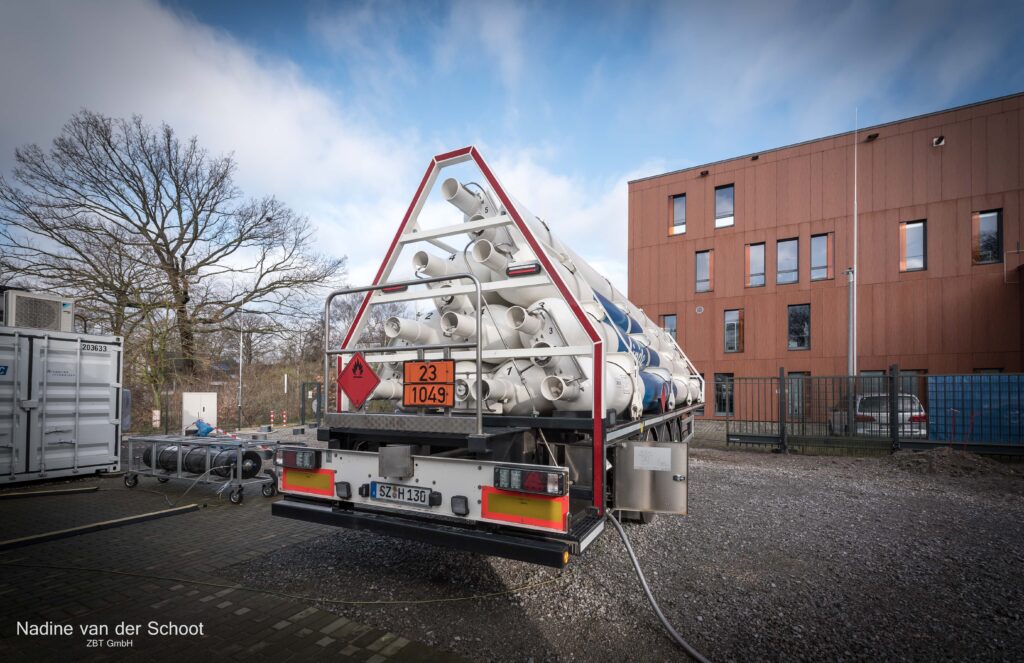
Hydrogen in swap tank trailers

 
Hydrogen drives for inland waterway vessels can help to significantly reduce CO2 emissions in the transport sector. A future hydrogen ecosystem for inland shipping could be based on interchangeable hydrogen refueling containers. The multinational research project CleanH2Shipping aims to develop and implement a viable hydrogen ecosystem for European inland shipping. The inland vessel Letitia is to be converted to this technology and operate as a demonstrator between Rotterdam and Duisburg on the Rhine.

In the CleanH2Shipping project, European ports, research institutions, technology providers and a large container ship owner are working together with the aim of demonstrating the potential of inland waterway vessels powered by hydrogen fuel cells. For the first time, exchangeable hydrogen tank containers, known as MEGCs (multiple-element gas containers), are being used to supply energy. As an example of sustainable shipping, the Letitia is intended to demonstrate how a green corridor between Rotterdam and Duisburg can function.
Our part

 
The task of the ZBT within the project is to analyse the regulations in the European Union for the handling of H2-MEGC in ports and on ships. This includes:

  • Safety standards and regulations for the transportation of hydrogen MEGC to the port
  • Specifications for the bunkering process at national and international level within the EU
  • Risk assessment and safety standards and regulations for the handling of MEGC in ports and for use on ships using the example of the Letitia

Appropriate guidelines for dealing with replaceable MEGCs in ports are to be derived from this.

However, the vision of those involved goes beyond mere demonstration. They are striving to promote broad acceptance throughout Europe and beyond, so that this project can contribute to achieving the “Fit for 55” targets and a sustainable, significant reduction in CO2 emissions.

Project information

CleanH2Shipping

 
Project ID: 101192306 – CleanH2Shipping – HORIZON-JTI-CLEANH2-2024
Project start: 1. April 2025
Duration: 36 months

The project is funded by the Clean Hydrogen Partnership and the European Union.

Project website

Funding logos of the European Union and the Clean Hydrogen Partnership

PROJECT PARTNERS

  • Argo-Anleg GmbH
  • Commissariat à l‘Énergie Atomique et aux Énergies Alternatives (CEA)
  • Duisburger Hafen AG (duisport)
  • EurA AG
  • MTS Duisburg GmbH
  • Universita di Pisa
  • Autorita di Sistema Portuale Del Mar TIRRENO SETTENTRIONALE (ASPMTS)
  • DeltaPort GmbH & Co. KG
  • North Sea Port
Logos of the partners in the CleanH2Shipping project

Contact

Project manager

Georg Dura
+49 203 7598-2344
Portrait of Georg Dura.

Other current projects

Discover more