New ZBT publication: More stable MnO₂ anodes for PEM water electrolysis

Nb/F-Co doping improves the activity and long-term stability of a PGM-free catalyst for acid oxygen generation

A new publication with significant ZBT involvement presents a promising approach to developing more durable and resource-efficient anode materials for PEM water electrolysis. Through targeted Co-doping of manganese dioxide (MnO₂) with niobium and fluorine, the research team was able to increase catalytic activity whilst significantly improving the material’s stability under highly acidic operating conditions.
PGM-free catalysts for scalable PEM water electrolysis

PEM water electrolysis is regarded as a key technology for the production of green hydrogen. However, a major challenge lies on the anode side: to date, iridium-based catalysts have been the primary choice for the oxygen evolution reaction (OER). Iridium is rare, expensive and only available in limited quantities for large-scale expansion of electrolysis. The development of high-performance and stable PGM-free alternatives is therefore a key component for the future scaling up of the technology.

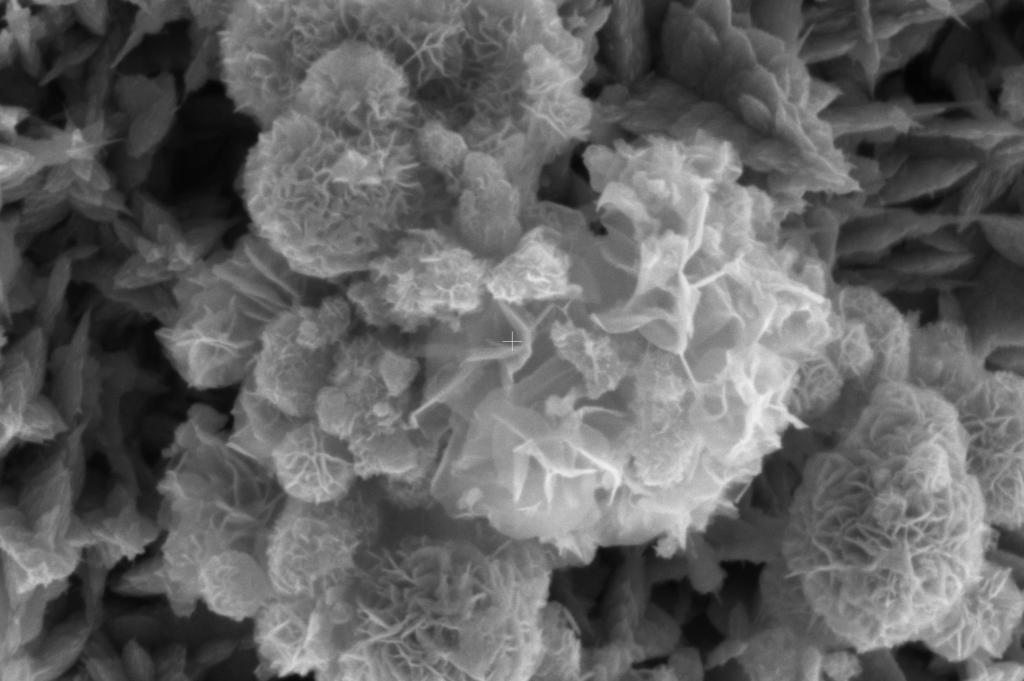
In this new study, MnO₂ is specifically modified at the atomic level through the simultaneous introduction of Nb⁵⁺ and F⁻. The co-doping influences the electronic structure and stabilises the ratio of different Mn oxidation states. This suppresses excessive oxidation of manganese under OER conditions, which can otherwise lead to the dissolution and degradation of the catalyst. The co-doped MnO₂-Nb-F catalyst achieved an overpotential of 410 mV at 10 mA cm⁻² and exhibited a cell voltage of 1.91 V at 1 A cm⁻² in a PEM electrolyser at 60 °C. In the long-term test, operation was possible for over 380 hours at 0.4 A cm⁻².

ZBT-XRD reveals structural changes

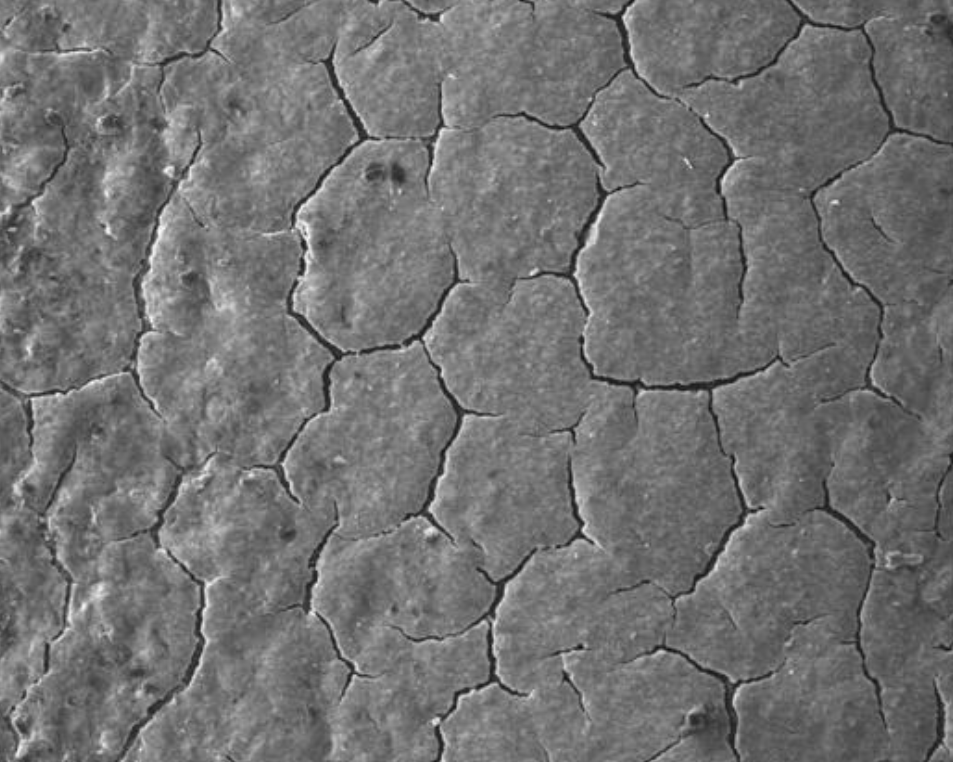
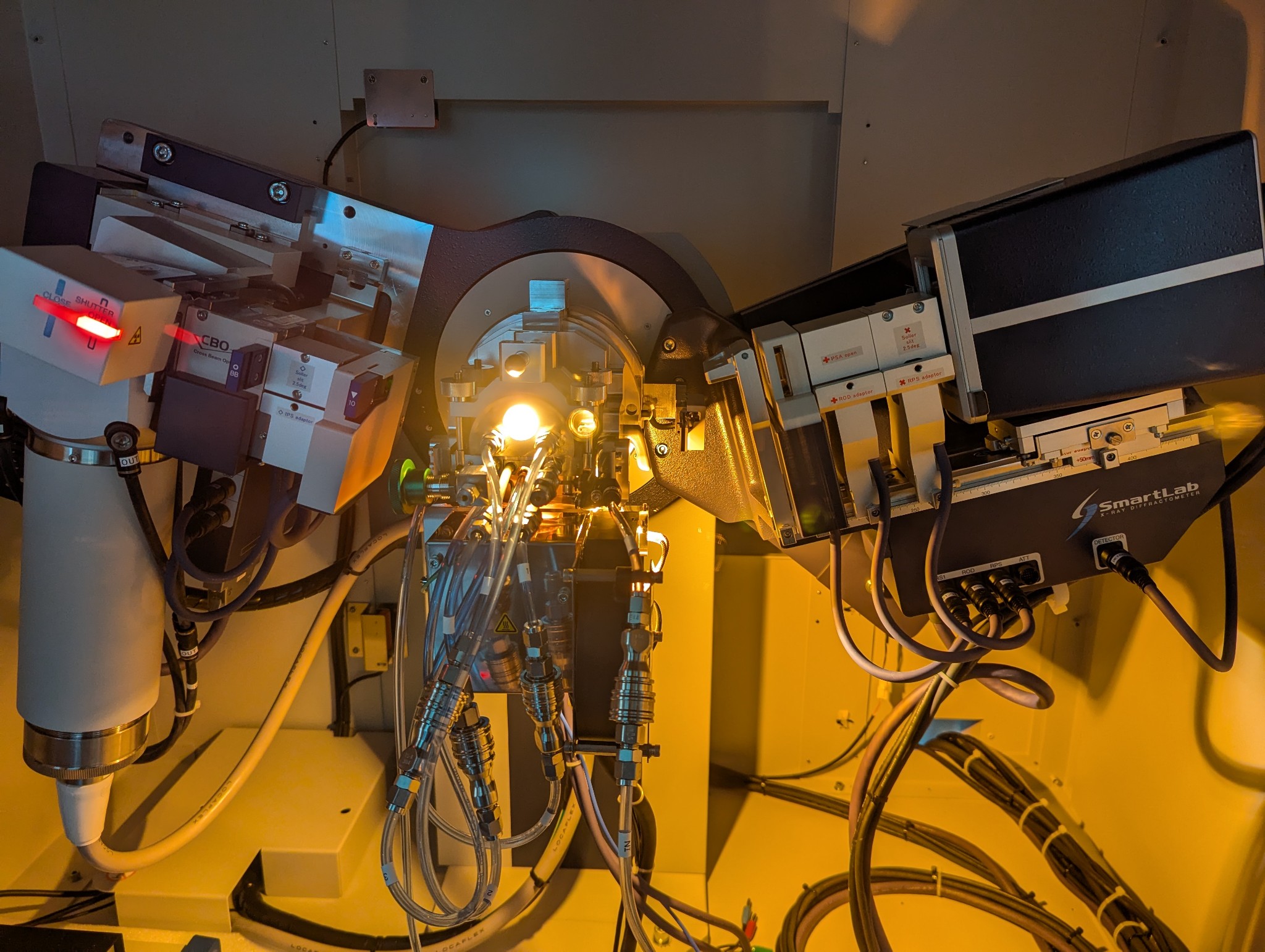
X-ray diffraction at the ZBT provided a key basis for understanding the new catalyst. The ZBT-XRD was used to investigate how the incorporation of niobium and fluorine affects the crystal structure, phase composition and lattice parameters of the MnO₂.

The measurements show that the characteristic γ/β MnO₂ structure is retained even after Co doping. At the same time, shifts, broadening and reduced intensities of individual diffraction peaks indicate lattice expansion, local stresses and increased structural disorder. It is also crucial that no additional crystalline Nb-containing secondary phases were detected. The XRD results thus provide important structural evidence that the doping does indeed interact with the MnO₂ system without disrupting its fundamental crystal structure. Together with electron microscopy, XPS and operando XAS, this provides a detailed picture of how Nb and F alter the electronic and structural properties of the catalyst.

more about our XRD

From materials analysis to the PEM electrolyser: research across the entire development chain

The publication illustrates what research at the ZBT is all about: developing materials, understanding their structure and function, evaluating them electrochemically and testing them under realistic conditions in the electrolyser.

We congratulate Vimanshu Chanda, Viktor Mackert, Pascal Sous, Markus Sonnenberg, Hesham Solh, Sebastian Daniel Hirt, Harry Ernst Hoster and Natalia Levin, as well as all the other researchers involved, on this outstanding collaborative work.

The article „Cation-Anion Co-Doping Enables Acid-Stable MnO₂ Anodes for Proton Exchange Membrane Water Electrolysis“ has been published in the journal Small Science by Wiley-VCH and Open Access is now available. A fantastic achievement for the entire research team and a prime example of the scientific work carried out at the ZBT.

read the research article

Contact

Vimanshu Chanda Ph.D.
+49 203 7598-4284

More news