3D X-ray microscopy (XRM)

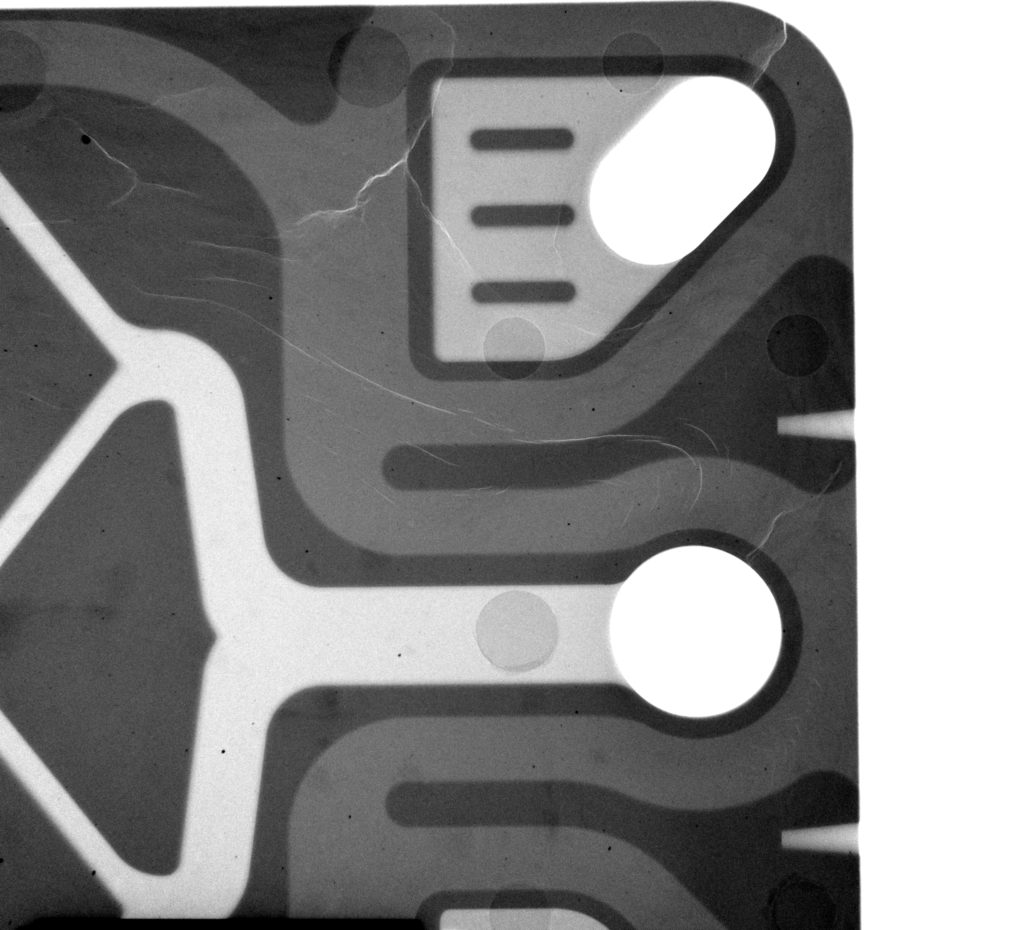
The ZBT is equipped with the ZEISS Xradia 620 Versa 3D X-ray microscope, a high-resolution system for non-destructive material and component analysis. 3D X-ray microscopy provides detailed insights into the interior of samples and reveals structures that are only partially accessible using conventional two-dimensional or destructive methods.

At the ZBT, the system is used primarily to investigate materials and components for hydrogen technologies. These include fuel cell components, porous transport layers, membrane electrode assemblies, injection-moulded parts, and additively manufactured structures. The method combines high-resolution imaging with quantitative structural, defect, and damage analysis.
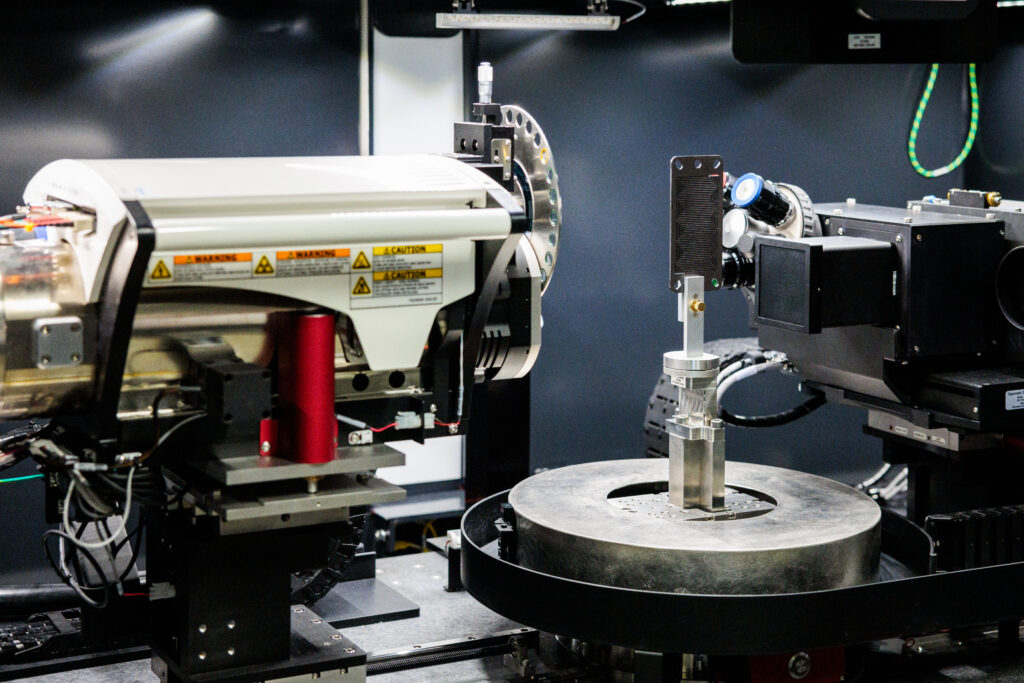
3D X-ray microscope at the ZBT - The Hydrogen and Fuel Cell Center for the investigation of hydrogen technologies

Applications of 3D X-ray microscopy

Mit XRM-Messungen können Materialstrukturen zerstörungsfrei in 3D erfasst, visualisiert und quantitativ ausgewertet werden. Die Methode unterstützt sowohl wissenschaftliche Untersuchungen als auch industrielle Entwicklungs- und Qualitätssicherungsprozesse.

Typische Anwendungsbereiche am ZBT sind:

  • Strukturaufklärung poröser Materialien
  • Untersuchung von Brennstoffzellen- und Elektrolyseurkomponenten
  • Qualitätskontrolle spritzgegossener oder additiv gefertigter Bauteile
  • Analyse von Defekten, Rissen und Inhomogenitäten
  • Untersuchung von Degradation, Frostschäden und Alterungseffekten
  • Datengrundlage für strukturaufgelöste Simulationen

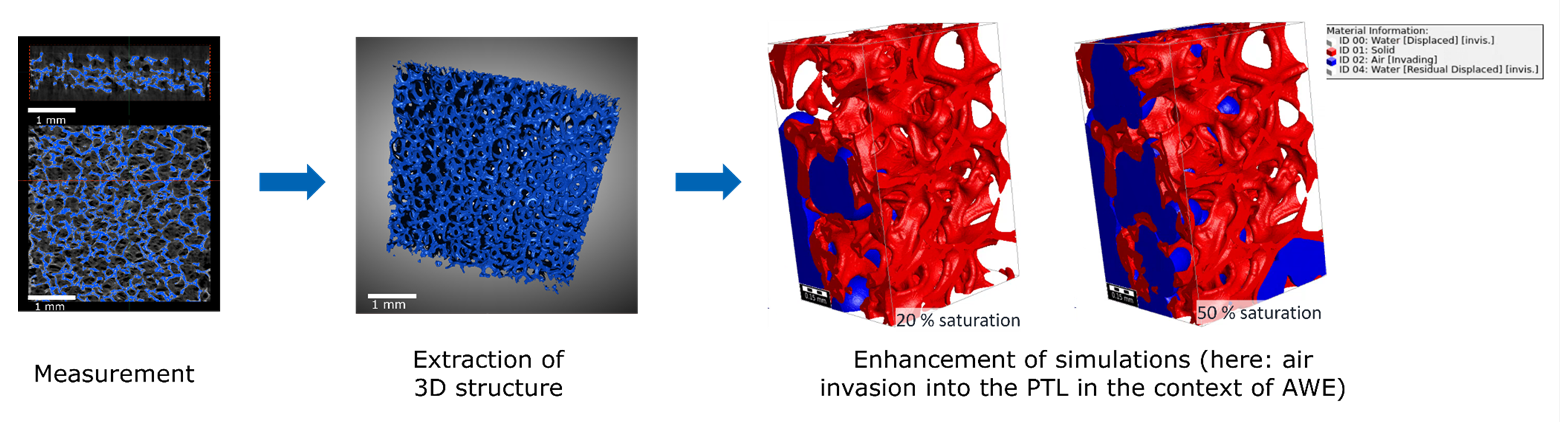
Realistic 3D Structures for Simulation and Modeling

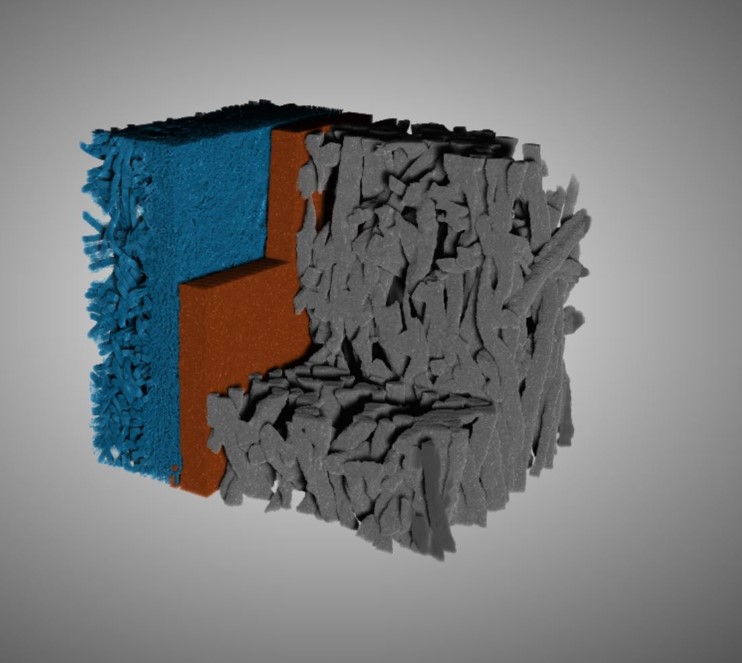
Porous structures influence mass transport, water distribution, gas transport, and performance in electrochemical systems. Using 3D X-ray microscopy, real-world pore geometries can be measured and utilised for structure-resolved simulations.

This allows idealised or highly simplified models to be replaced by measured 3D structures. As a result, transport pathways, local saturation, bottlenecks, and performance-limiting areas can be analysed more accurately. At the ZBT, this approach has been used, among other things, for complex porous components and interfaces in fuel cell and electrolyser contexts.

Quality Control of Injection Moulding and Manufacturing Processes

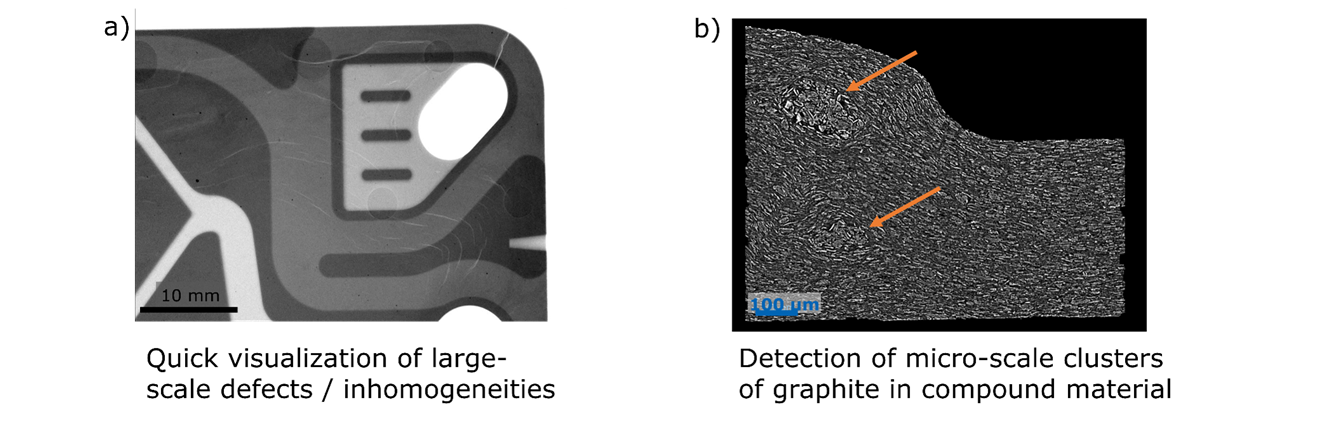
XRM measurements enable the nondestructive inspection of technical components across various length scales. In injection-moulded components, they can reveal internal inhomogeneities, defects, filler distributions, or particle orientations.

This information can be utilised to optimise manufacturing processes in specific ways, such as with regard to temperature, pressure, speed, or material composition. At the same time, the analysis of the microstructure helps provide a better understanding of material properties such as thermal conductivity or mechanical stability.

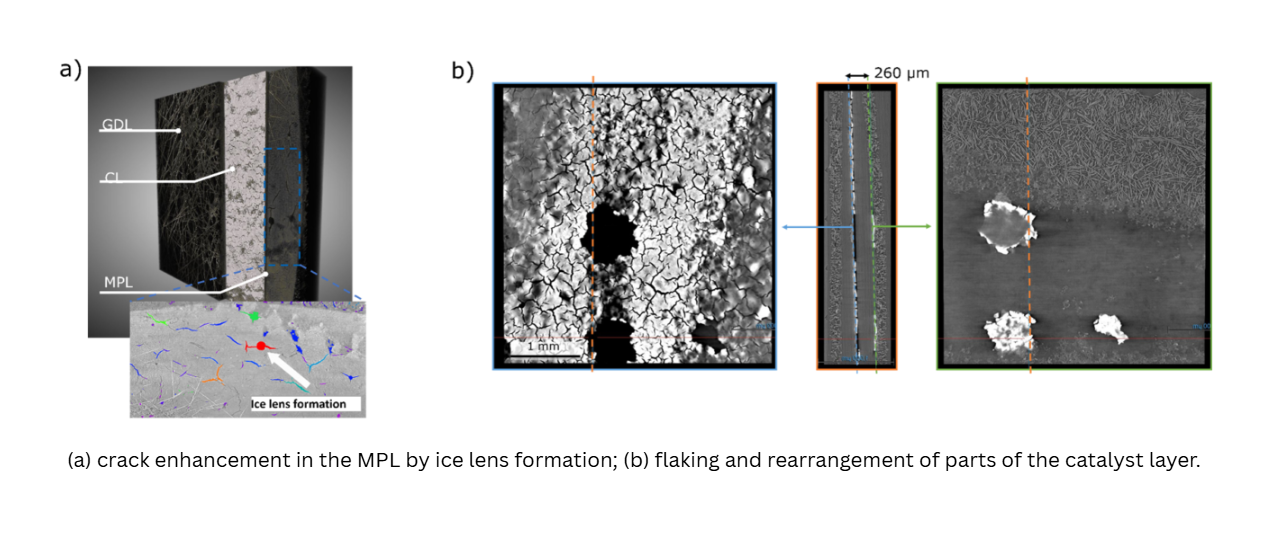
Analysis of Degradation and Frost Damage in Fuel Cells

Fuel cell components are subjected to demanding conditions during operation. Cold start conditions and freeze-thaw cycles, in particular, can alter the material structure of membrane electrode assemblies and adjacent layers.

3D X-ray microscopy makes it possible to examine such changes within the multilayer system non-destructively. For example, it reveals cracking, delamination, structural rearrangements, or damage caused by moisture or ice. This allows for a better understanding of aging mechanisms and enables the targeted further development of materials, components, and operating strategies.

What can be analysed using XRM?

3D X-ray microscopy makes it possible to visualise, measure, and evaluate internal structures and material properties. Depending on the sample and the research question, qualitative visualisations, quantitative structural parameters, or data-driven analyses can be generated.

Among other things, the following can be examined:

  • Pore Structures, Porosity, and Pore Size Distributions
  • Cracks, delaminations, and internal defects
  • Layer Structure and Structural Changes in Multilayer Systems
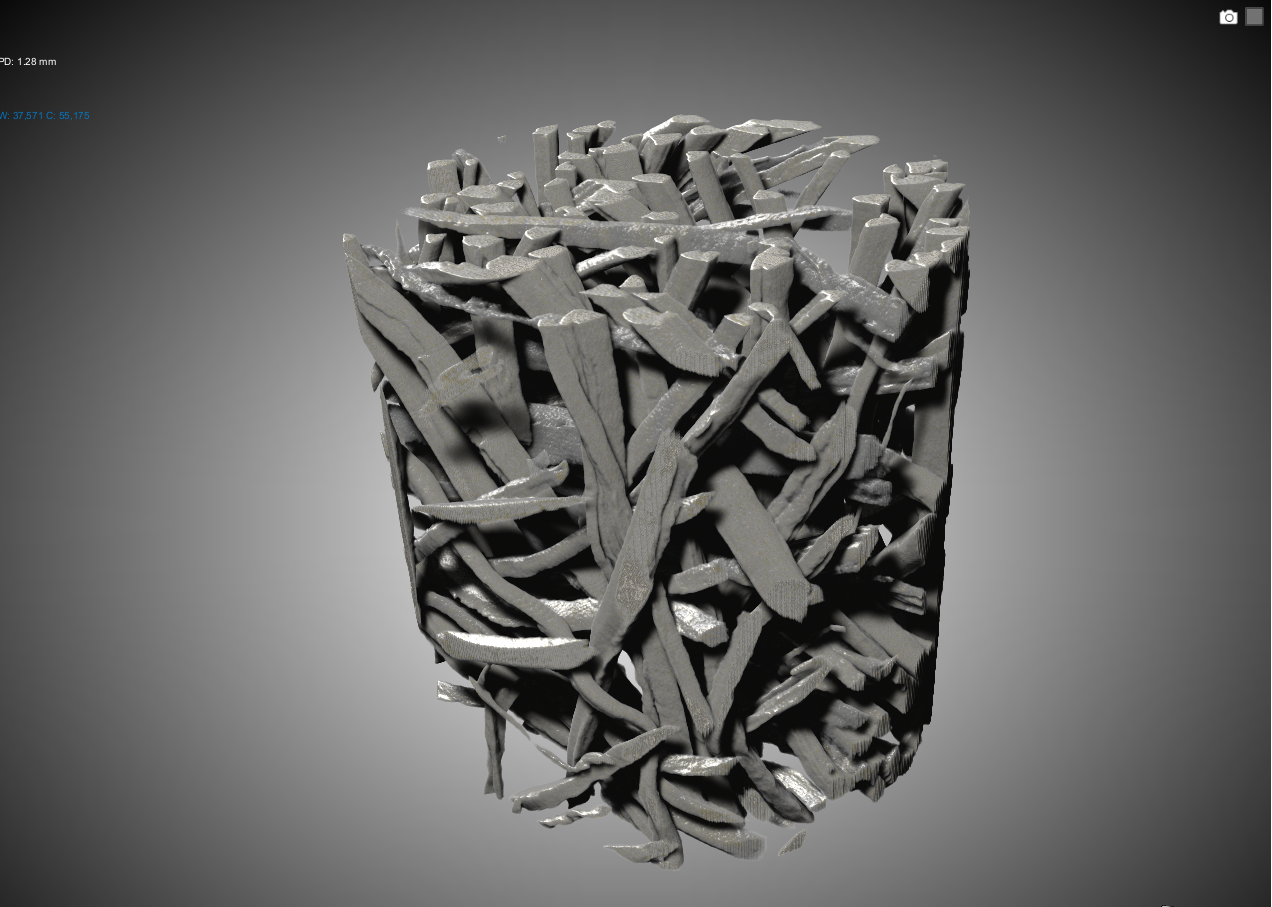
  • Particle, fiber, or filler orientations
  • Water Distribution and Transport Pathways in Appropriate Sample Setups
  • Internal geometries of technical components
  • Damage caused by aging, frost, and moisture
  • additively manufactured structures, nozzles, composite materials, and engineering samples with complex internal geometries

Technical Specifications

For 3D X-ray microscopy, the ZBT utilises the ZEISS Xradia 620 Versa. The system is suitable for high-resolution 3D analyses of engineering materials and components and can be used for a variety of sample sizes and research questions.

  • Maximum resolution: up to 0.5 µm
  • Power: 25 W
  • Voltage range: 30–160 kV
  • Available Objectives: 0.4x, 4x, 20x, 40x
  • Maximum sample weight: 25 kg
  • In-situ measurements are possible

Measuring principle

  • Radiography: X-rays transmitted through the sample are converted into visible light and projected onto a CCD camera.

  • Tomography: X-rays are taken from various angles of rotation to calculate a 3D structure.

  • Software: Data analysis using statistical methods, segmentation, or machine learning algorithms.

Wissenschaftliche Publikation zur schnelleren Herstellung compoundbasierter Bipolarplatten

Im International Journal of Hydrogen Energy ist eine gemeinsame Publikation der Universität Stuttgart und des ZBT zur schnelleren Herstellung compoundbasierter Bipolarplatten erschienen. Untersucht wurde ein neuartiges, induktiv beheiztes Presswerkzeug aus ultrahochfestem Beton. Das XRM am ZBT kam dabei unter anderem zur Analyse der Faserverteilung im Material und zur zerstörungsfreien Prüfung der eingebetteten Induktionsspule nach Belastung zum Einsatz.

Quality control of bipolar plates using the BePPel test bench
zur Publikation

Wissenschaftliche Publikation zur gezielten Füllstoffausrichtung in Kunststoffrohren

In den AIP Conference Proceedings ist eine gemeinsame Publikation der Universität Duisburg-Essen und des ZBT zur Entwicklung wärmeleitfähiger Kunststoffrohre für Wärmetauschersysteme erschienen. Untersucht wurden speziell ausgelegte Extrusionswerkzeuge, mit denen Graphitpartikel gezielt ausgerichtet und die Wärmeleitfähigkeit um bis zu 74 % gesteigert werden konnten. Das XRM am ZBT machte dabei die Verteilung und Orientierung der Füllstoffe im Rohrquerschnitt sichtbar und half, die Wirkung der unterschiedlichen Werkzeugkonzepte zu erklären.

zur Publikation

3D X-ray microscope

Simon Dondrup
+49 203 7598-2364
Portrait of Simon Dondrup.

3D X-ray microscope

Dr. Viktor Mackert
+49 203 7598-2370
Portrait eines Manns mit Brille, Anzug und Krawatte