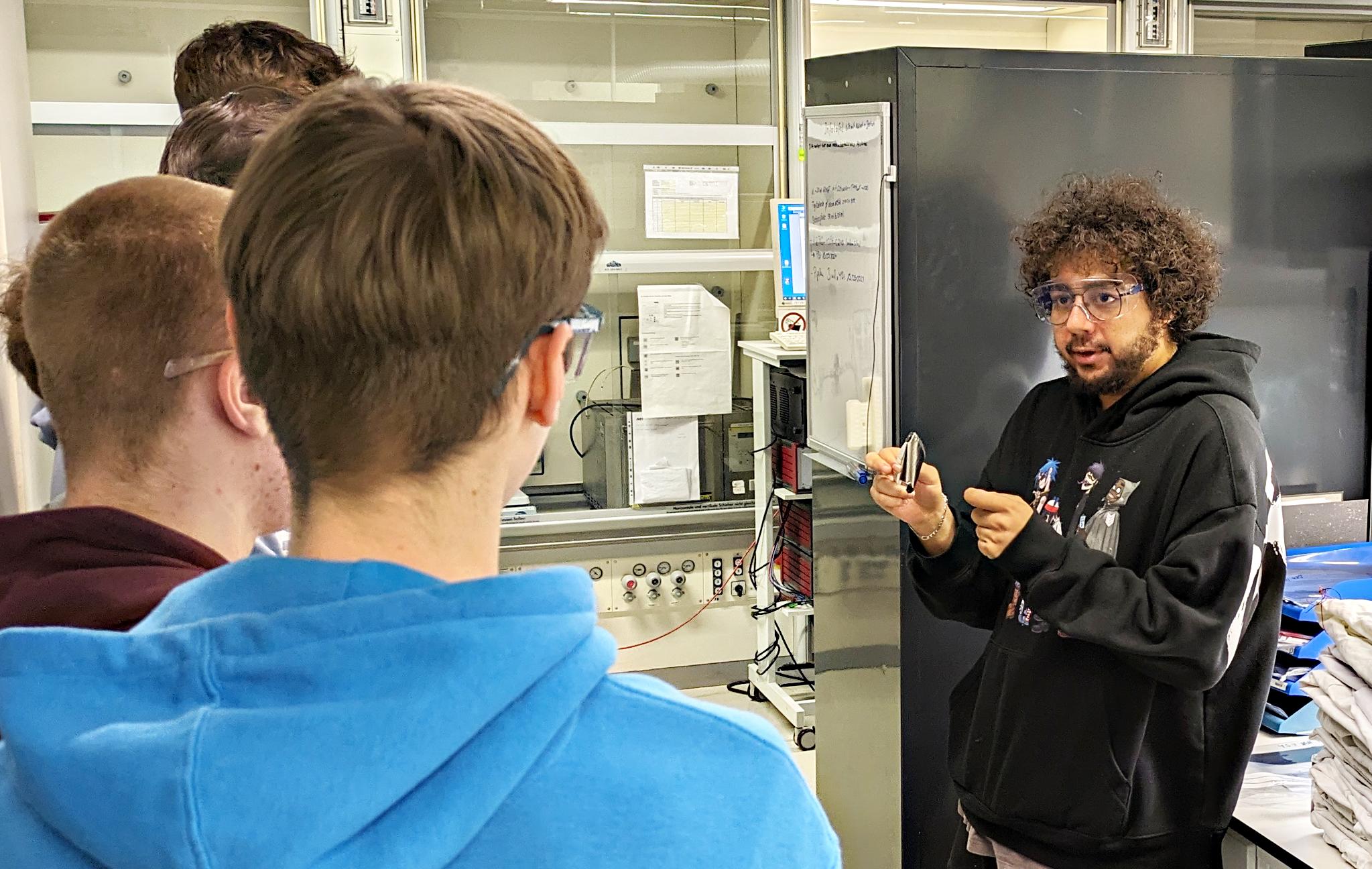
Promoting young talent: pupils immerse themselves in nanoworlds at the ZBT


The NanoSchoolLab of the University of Duisburg-Essen was a guest at the ZBT. Eleventh-graders built components for electrolysis cells and tested them.


Eleven Year 11 pupils from two Duisburg grammar schools recently took a look at the world of nanoparticles in fuel cell and electrolysis technology at the ZBT – The Hydrogen and Fuel Cell Center. They came over to us as part of an event organised by the NanoSchoolLab “Insights into the nanoworld” at the University of Duisburg-Essen to experience the application of nanoparticles for themselves in the ZBT laboratories.
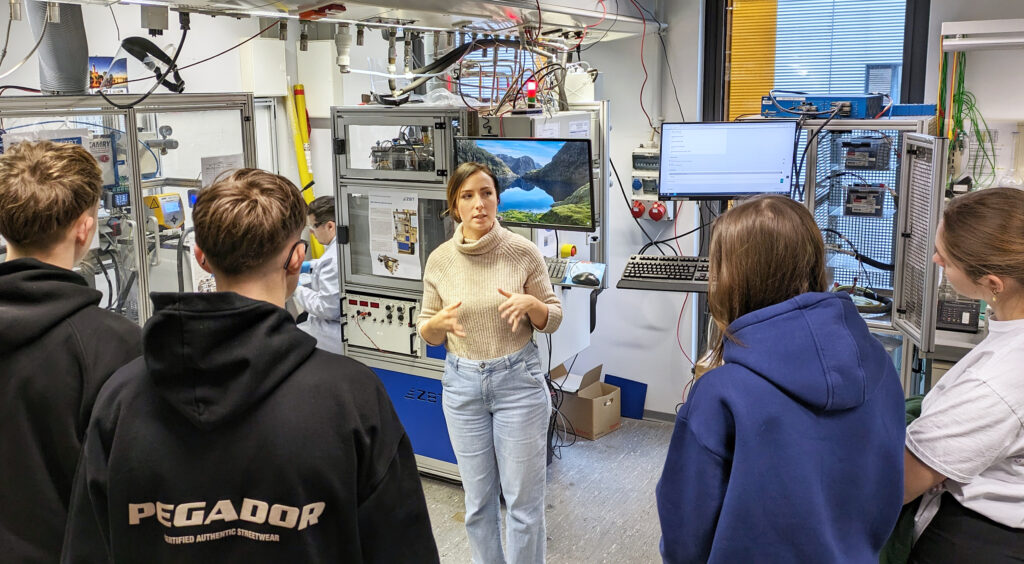
 

The so-called The membrane electrode assembly (MEA ) is the electrochemical heart of a fuel or electrolysis cell. Nanomaterials are used primarily in the area of catalysts. The students got to know the process chain for manufacturing the MEA and carried it out practically themselves.


Nanotechnology in a nutshell

In wet chemistry, the students were able to weigh catalyst powder, pipette solvent and ionomer and disperse the whole thing in an ultrasonic bath to produce a dispersion. Catalyst layers were then sprayed in the coating laboratory. Finally, the self-built MEAs were tested in the electrolysis cell in the test bench laboratory. At each station and during all activities, the ZBT scientists explained the underlying physical and chemical principles.

The NanoSchoolLab offers day courses, project courses and teacher training on nanotechnology topics from the fields of physics, engineering and chemistry. The offer is aimed at courses in grades 8 to 13 at grammar schools, comprehensive schools, secondary schools and vocational colleges. Visiting the NanoSchoolLab is free of charge.

to the NanoSchoolLab of the University of Duisburg-Essen

Media

How to... Catalyst dispersion: a brief introduction by ZBT doctoral student Adib Caidi

How to… Catalyst dispersion: a brief introduction by ZBT doctoral student Adib Caidi
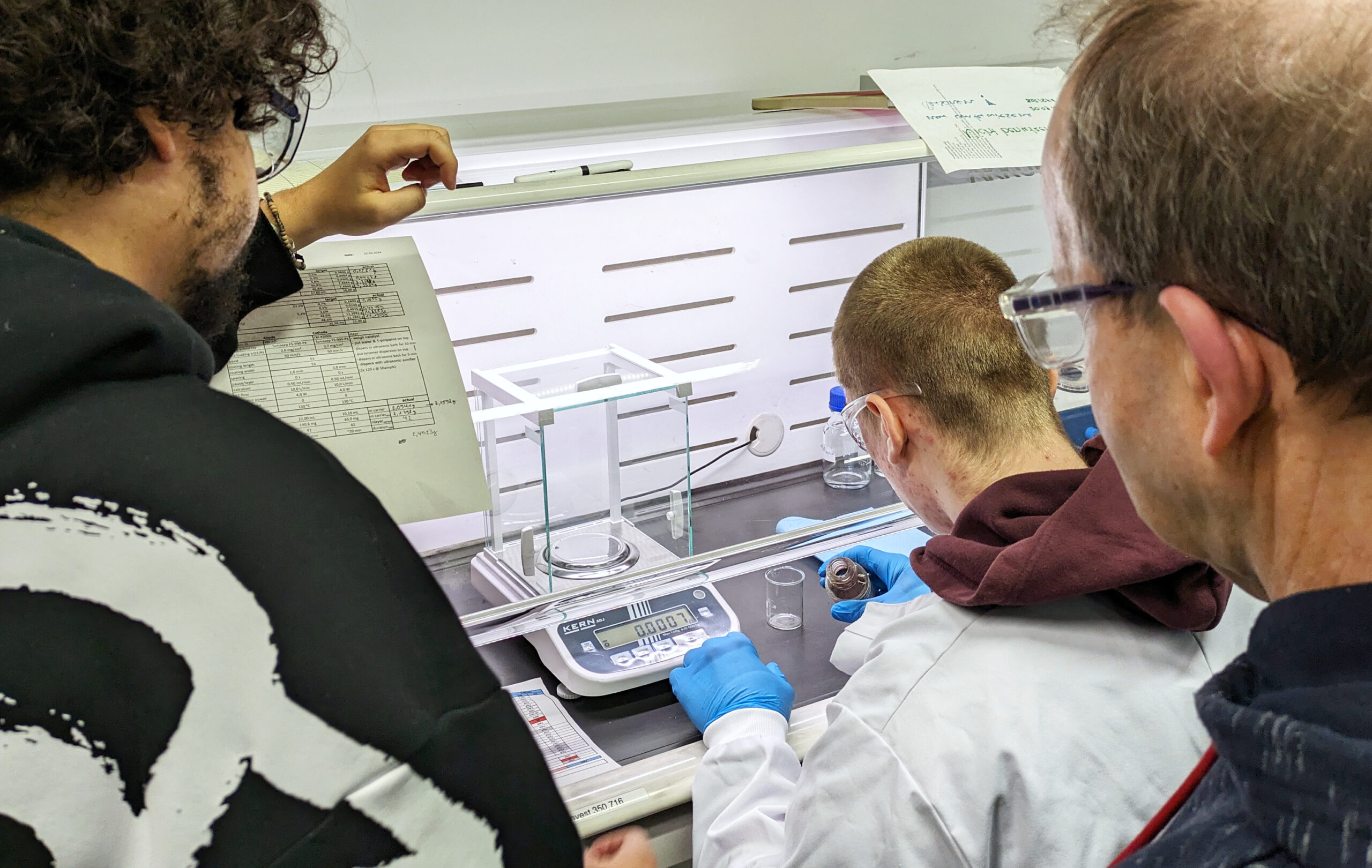
Try it out for yourself: Participants were able to make a catalyst dispersion themselves.

Try it out for yourself: Participants were able to make a catalyst dispersion themselves.
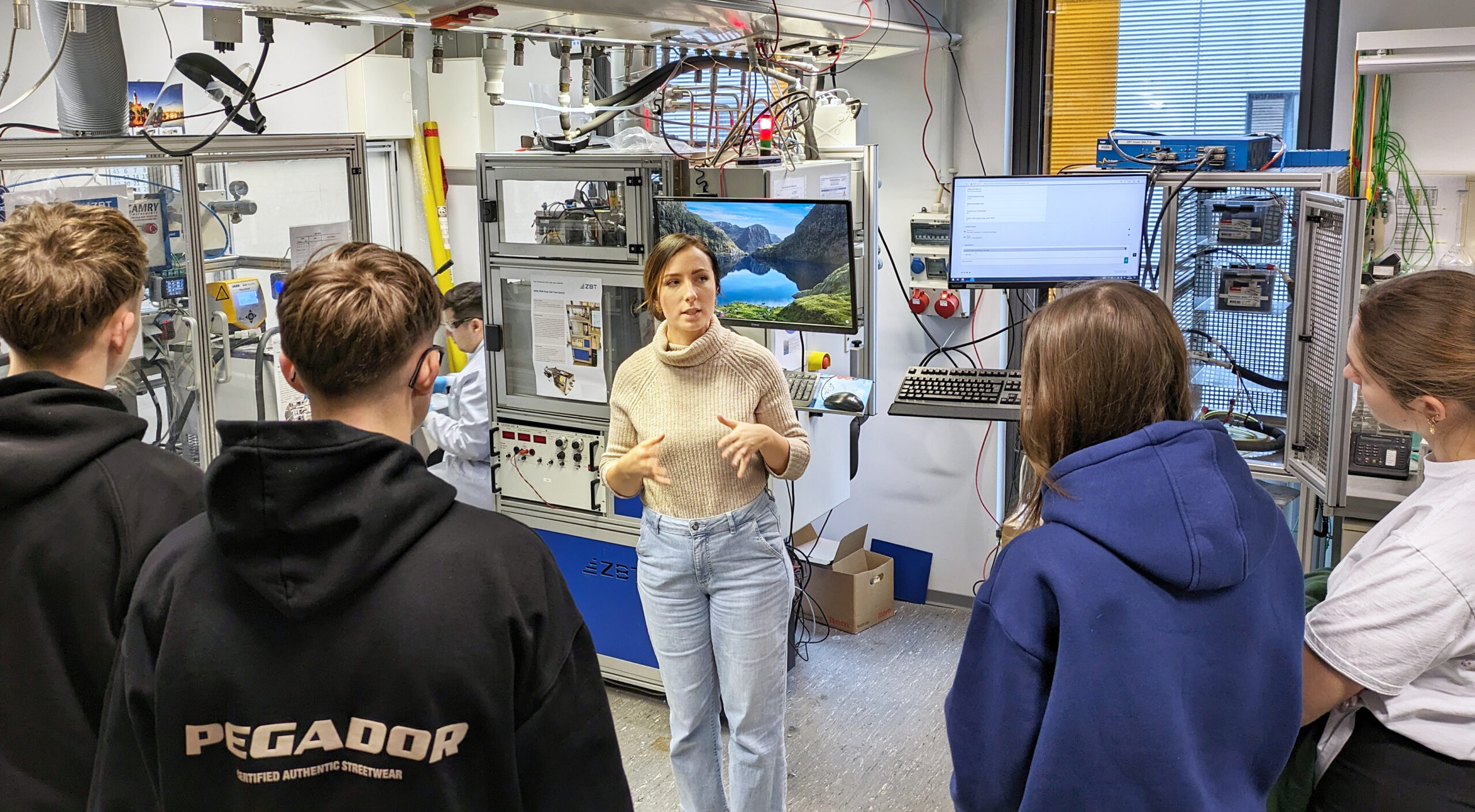
A short trip into the nanoworld: ZBT doctoral student Miriam Hesse shows NanoSchoolLab participants the ZBT laboratories.
A short trip into the nanoworld: ZBT doctoral student Miriam Hesse shows NanoSchoolLab participants the ZBT laboratories.
Further events