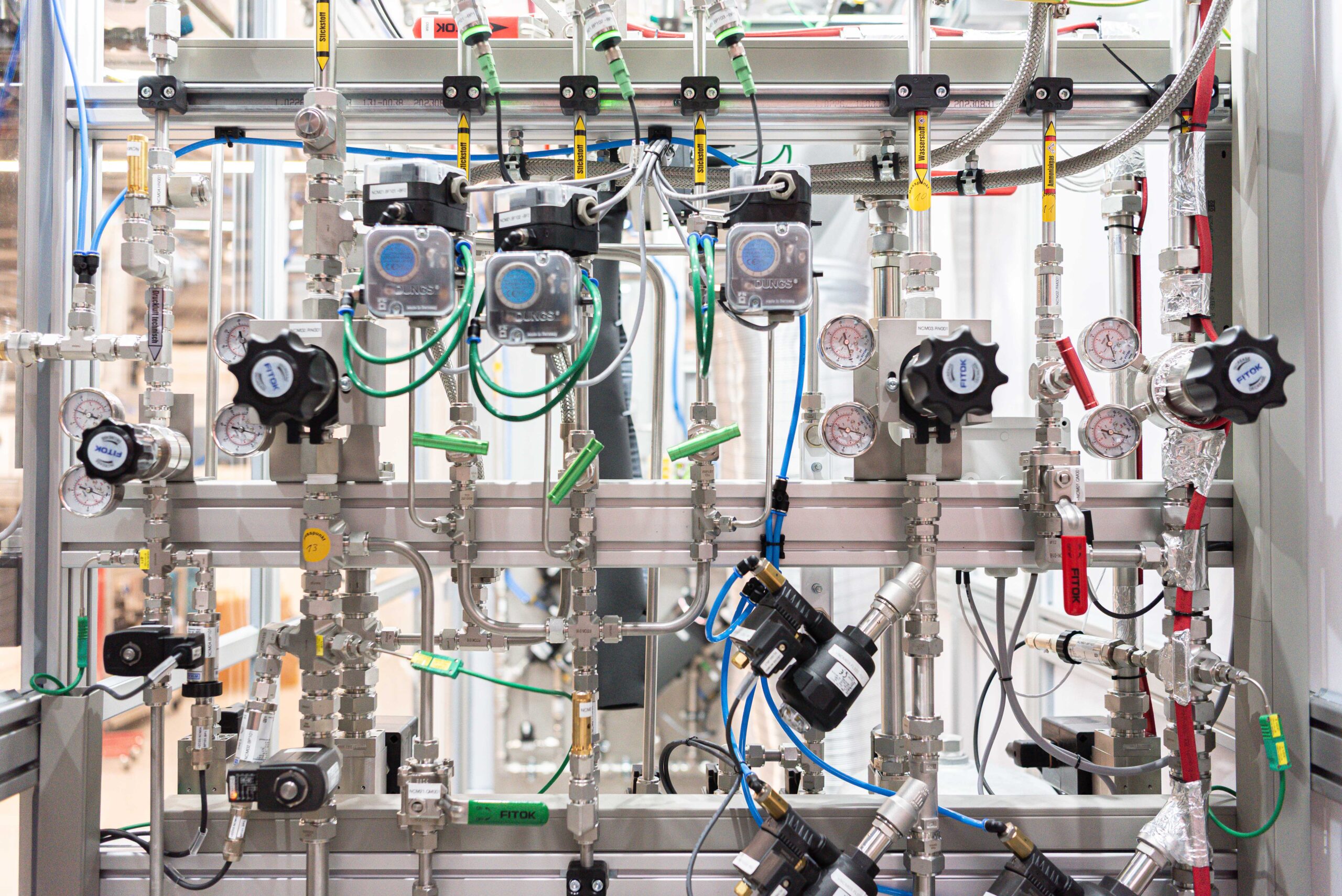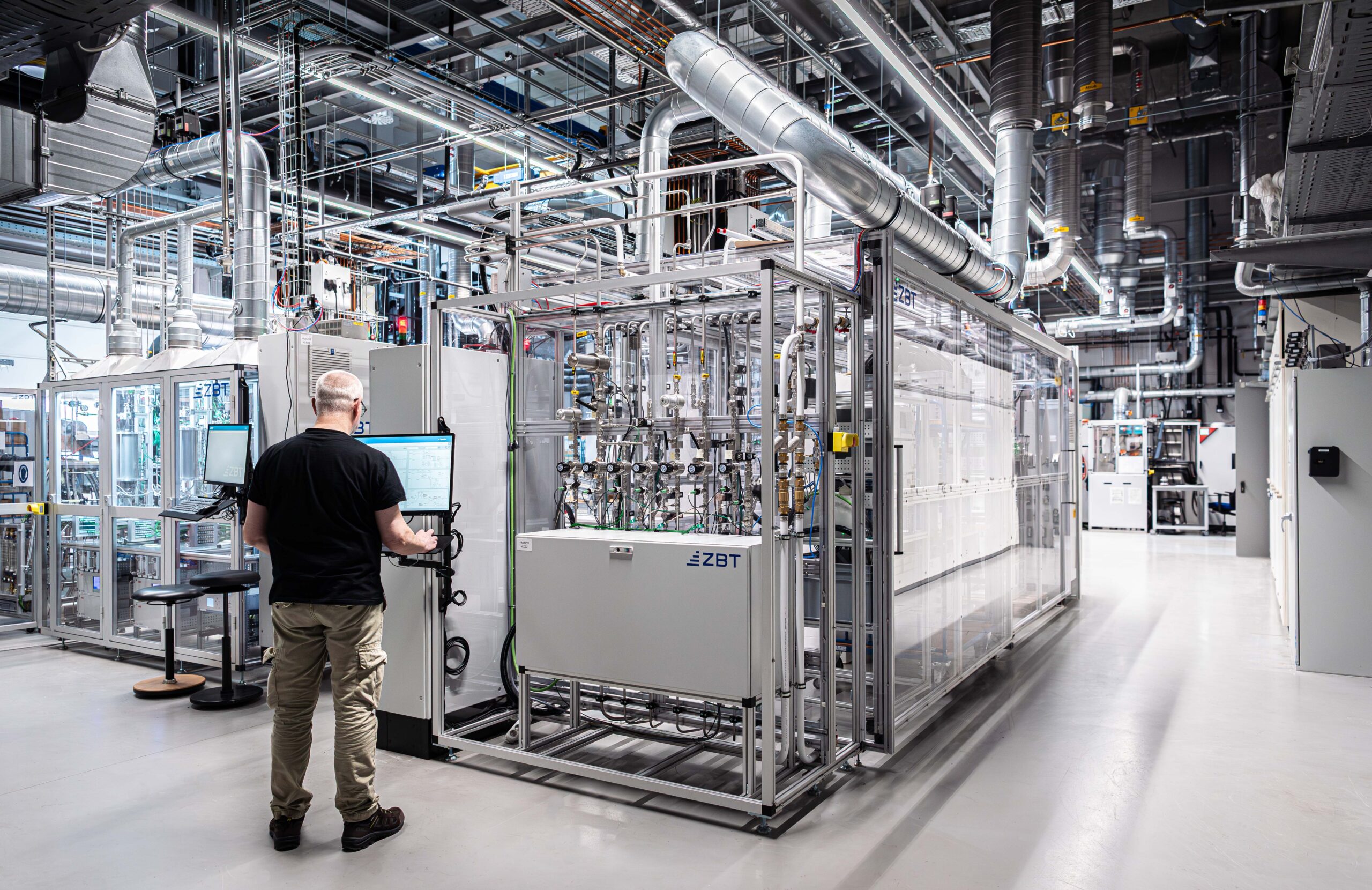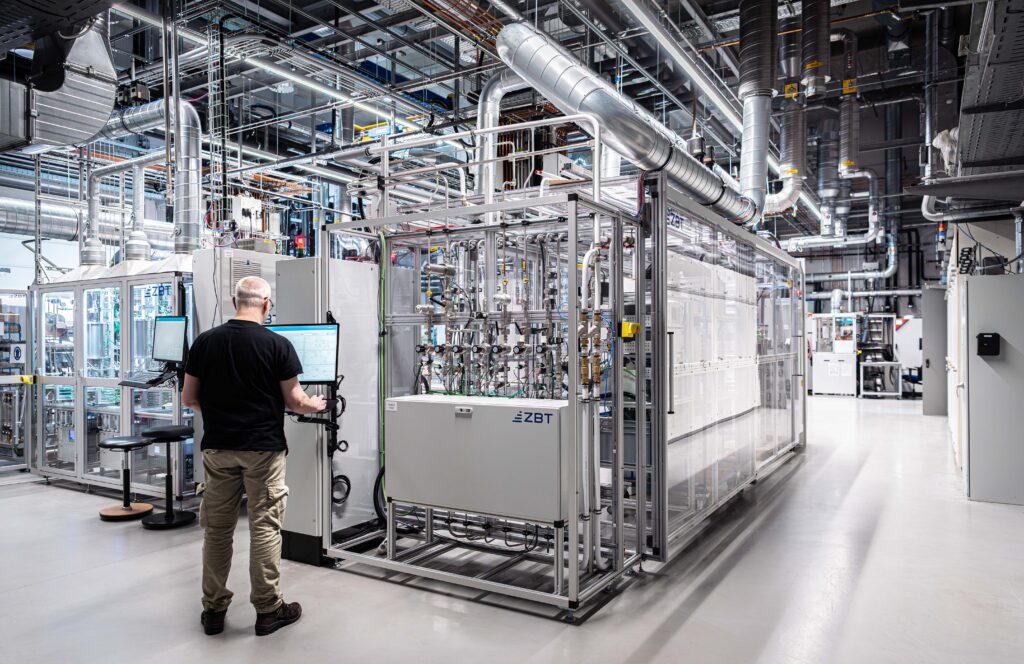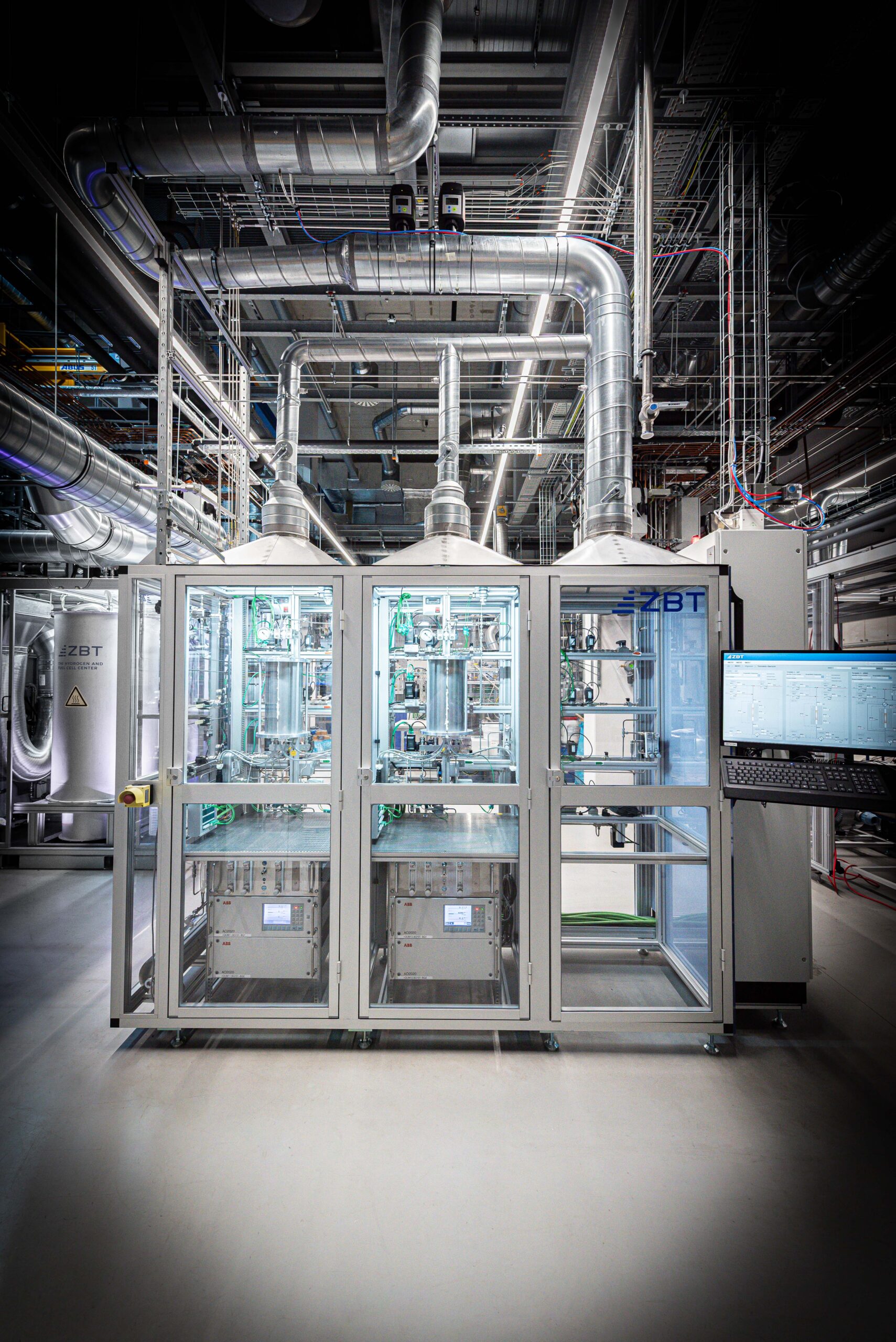
Labor mit mehreren Testständen

Ammonia as a C-free fuel

Carbon-free, energy-dense, and easy to store: Ammonia offers great potential as a hydrogen carrier for a climate-neutral energy system.

Ammonia (NH₃) is one of the most widely produced chemicals in the world and has been manufactured on an industrial scale for decades. As a compound of nitrogen and hydrogen, ammonia contains no carbon. At the same time, it can be liquefied, stored, and transported at moderate pressures. This makes NH₃ particularly suitable for applications in which large amounts of energy need to be transported or hydrogen needs to be supplied on a decentralised basis.

At ZBT, we focus in particular on the technical utilisation of ammonia as an energy carrier and hydrogen carrier. Our work centers on ammonia cracking, reactor and plant development, catalyst qualification, simulation, automation, safety, and gas analysis.
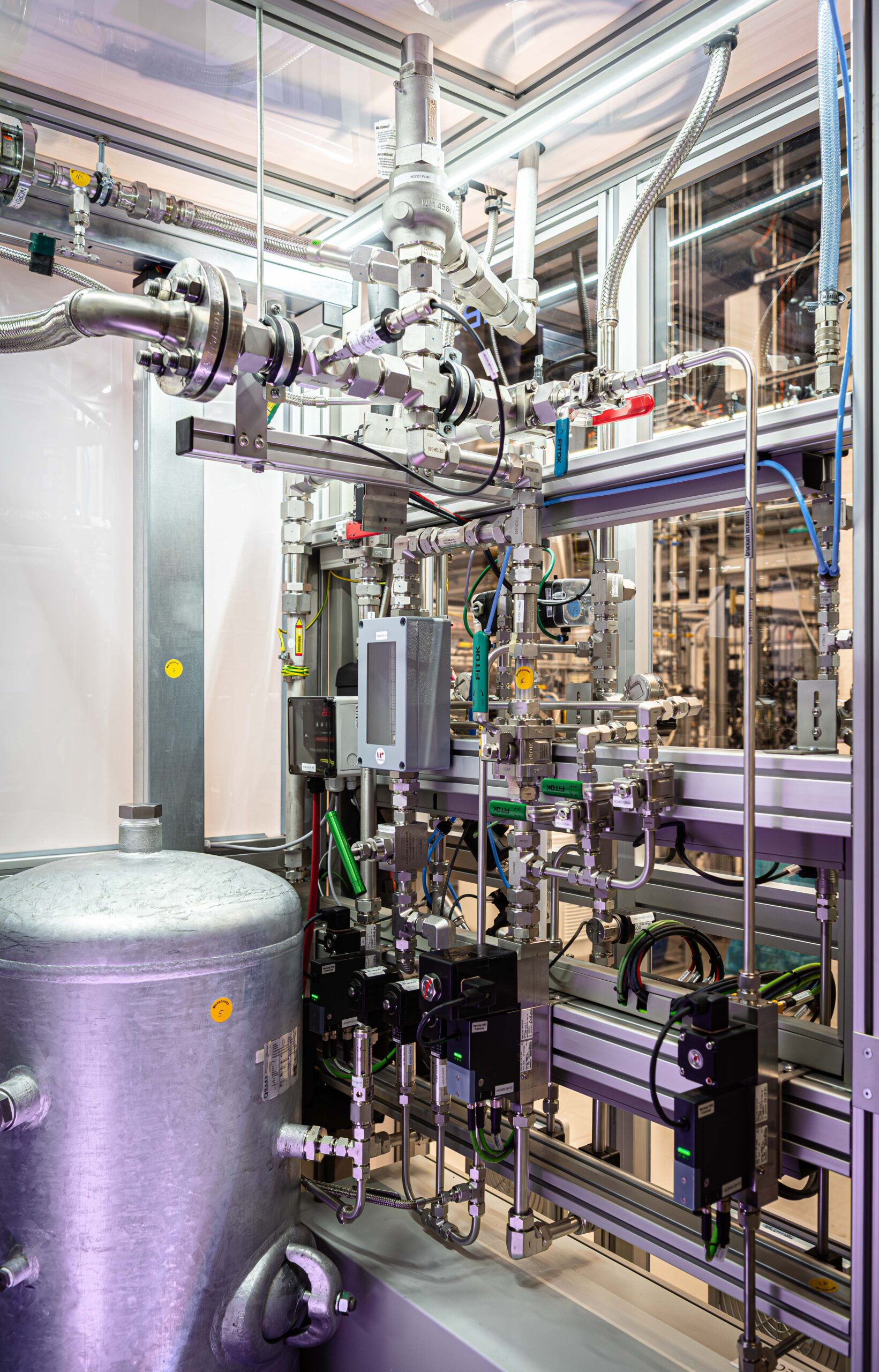
High energy density and easy storage

One challenge facing the hydrogen economy is the transportation of hydrogen. Ammonia contains about 17.8 percent hydrogen by weight and can be liquefied at about 9 bar absolute or around minus 33 °C. This allows hydrogen to be transported and stored in a chemically bound form without the high pressures of compressed hydrogen or the low temperatures of liquid hydrogen.

At the destination, ammonia can be utilised directly or broken down in an ammonia cracker into a hydrogen-rich gas mixture. It is precisely at this interface between ammonia infrastructure and hydrogen applications that ZBT’s research and development efforts focus.

Ammonia Cracking: Producing Hydrogen on Demand

How should an ammonia cracker be designed if an application requires a specific hydrogen flow rate, pressure, or residual ammonia content? At ZBT, we consider the catalyst, reactor, heat integration, materials, control systems, and safety as an integrated system.

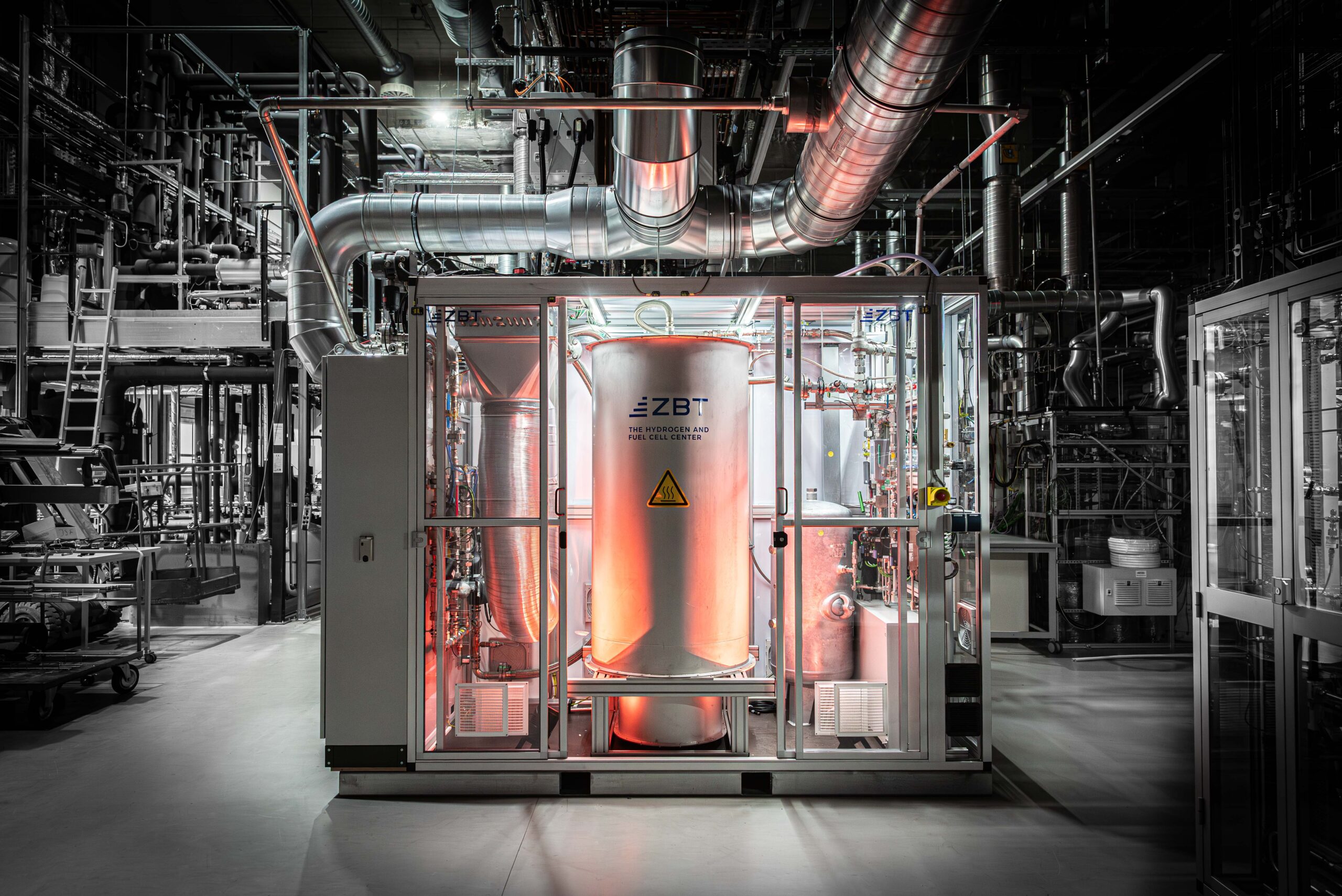
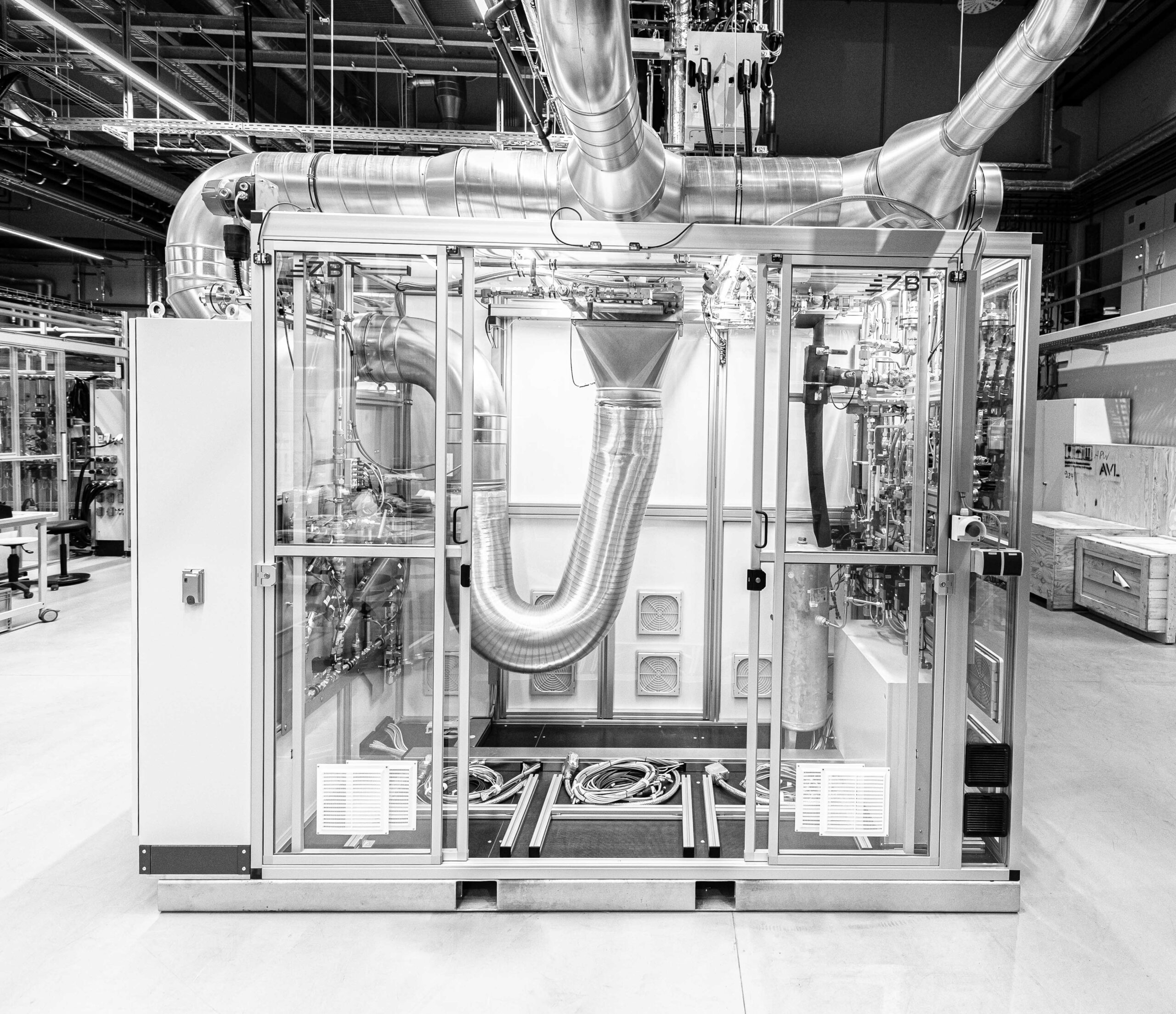
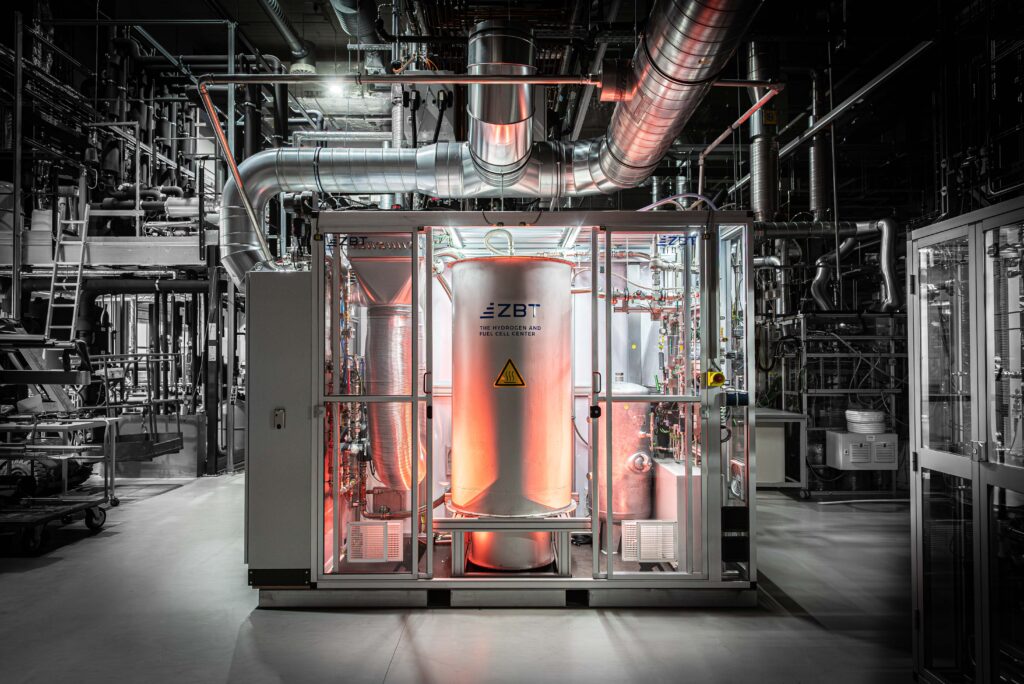
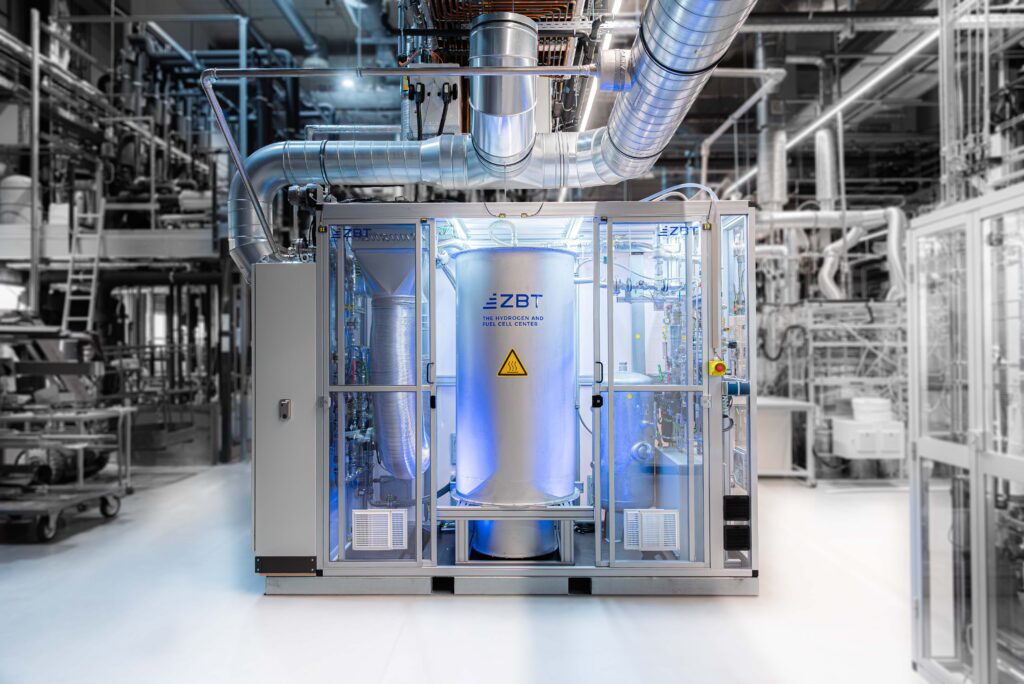
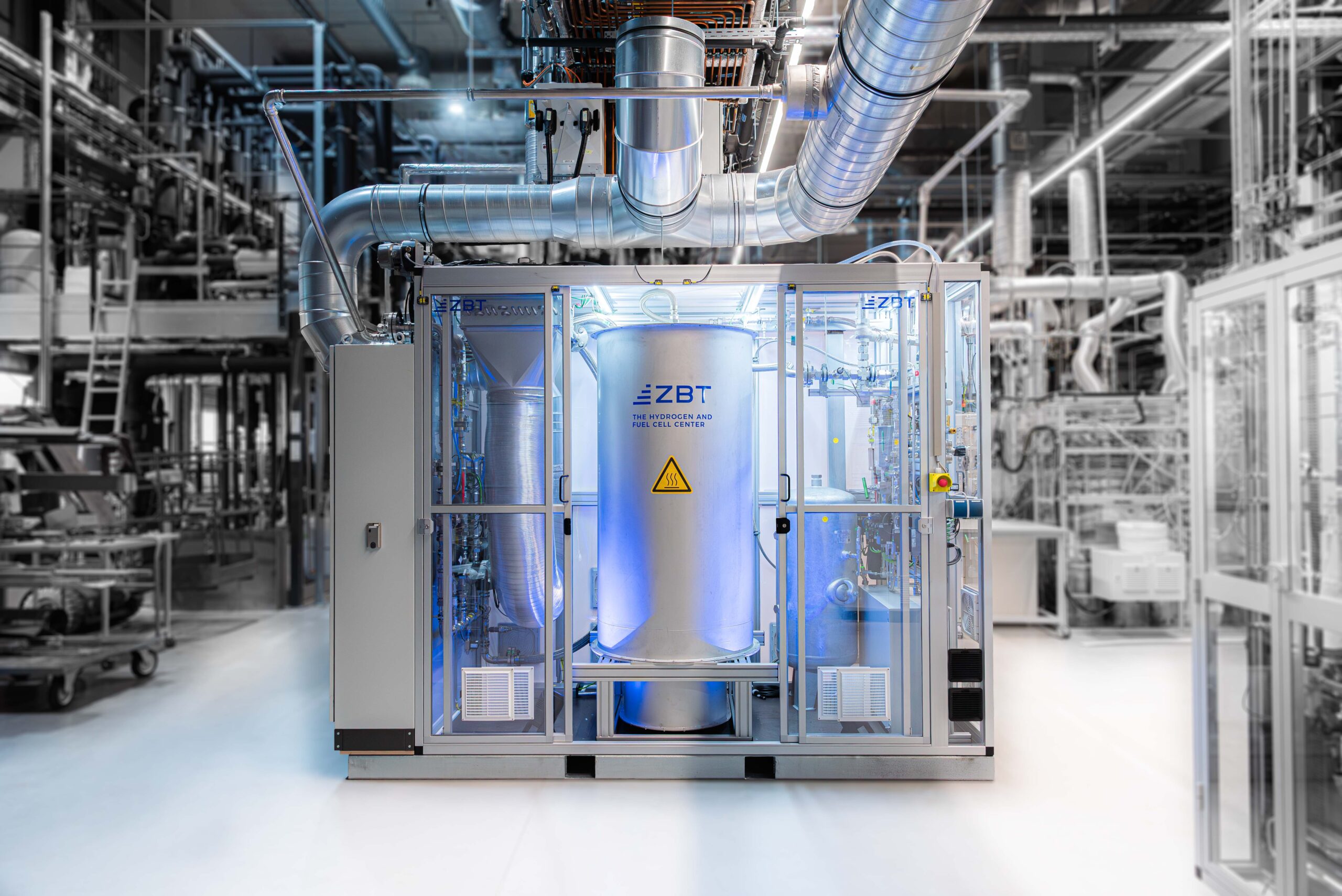
Among other things, cracker systems with a hydrogen output of 150 kW for stationary and maritime applications were developed. For inland waterway shipping, for example, a fully automated, pressurised, and containerisable system was developed that produces 4.5 kg of hydrogen per hour at 8 bar overpressure.

Teststand für Ammoniak-Craccker in großem Labor

Catalysts for Ammonia Crackers

The catalyst influences the reaction temperature, reactor size, efficiency, and service life of a cracker. At the ZBT, we therefore test catalysts under conditions that closely resemble actual operating conditions and evaluate their activity, kinetics, and long-term stability.

A project compared nickel and ruthenium catalysts. A selected nickel catalyst achieved approximately 90 percent ammonia conversion at about 500 °C and showed no measurable loss of activity over 1,000 operating hours, including temperature cycles.

Reactor Development and Heat Integration

Ammonia cracking requires a continuous supply of heat. It is therefore crucial to deliver this heat efficiently to the reaction zone without causing thermal overload on the catalyst and materials.

To this end, the ZBT develops and evaluates electrically and hot-gas-heated reactor concepts, fixed-bed reactors, flow heaters, adiabatic reaction stages, and internal heat recovery. For various applications, both directly electrically heated fixed-bed reactors and multistage concepts with flow heaters and catalytic reaction stages have been developed.

Materials for Hot NH₃/H₂ Atmospheres

High temperatures, hydrogen, ammonia, and pressure can lead to nitriding, embrittlement, corrosion, and thermal fatigue. The proper selection of materials is therefore a key component of cracker design.

At the ZBT, materials are studied experimentally and combined with thermal and mechanical simulations. For example, in tests conducted at 750 °C and 10 bar overpressure, Alloy 600 exhibited a significantly shallower nitriding depth than conventional stainless steel. Such data is directly incorporated into material selection and the definition of safe operating limits.

Simulation and Digital Development

Simulation helps identify operating points and critical loads even before a system is built. At ZBT, process models, dynamic simulations, CFD, FEM, and multiphysics models are used for this purpose.

We use this to investigate, among other things, temperature fields, pressure losses, reaction kinetics, startup processes, and various plant configurations. For a 150-kW cracker plant, this allowed us to compare and optimise different module configurations in terms of residual ammonia, heating capacity, and thermal load.

Security and Automation

Ammonia is toxic, and the resulting gas, which contains hydrogen, is flammable. Safety, process control, and automation must therefore be developed in tandem from the very beginning.

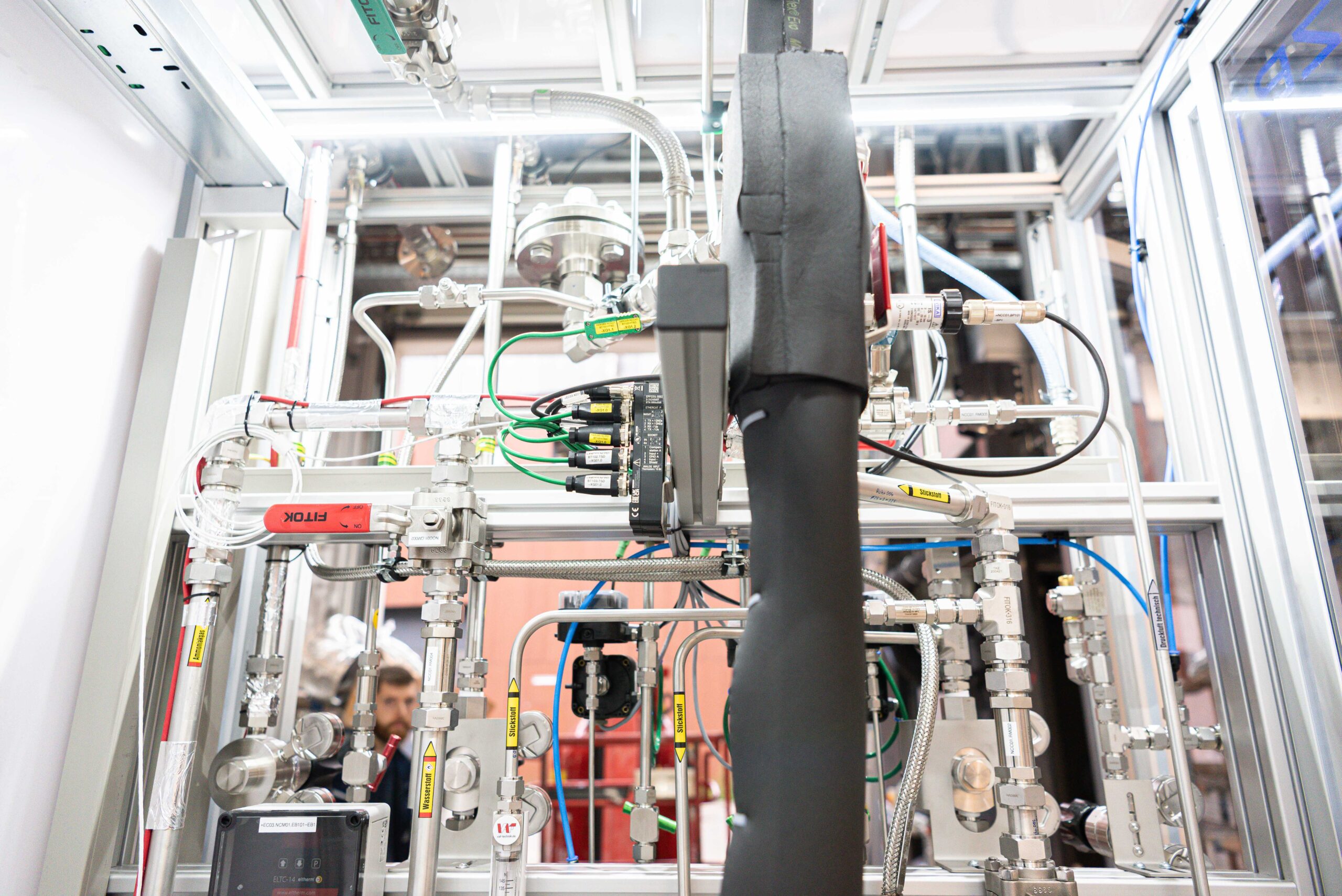
At ZBT, requirements from the Druckgeräterichtlinie (Pressure Equipment Directive), the Maschinenrichtlinie (Machinery Directive), and ATEX, among others, are taken into account and translated into safety concepts through HARA and HAZOP analyses. Implemented systems include, for example, nitrogen inerting, NH₃ and H₂ gas detection, mechanical ventilation, and multi-stage shutdown logic.

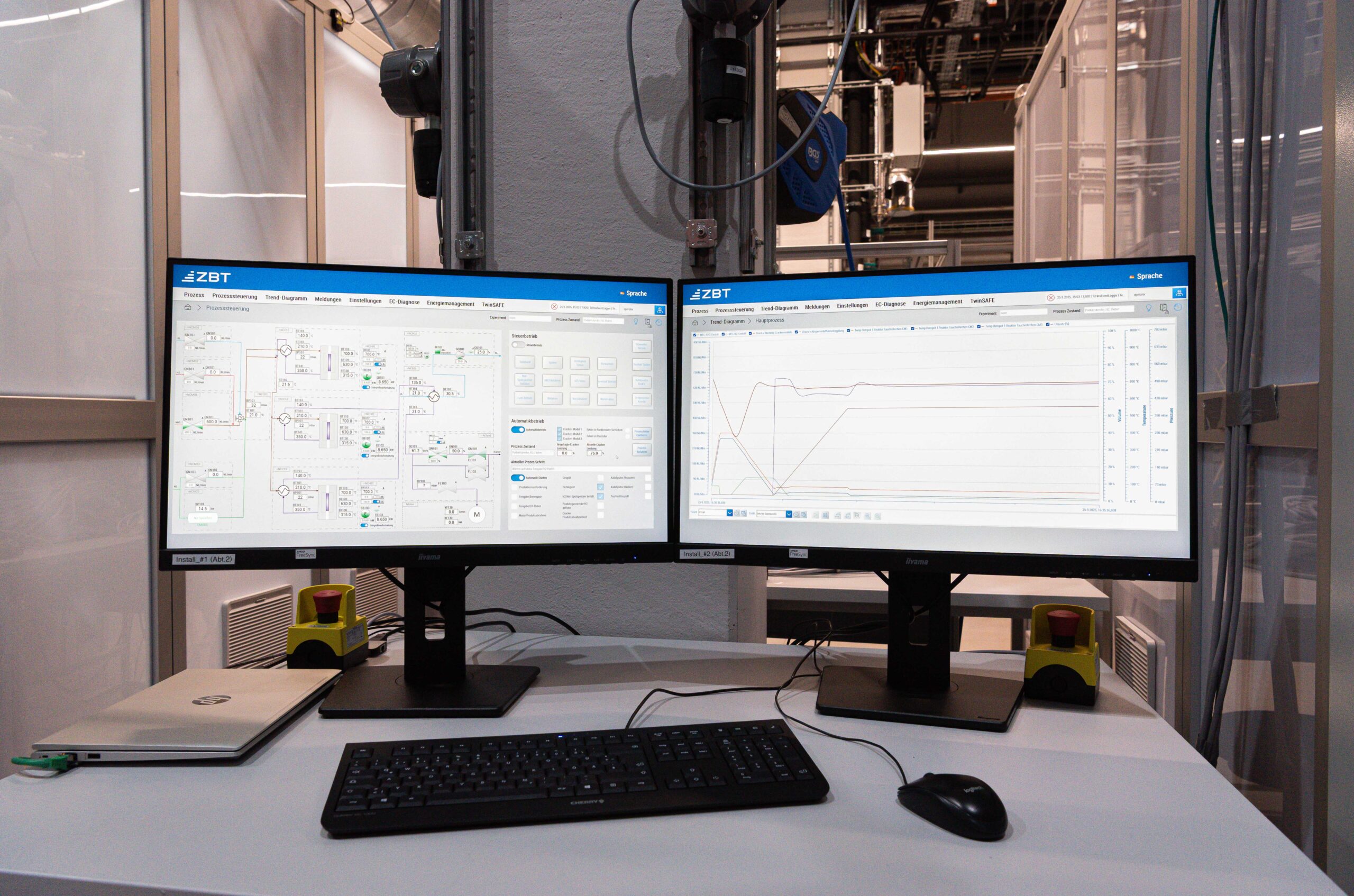
ZBT also specialises in the automation of complex cracker plants. A system that has been developed processes approximately 300 I/O signals and automates, among other things, purging, leak testing, preheating, and ammonia startup.

Test Infrastructure for Ammonia Technologies

The ZBT has test benches that specialise in development and qualification. A multifunctional test bench enables testing of everything from individual components to complete cracker systems in the range of 10 to 150 kW of hydrogen output and at pressures up to 11 bar absolute.

For catalyst development, three independently operable integral reactors are available, capable of operating at temperatures up to 800 °C, pressures up to 11 bar absolute, and space velocities up to 50,000 h⁻¹. In addition, online gas analysis and FTIR analysis are available for ammonia, hydrogen, NOₓ, and other gas components.
The ZBT’s ammonia infrastructure also includes a storage capacity of 4 tonnes as well as the supply of gaseous and liquid ammonia at pressures up to 20 bar and flow rates of up to 80 kg/h.

Development from individual components to the complete system

The ZBT supports companies and research partners in the development of ammonia technologies, from initial design through to the demonstrator phase. This includes:

  • Ammonia Cracker and Hydrogen Production from NH₃
  • Reactors, heat exchangers, and other components
  • Catalyst Screening and Long-Term Qualification
  • Material Selection for High-Temperature Applications
  • Process Simulation, CFD, and FEM
  • Scale-up and System Integration
  • Automation and Security Technology
  • Component, Prototype, and System Testing
  • Gas and Emissions Analysis

Through this approach, we combine experimental research, simulation, and plant development to further advance and validate ammonia technologies for specific applications.

Developing and Testing Ammonia Technology

Whether it’s a cracker, reactor, catalyst, or complete conversion system, ZBT provides support for the development, design, and experimental validation of ammonia technologies.

Contact

Head of the Ammonia Program Area

Dr. Lena Engelmeier

Highlights from Our Projects

Contact

CAMPFIRE Network Coordinator

Jens Wartmann
+49 203 7598-3336
Porträt von Jens Wartmann.

Contact

Head of Fuels and Processes Department

Michael Steffen
+49 203 7598-3033