RollPriCat – Production of graded catalyst layers in inkjet printing

MEAs for fuel cells: New roll-to-roll process applies catalyst ink directly to the membrane – from both sides.

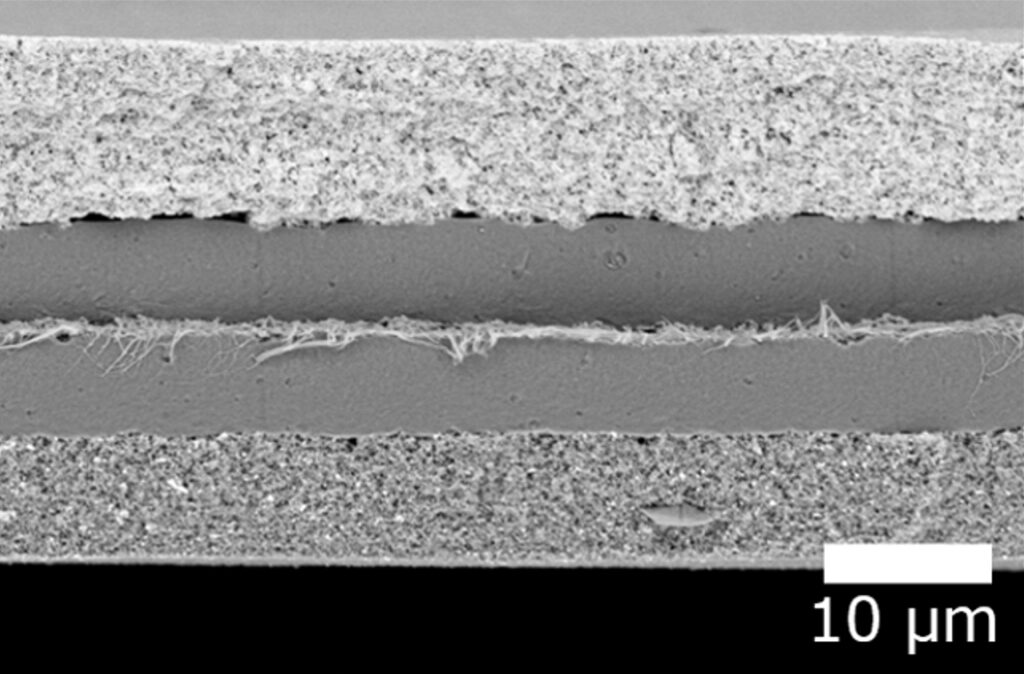
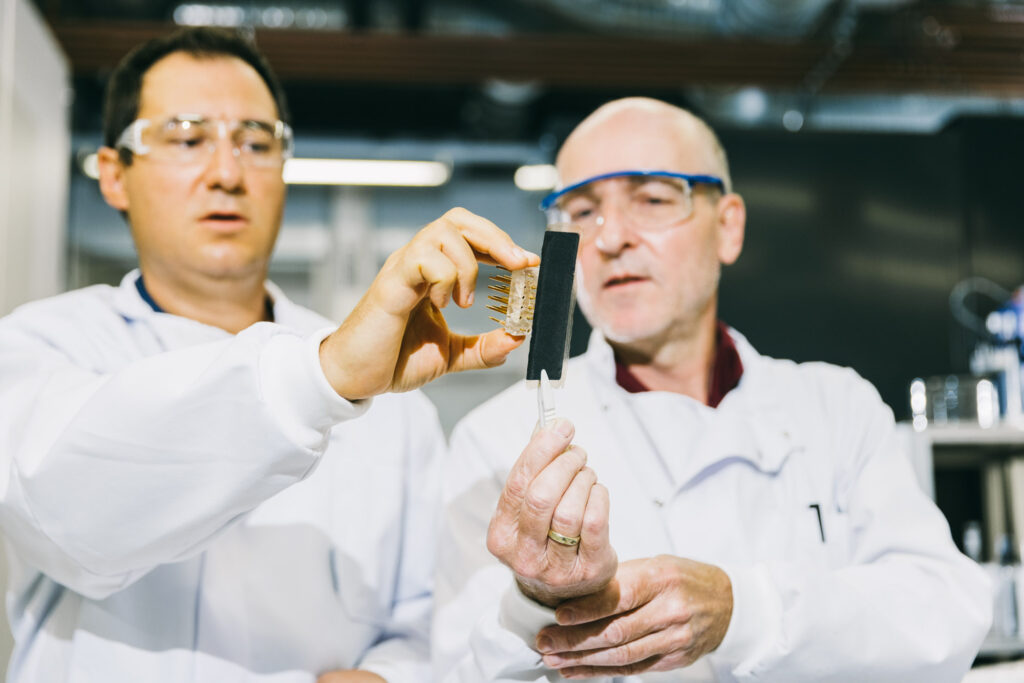
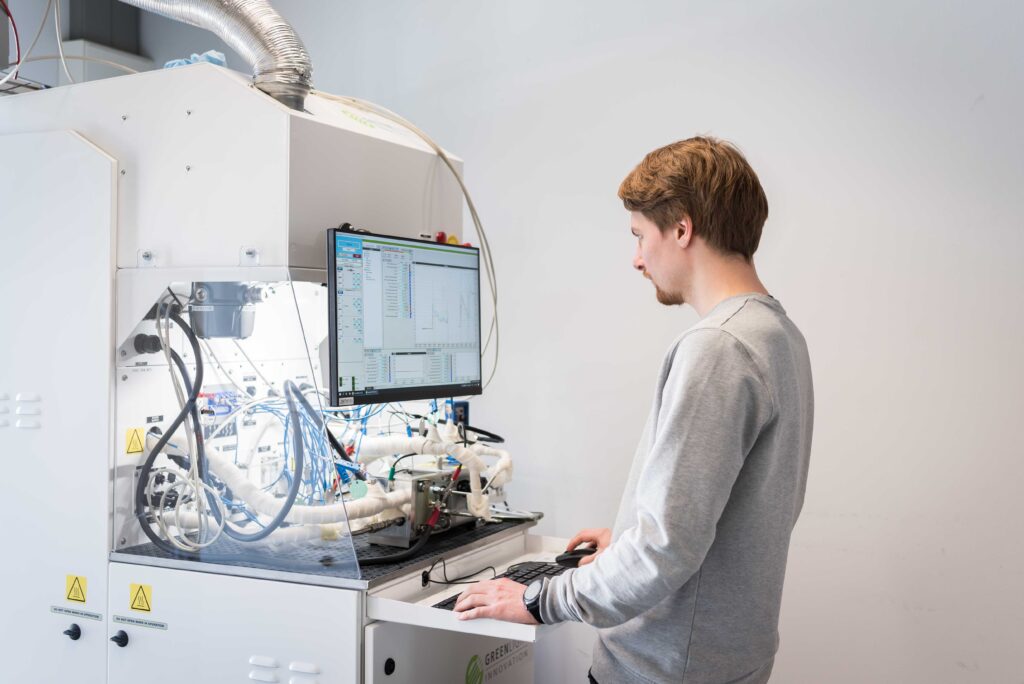
In the recently completed “RollPriCat” project, the Fraunhofer Institute for Electronic Nano Systems (ENAS) and the ZBT have jointly developed a novel process for the production of MEAs for PEM fuel cells in which catalytically active ink is applied directly to the membrane – on both the anode and cathode sides.

The aim of the project was to achieve a high activity of the cathode catalyst layer (CCL) with less platinum coating than before. This was to be ensured by a customised spatial structuring of the cathode catalyst layer using inkjet technology.
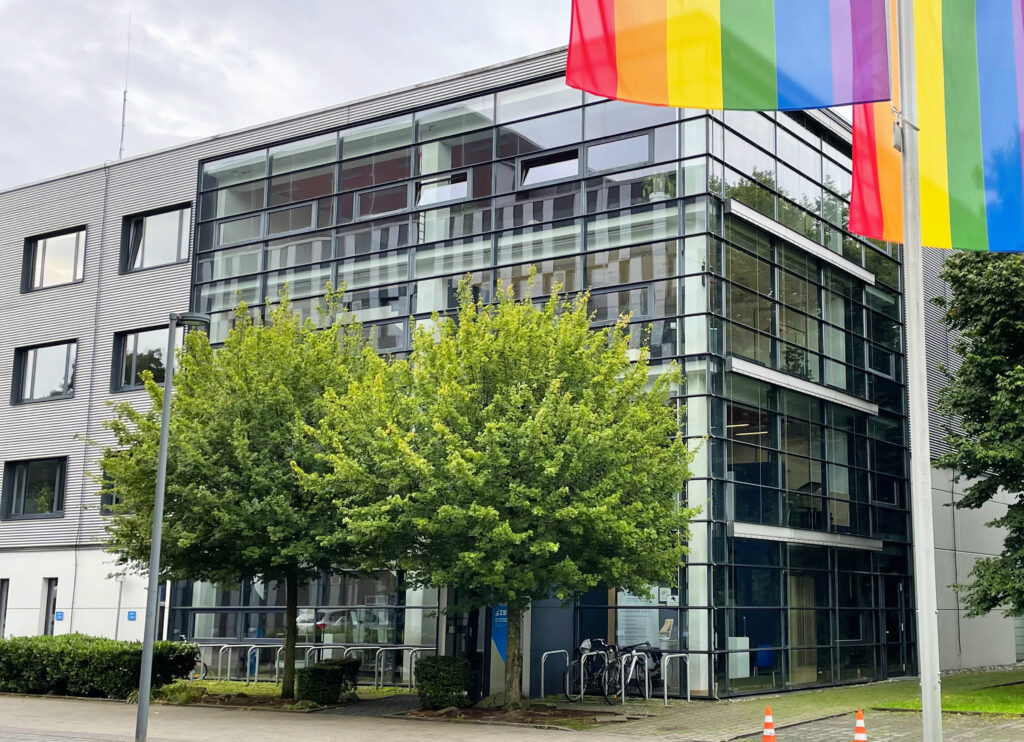
The entrance area of an institute building with a glass façade and two trees in front of it

Achievements

The most important results for overcoming key challenges in PEMFC:

  • New process for structured cathodes with graduated concentrations of platinum (Pt) and proton-conducting polymer
  • Raw material efficiency: Platinum is expensive and politically critical. Our method achieves excellent performance with a very low platinum loading of just 0.2 mg Pt/cm².
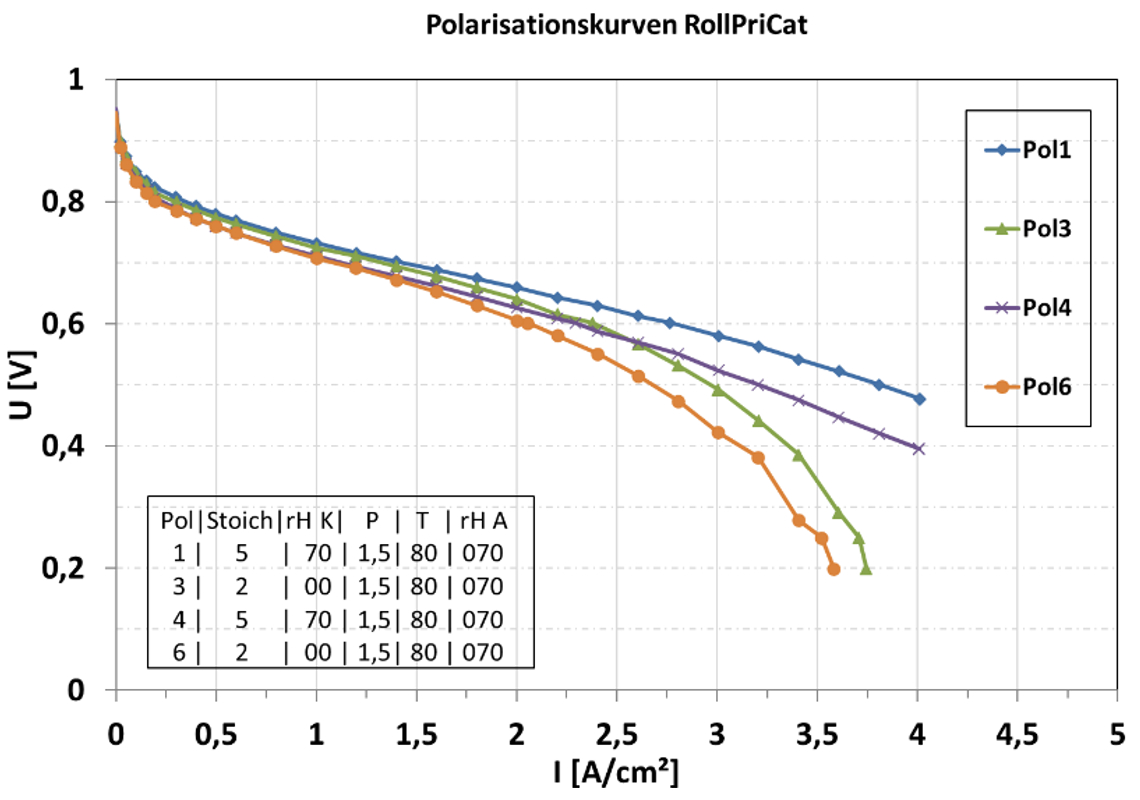
  • Performance: The optimised electrodes achieve a current density of 2.8 A/cm² at 0.6 V – with high efficiency under wet (pole 1) and dry (pole 3) operating conditions as well as high stability (pole 4 and pole 6) after accelerated ageing.
  • Scalable, robust production: The process is compatible with continuous roll-to-roll manufacturing, making it directly relevant for mass production.
Diagram showing four polarisation curves from the RollPriCat project

By optimizing both the PPS and the production technology, substantial price advantages can be achieved, especially with a small number of identical products. In this way, the project can both realise a cost-effective, sustainable process for the production of PEM fuel cells and provide important insights into the properties of structured PPS, a highly topical approach to reducing the Pt content in PPS.

In the “RolPriCat” project, the participants made great progress in terms of the performance and durability of fuel cells and achieved a milestone on the way to cost-effective, scalable solutions for an overall system for the use of renewable energies. By pushing the boundaries of fuel cell production further and further, we are contributing to the success of hydrogen technologies and the energy transition as a whole.

The project consortium wants to build on this success and is now planning the production of electrodes for water electrolysers in the follow-up project “grELjet”.

Project information

Project title: “RollPriCat – Efficient production of graded cathode catalyst layers using inkjet printing by direct coating of a polymer electrolyte membrane in a roll-to-roll process for use in PEM fuel cells”

Term: 1. March 2023 to 31. August 2025, completed

Project participants:
– Fraunhofer Institute for Electronic Nano Systems (ENAS)
– ZBT – The Hydrogen and Fuel Cell Center

Funding note: The research project was funded via the AiF as part of the program to promote joint industrial research and development (IGF) by the Federal Ministry of Economics and Climate Protection on the basis of a resolution of the German Bundestag.

AiF-FV number: 22764

Electrochemical Components Department

Further projects