Hydrogen filling stations, i.e. stations for filling cars, buses, lorries or filling stations for trailers, containers or ships, have one thing in common: their thermodynamic processes have a significant influence on the distribution of contaminants in the system. Water as a contaminant is a particular focus here.
ISO 14687 (DIN EN 17124) specifies strict limit values for 13 different substances/contaminants (excluding particles) for hydrogen used in fuel cells. The current limit for water is 5 ppm. Measurements by the ZBT at more than 20 filling stations show that water regularly occurs in concentrations that reach or exceed this value. This has an impact on the reliability and safety of the systems, for example due to condensation and freezing in pipes, storage tanks or fittings.
The investigations have also shown that the water distribution in the system is heavily dependent on pressure, temperature and operating strategy and that the values measured at the discharge point often only represent a snapshot. A comprehensive understanding of the dynamic processes is therefore necessary. Therefore, the HRS model is extended by the possibility to perform calculations with wet hydrogen in order to analyse the time- and location-resolved distribution of water in filling systems so that condensation, dew point shifts and enrichment processes can be determined. In other words, the gaseous loading of hydrogen with water is represented. In this way, accumulation and precipitation points as well as critical operating points can be identified and recommendations for action can be derived.

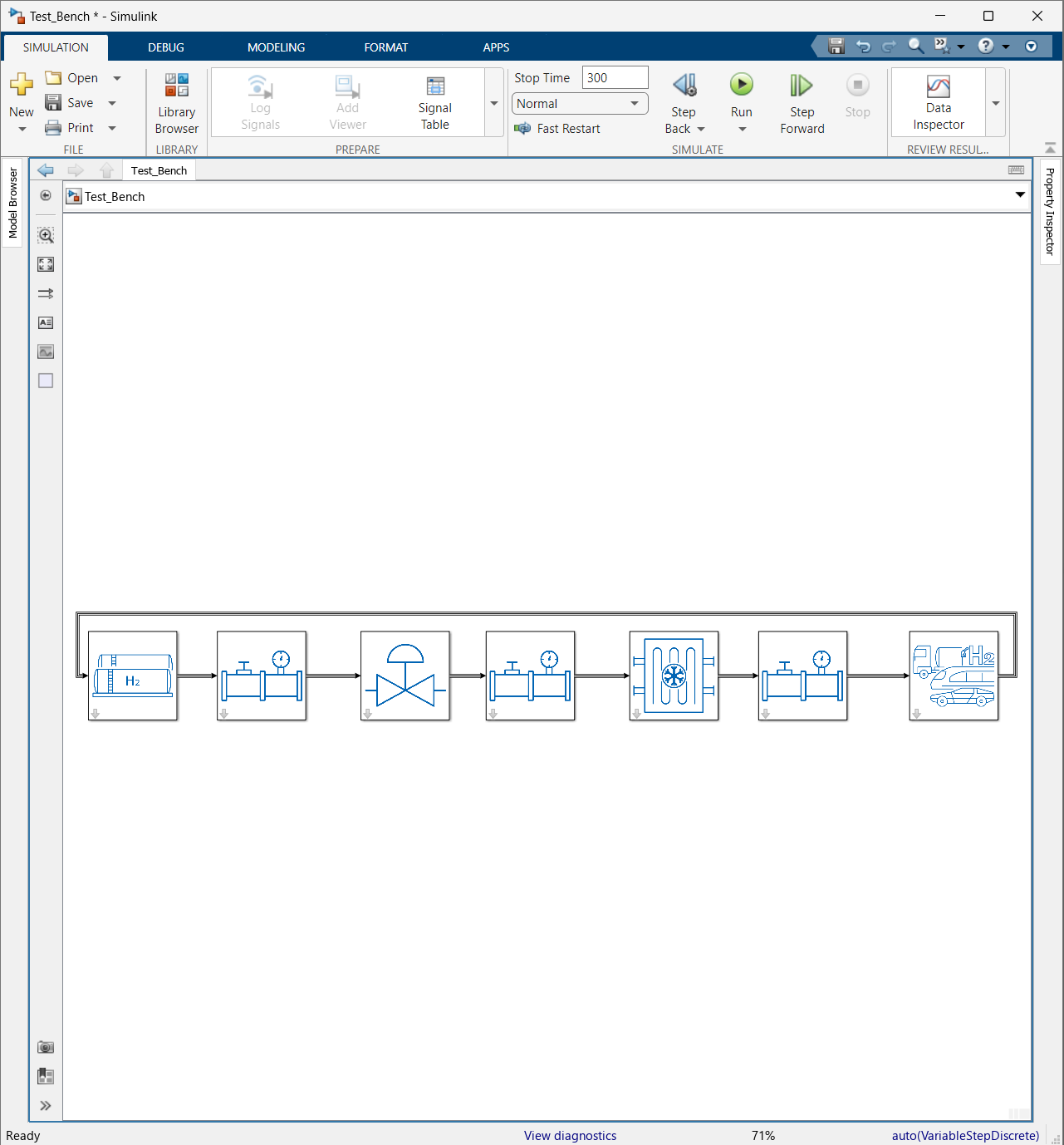
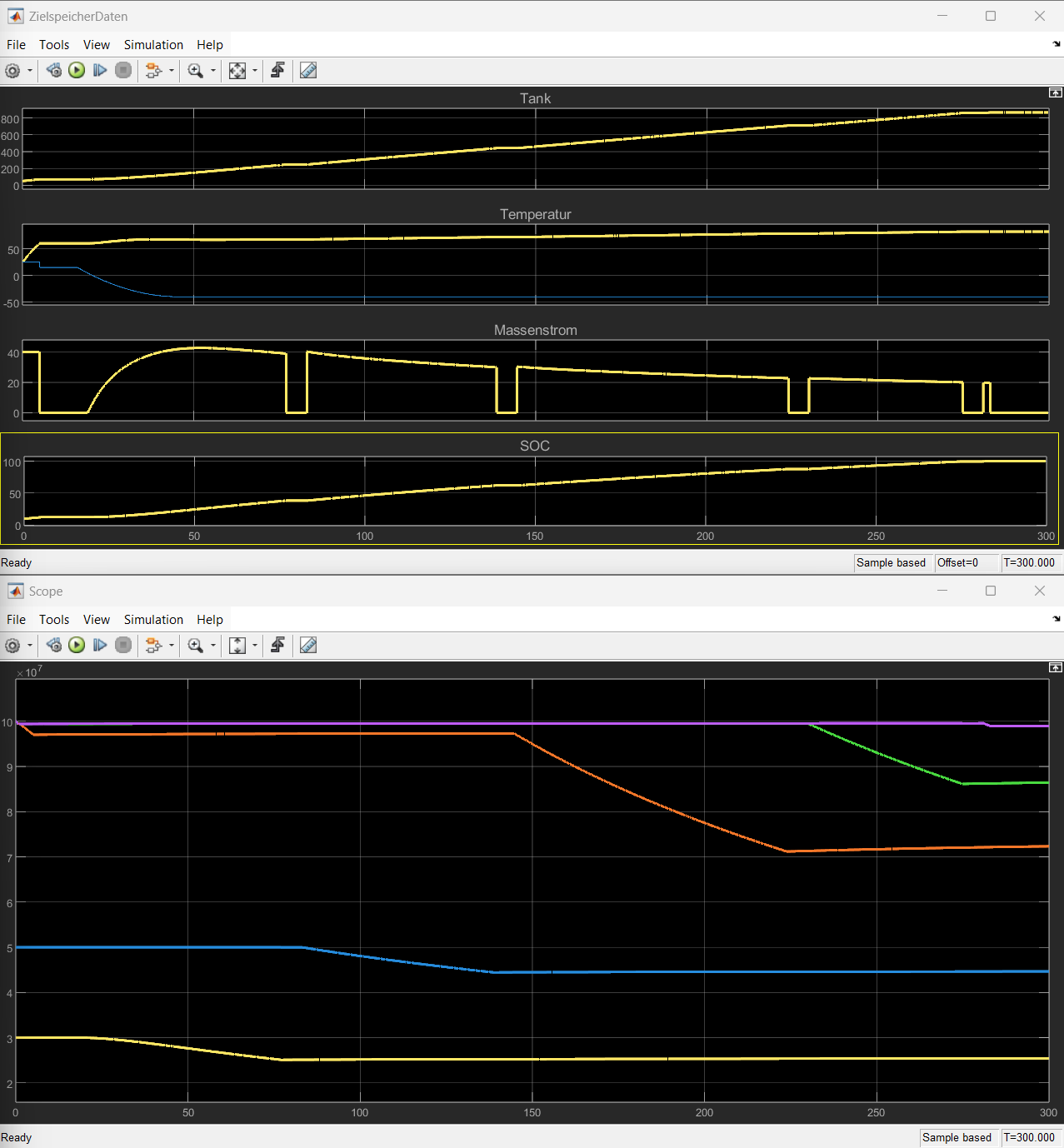

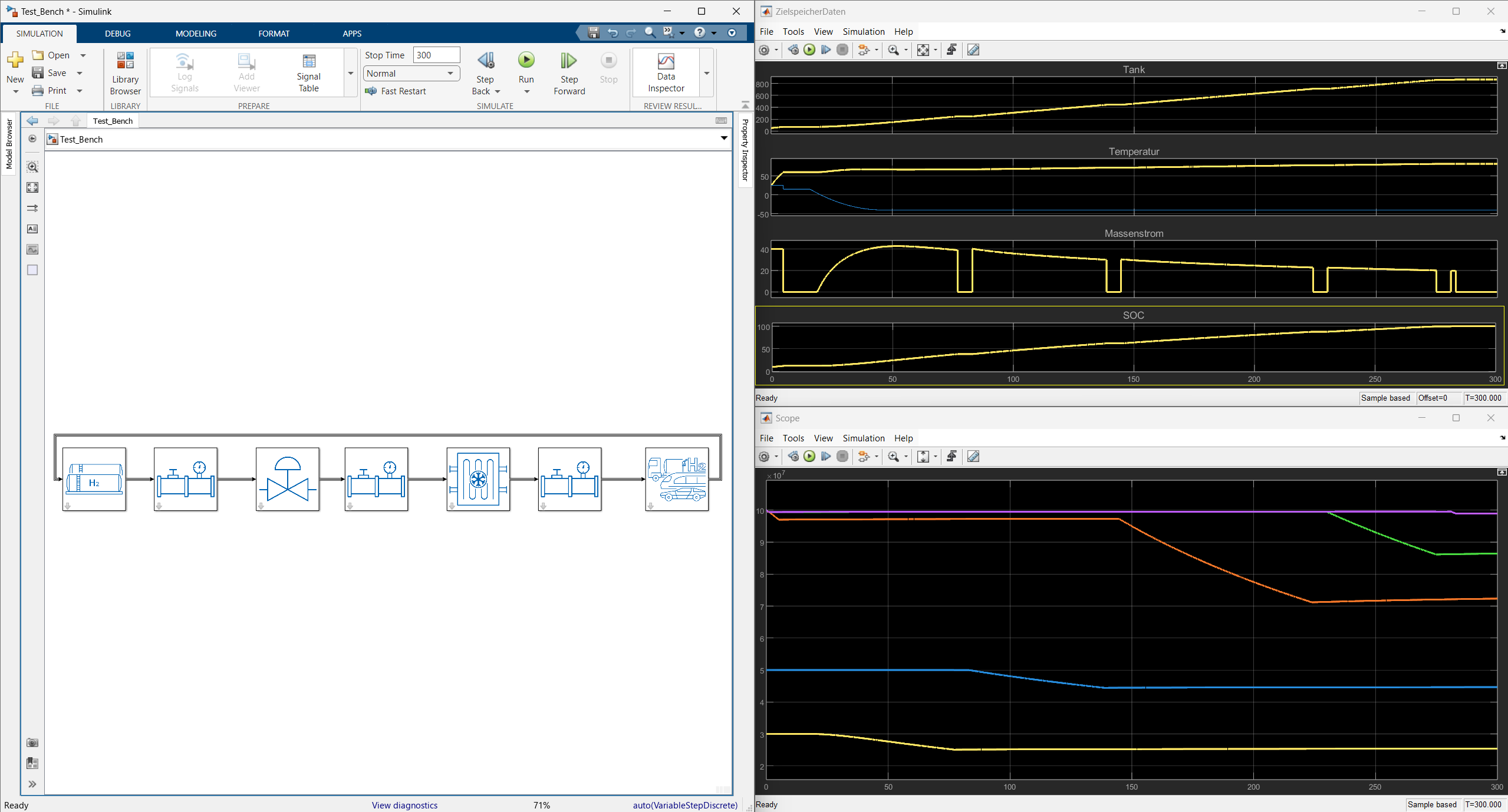 HRS-Modell offers a clear user interface. (click to enlarge)
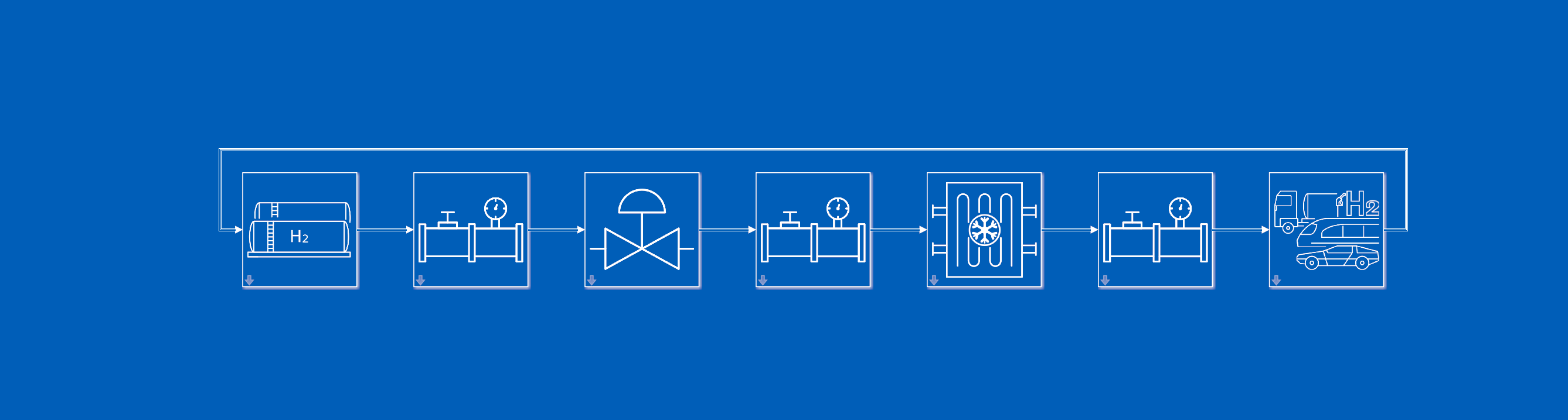 Process chain covered by the HRS-Modell (click to enlarge)
 HRS-Modell is a new, free simulation tool for calculating and modelling hydrogen filling systems.