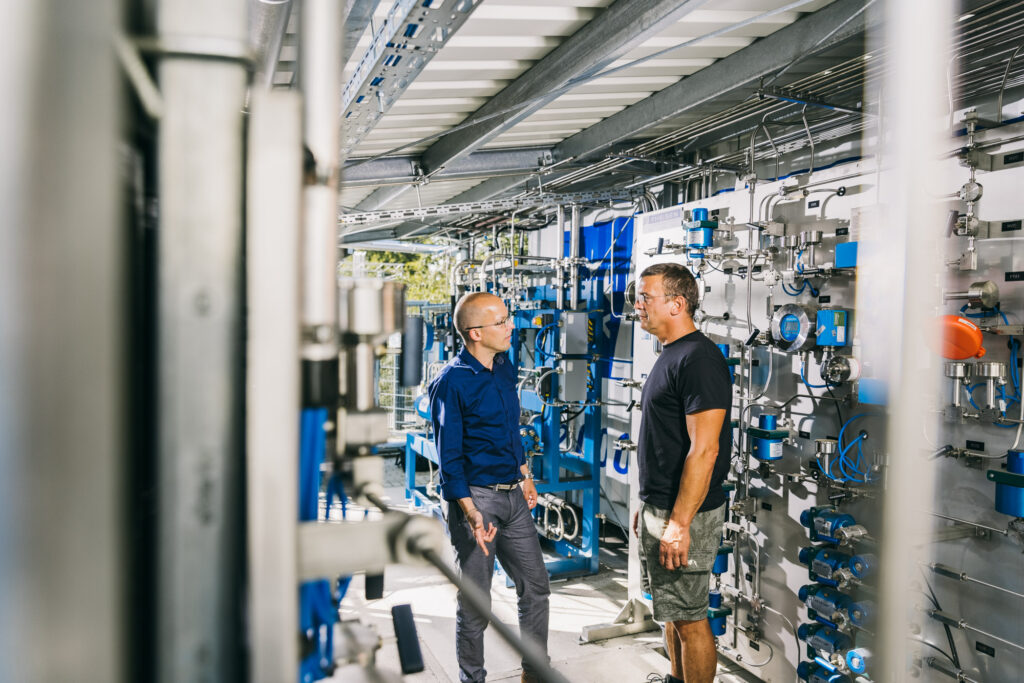
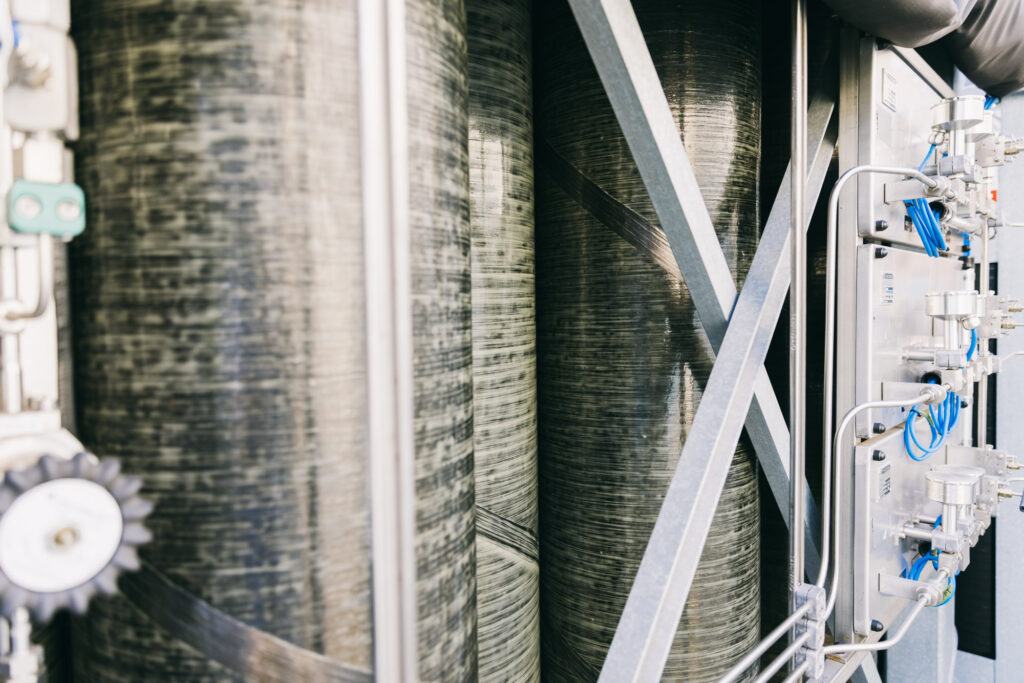
The joint project ‘FaeBS’ started on 1 November 2021, in which the ZBT is collaborating with partners BMW AG, Robert Bosch GmbH, Gemeinnützige KIMW Forschungs-GmbH, MANN+HUMMEL GmbH, Woco GmbH & Co KG and Zollner Elektronik AG. With its ‘New Vehicle and System Technologies’ guideline, the Federal Ministry for Economic Affairs and Energy (BMWK) is enabling the automotive industry to develop new innovative vehicle concepts, thereby creating a faster and larger technology hub and generating greater added value for Germany. As part of this economic stimulus package, the FaeBS project aims to develop and test prototypes of a powerful, innovative fuel cell system (FCS) that is compact and optimised for installation space, using innovative new components.
The aim of the project and the partners is to present a robust, compact drive concept with a 30% reduction in volume, which offers higher efficiency and better heat management than today’s hydrogen drive systems. The results and findings obtained will form the basis of expertise and decision-making for possible next development steps by the various partners and contribute to a possible vehicle offering towards the end of the decade.
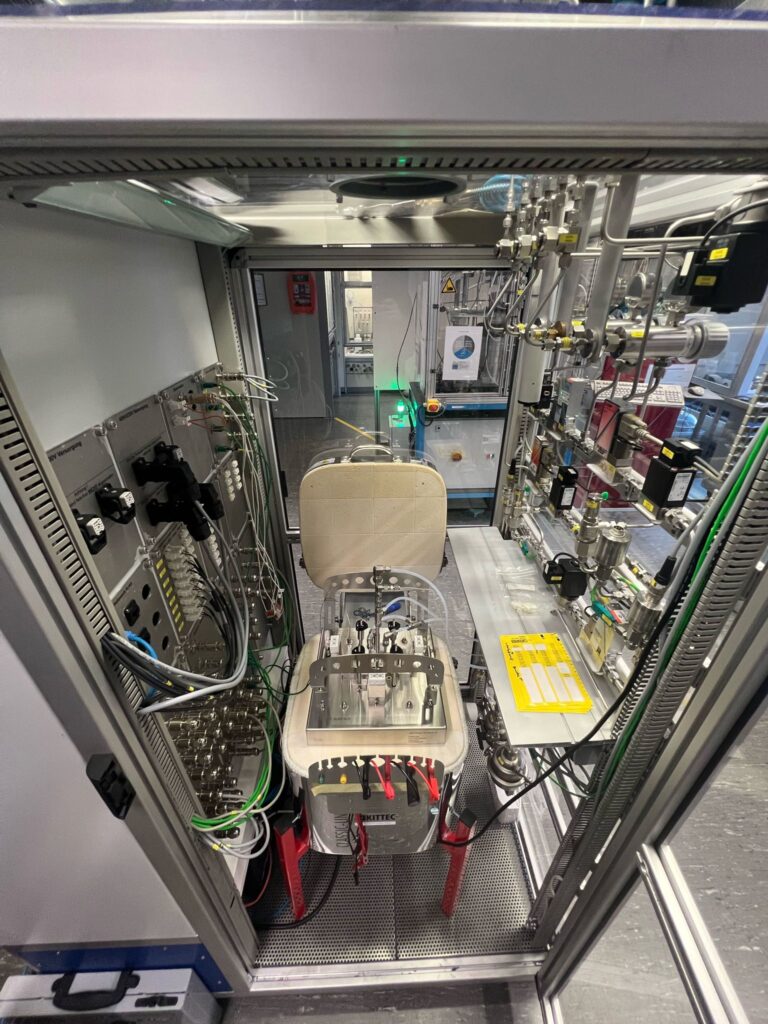
In the project, ZBT, together with the Lüdenscheid Plastics Institute (KIMW-F) and BMW, is responsible for the scientific work in work package 8 with the aim of further developing the qualification method for determining suitable materials for components in fuel cell systems. The findings and results obtained in the BMWi VALIDATE project serve as a basis for this work. To achieve the defined goals, ZBT is researching new innovative test setups and a novel contamination chamber concept that will make it possible to investigate the influence of materials in both dry and humid environments. Another focus at ZBT is on transferring the results of the single cell tests to the short stack level and achieving a comparison between ex-situ (KIMW-F) and in-situ (ZBT) methods. In addition, various electrochemical measurement methods and scientific evaluations of the degradation behaviour of the fuel cell during contamination are used to differentiate between organic and ion-based contamination.
Within the framework of the funded project, ZBT sees an opportunity to develop and establish an in-situ test method for the suitability of materials in fuel cell systems. The methodology should be compact, inexpensive and quick to implement. A standardised test methodology and suitability definitions for the use of materials in fuel cell systems will become increasingly important as series production progresses. A defined, scientifically supported qualification method offers OEMs and the entire supply chain the certainty of clearly defining the suitability criteria for materials and their manufacturing chains. The plan is to develop the method together with partners from industry and research with a view to creating a standardised test procedure.
Project partners:
- Robert Bosch GmbH
- Zollner Elektronik AG
- MANN+HUMMEL GmbH
- Woco Industrietechnik GmbH
- The Hydrogen and Fuel Cell Center ZBT GmbH – Fuel Cell Systems Department
- Non-profit KIMW Forschungs-GmbH