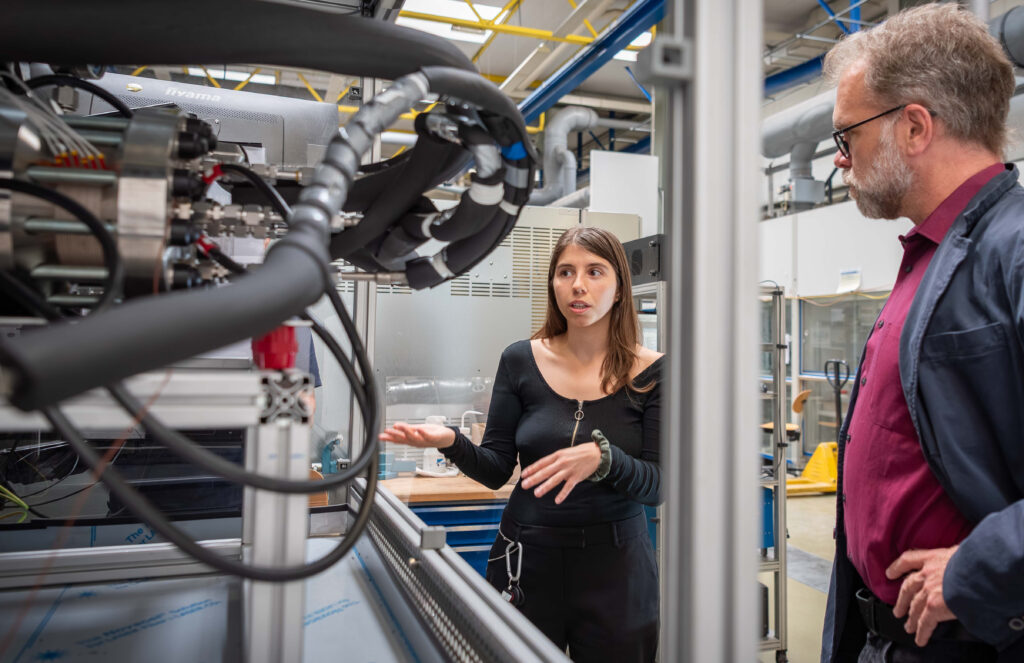
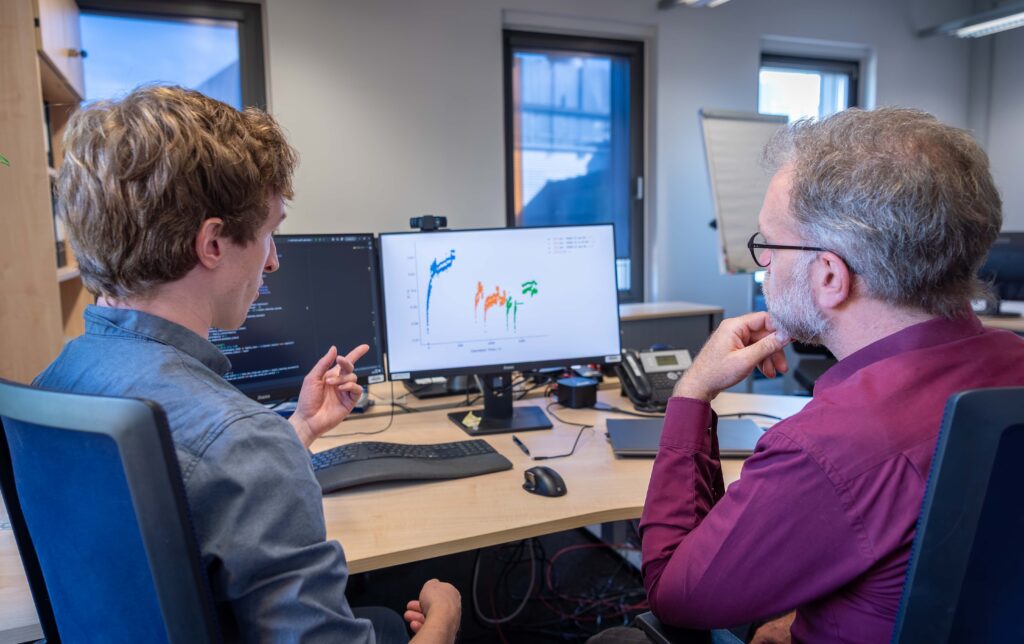
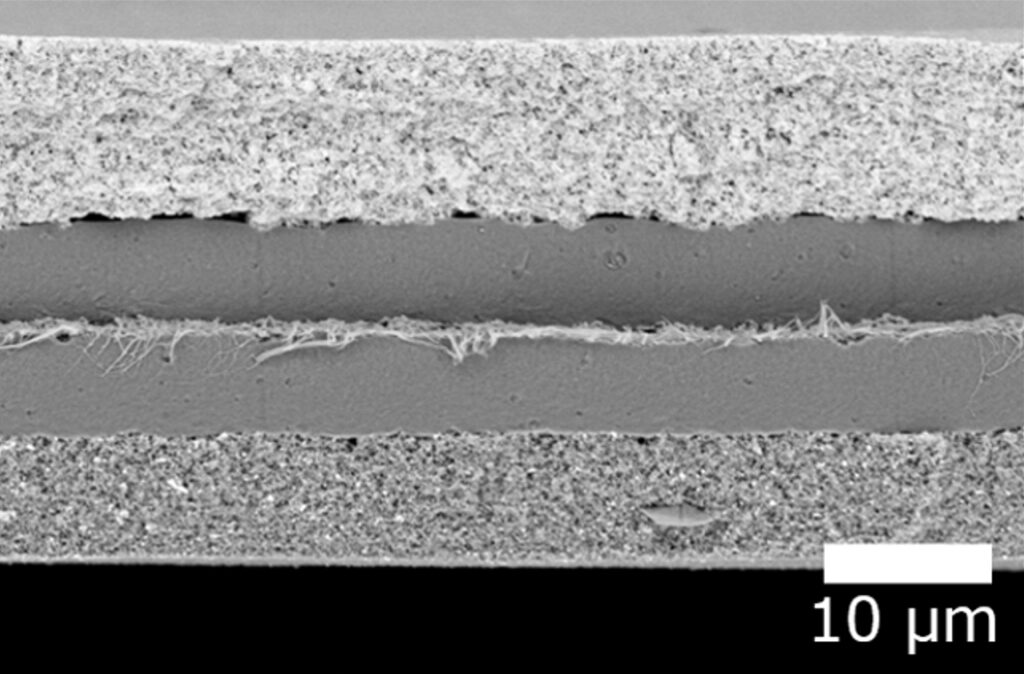
A simple and cost-effective catalyst production process is required for the large-scale manufacture of membrane electrode units for alkaline polymer membrane water electrolysis (AEM-WE). Therefore, this project aims to develop a physical vapour deposition process suitable for upscaling for coating porous, structured transport layers for AEM-WE with active components made of precious metal-free high-entropy alloy (HEA) materials. To this end, INP is developing plasma coating processes for the cathode and HEA decorations, for which the University of Rostock is producing HEA targets using high-energy ball milling and spark plasma sintering. The ZBT is developing a membrane electrode unit adapted to these cathodes and, by characterising the electrolyser in operation – in conjunction with further (electro)chemical and structural analyses at the three research centres – is enabling targeted improvement of the cathode and the deposition processes. The cross-project goal is to develop a scalable process for cost-effective, efficient catalysts for AEM-WE. Important interim results include: (1) high porosity (≥ 70%) of the cathode applied by atmospheric pressure plasma spraying with simultaneous long-term stability; (2) transferability of the stoichiometry of the HEA target to the sputtered decorations with specific surface areas of > 5 cm²/mg. SMEs active in plant engineering or coating will benefit from the process knowledge gained in the CatHEA project on the deposition of porous (HEA) layers. The findings on noble metal-free cathodes are also directly relevant for manufacturers of electrolysers and their components. Last but not least, all SMEs that use hydrogen as a process gas or heating gas will benefit in the long term from more efficient, cheaper processes for CO₂-neutral hydrogen production.
Source: