Start of development: Manufacturing flexibly configurable sensor fuel cells using 3D printing and electroplating technology
Test fuel cells with a reduced active area serve as central testing, inspection and monitoring elements in material development and prototype construction of components for fuel cell systems. In this way, they help to establish the hydrogen infrastructure.
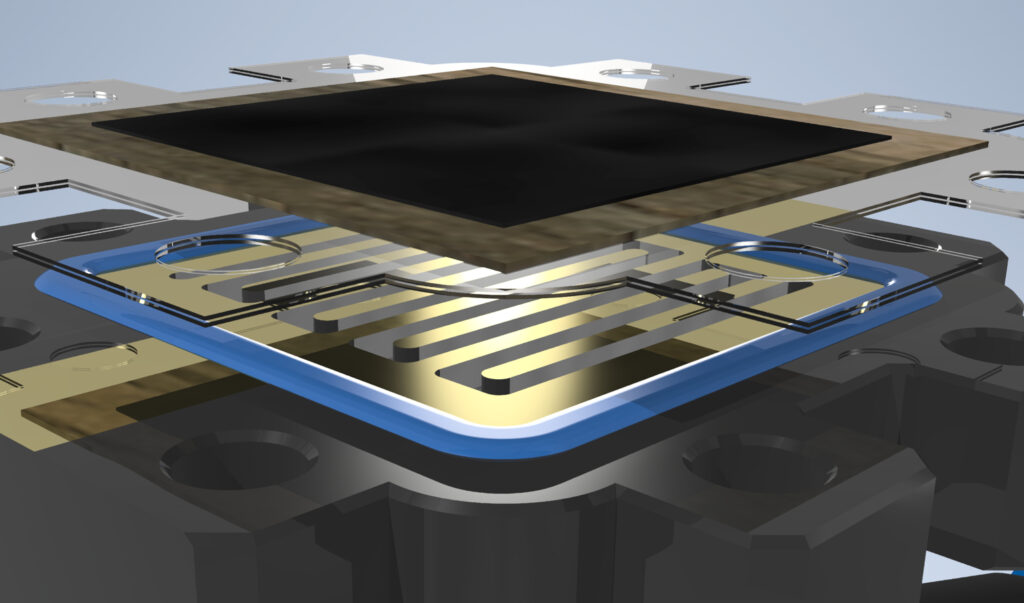
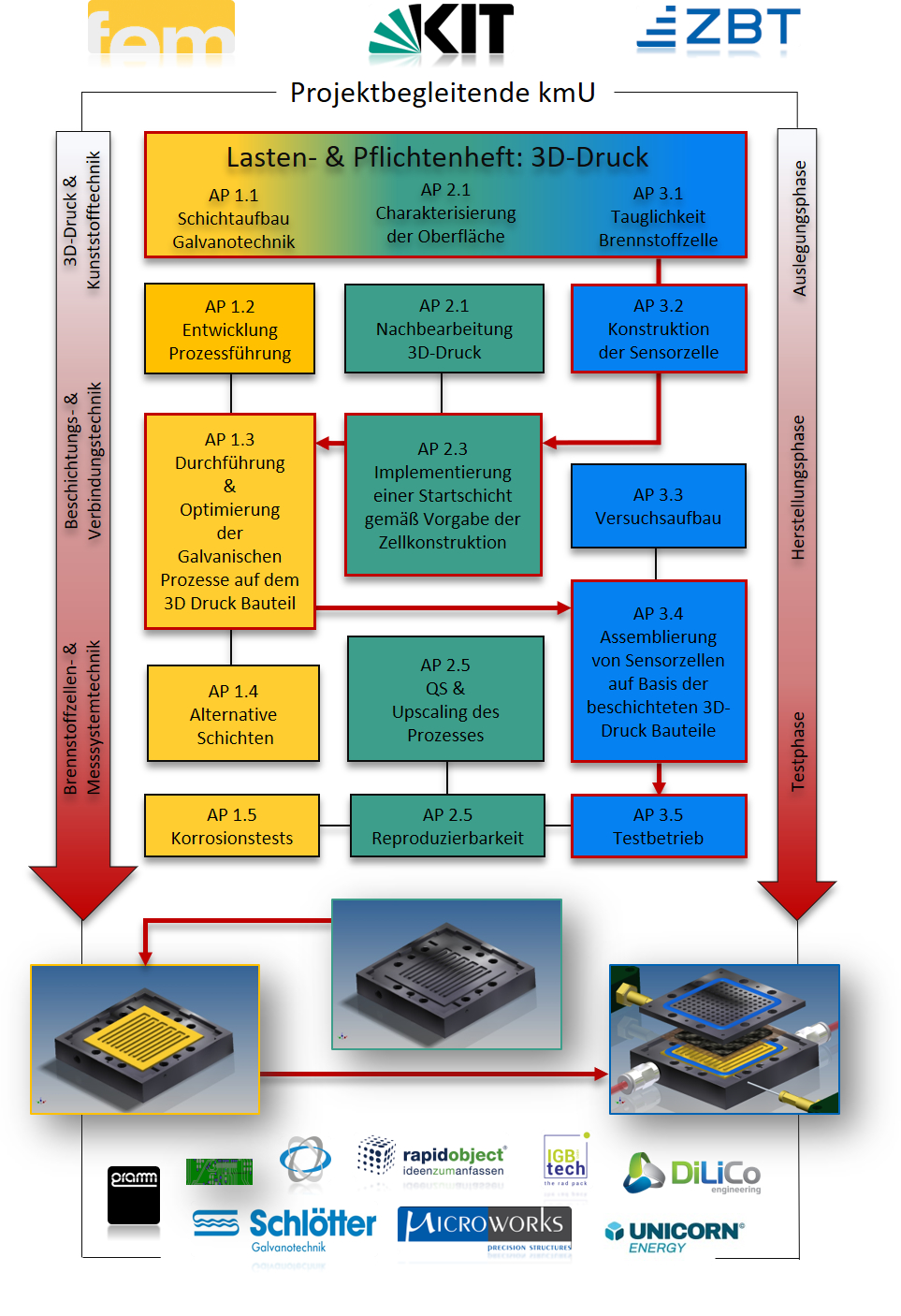
Image collection
Work program of the R&D partners for the process development (click to enlarge)
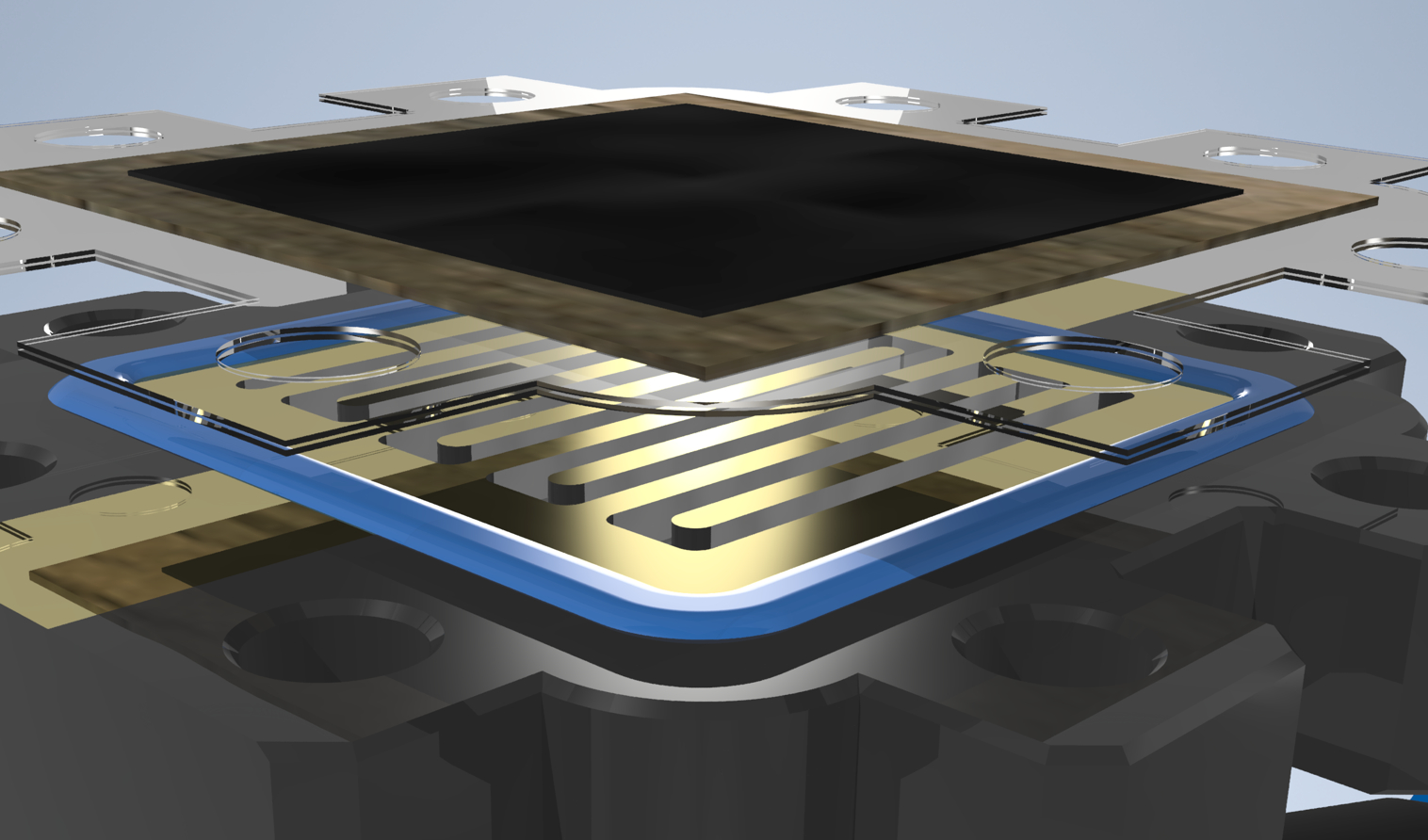 Early CAD model of the central sensor cell component in contact with the MEA (click to enlarge)