At International Conferences: ZBT Researcher Presents Advances in Conductive Polymer Compounds

The ZBT presented new research findings on the processing of highly filled polymer compounds at the 41st International Conference of the Polymer Processing Society (PPS-41) in Italy and the 22nd European Conference on Composite Materials (ECCM22) in Norway.

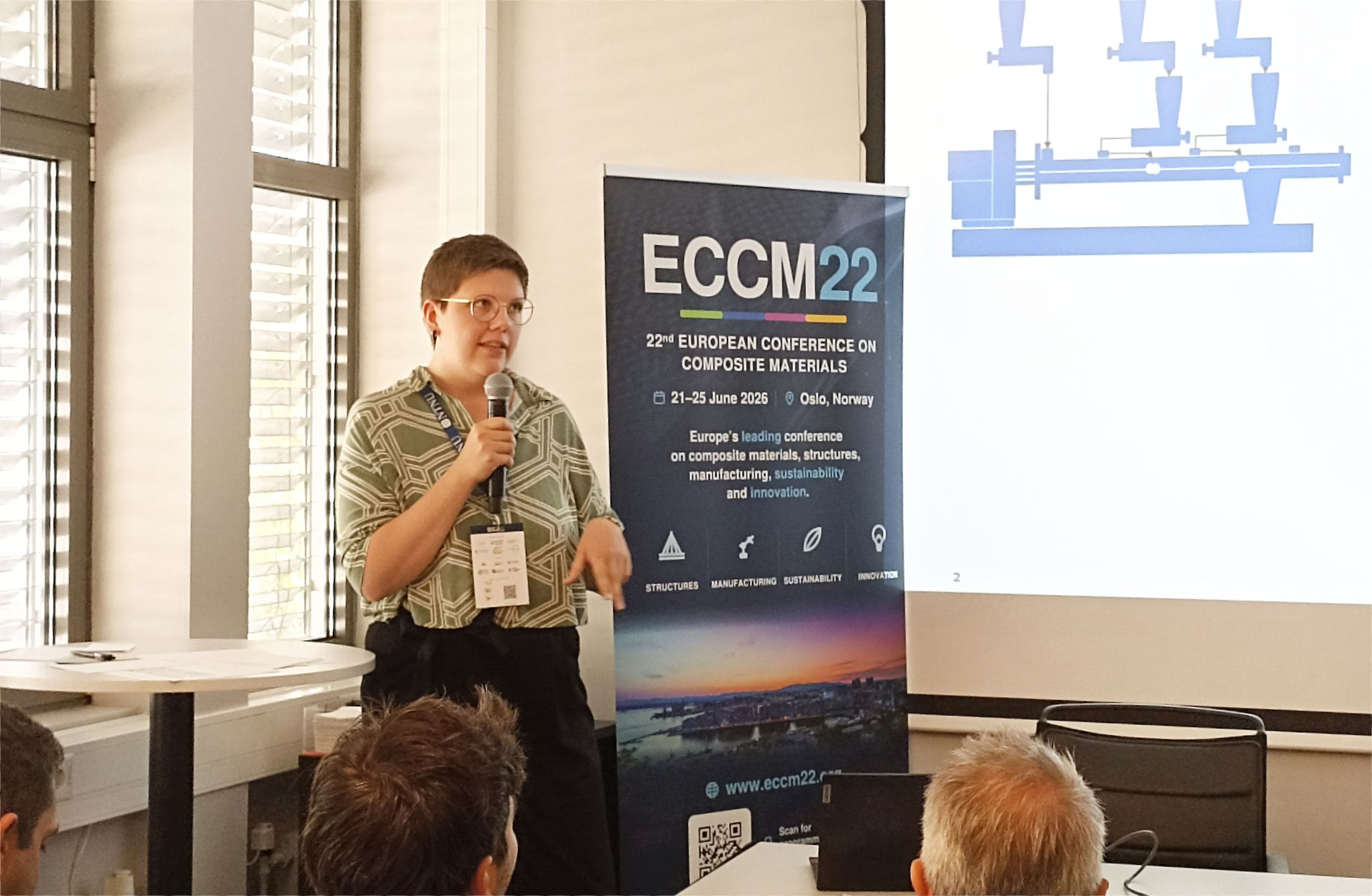
The presentations given by ZBT researcher Elisabeth Verweyen in Paestum near Salerno and in Oslo focused on materials and manufacturing processes for conductive bipolar foils and plates used in electrochemical energy systems such as low-temperature PEMfuel cells and electrolysers.
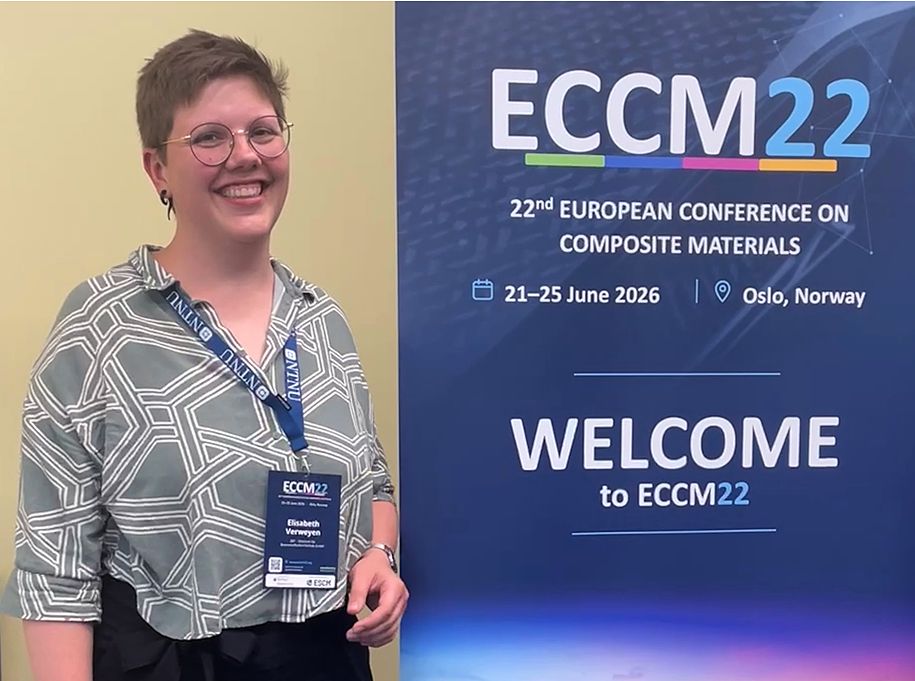
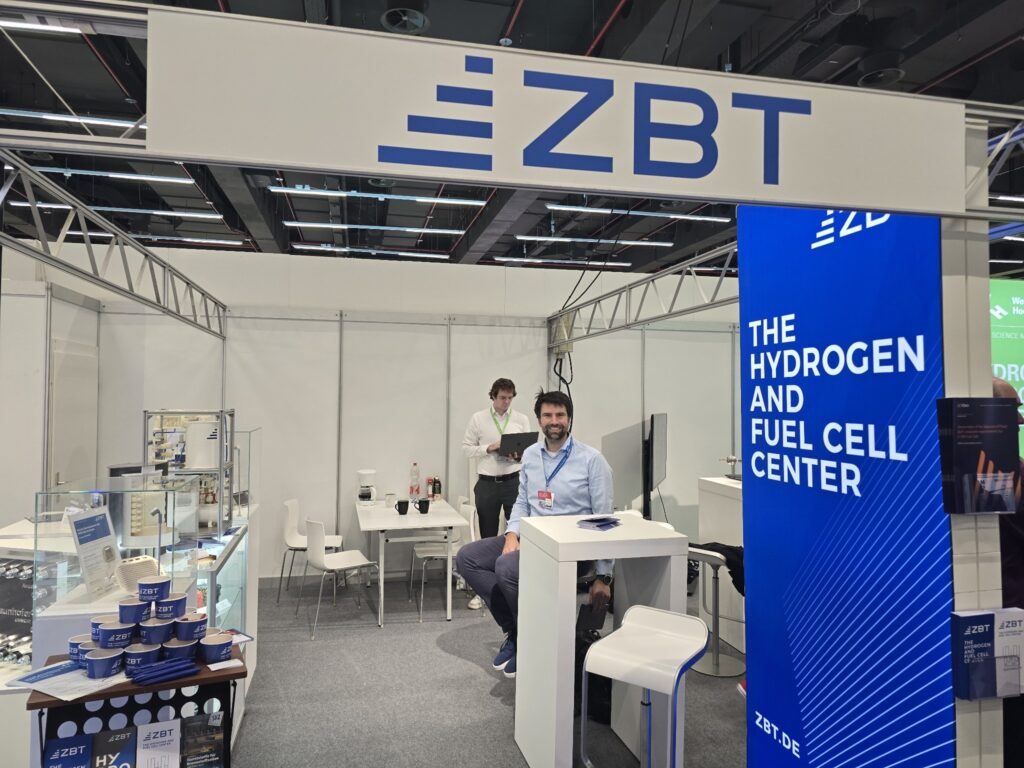
Konferenzteilnehmerin neben einem Konferenzplakat

Challenges in Processing Highly Filled Polymer Compounds

Highly filled polymer compounds are considered a promising alternative for the production of conductive components. However, their high content of conductive fillers places special demands on the compounding and extrusion processes. To better understand these relationships and further develop the materials in a targeted manner, the ZBT is investigating both the material composition and the process control during twin-screw extrusion.

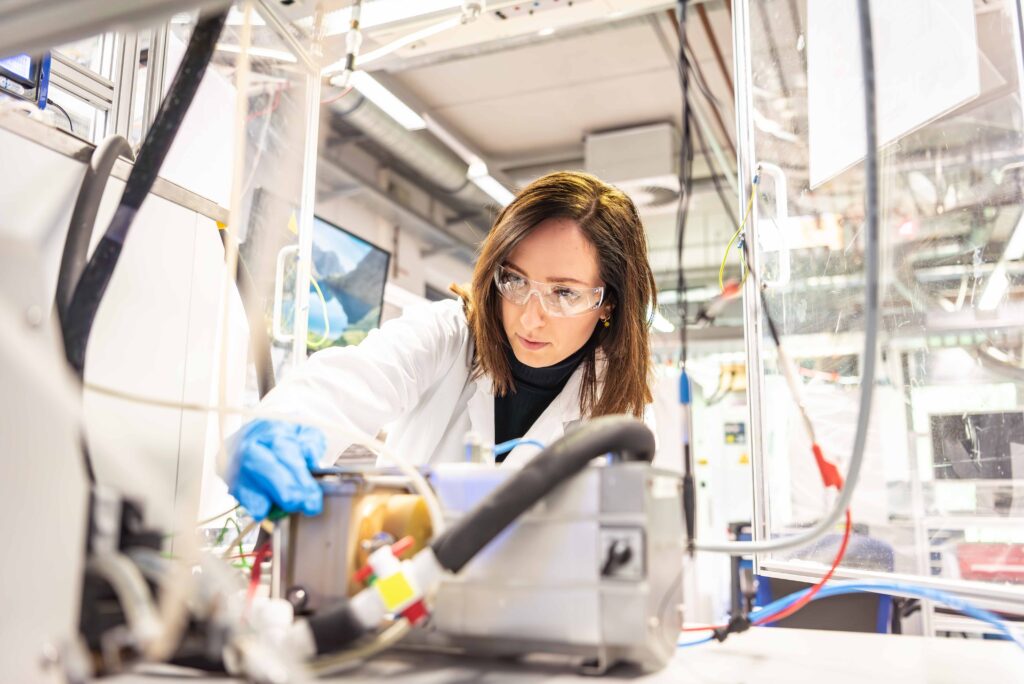
Insights into the compounding process: Sampling during extrusion

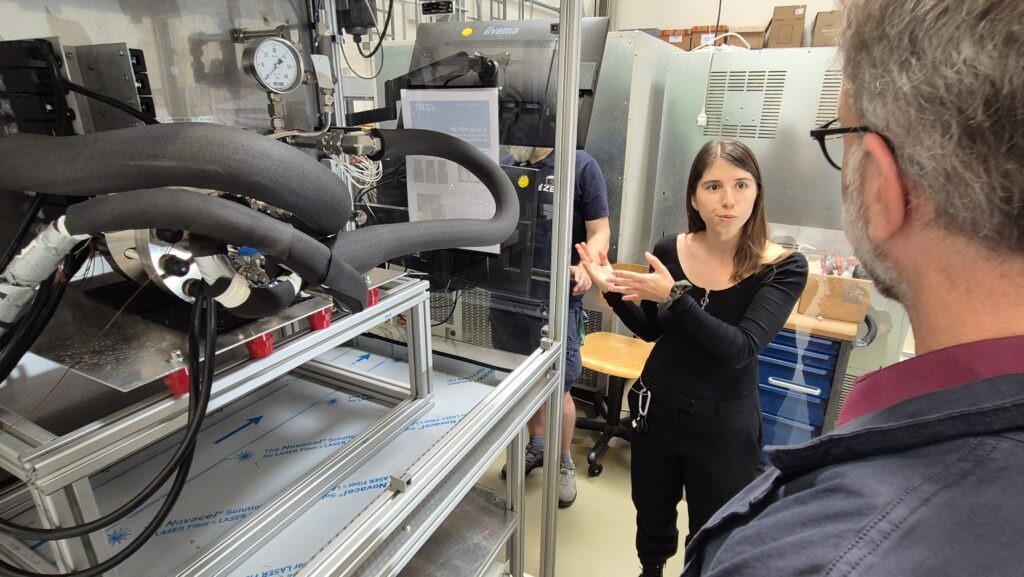
As part of the IGF project TheBiPo, continuous manufacturing processes for thin conductive bipolar films were developed. A key focus of the work is the analysis of the compounding of highly filled polymers in a co-rotating twin-screw extruder with a clamshell barrel.

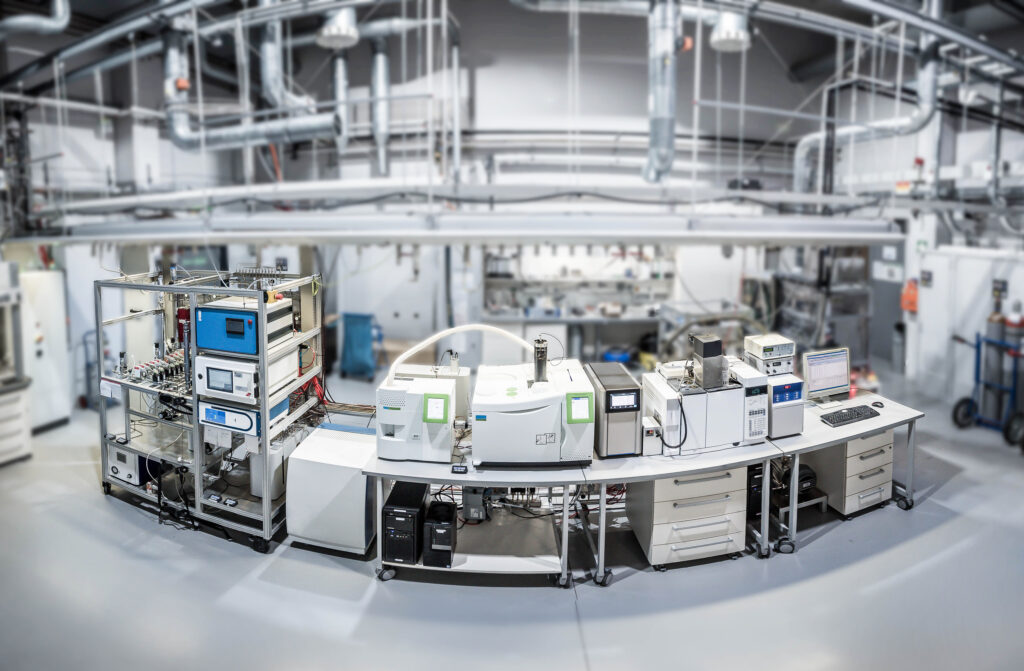
This pilot plant makes it possible to take samples at defined positions along the length of the screw while the extrusion process is underway. This allows for a detailed investigation of the local compounding mechanisms as well as the influence of individual process steps on the resulting material properties.

Learn more about TheBiPo project

The Effect of Graphite and Carbon Black on Material and Process Properties

In the GRETE project, Elisabeth Verweyen, Tim Sulewski (Aachen University of Applied Sciences), and Dr. Marco Grundler (ZBT) analysed highly filled polypropylene compounds, each with a filler content of 54% by volume. The ratio of graphite to carbon black was systematically varied.

Extensive thermoanalytical, rheological, electrical, and mechanical tests show that while a higher carbon black content improves electrical conductivity, it simultaneously increases viscosity and places greater demands on the extrusion process. The results help identify suitable material formulations and stable process windows for the production of conductive compounds.

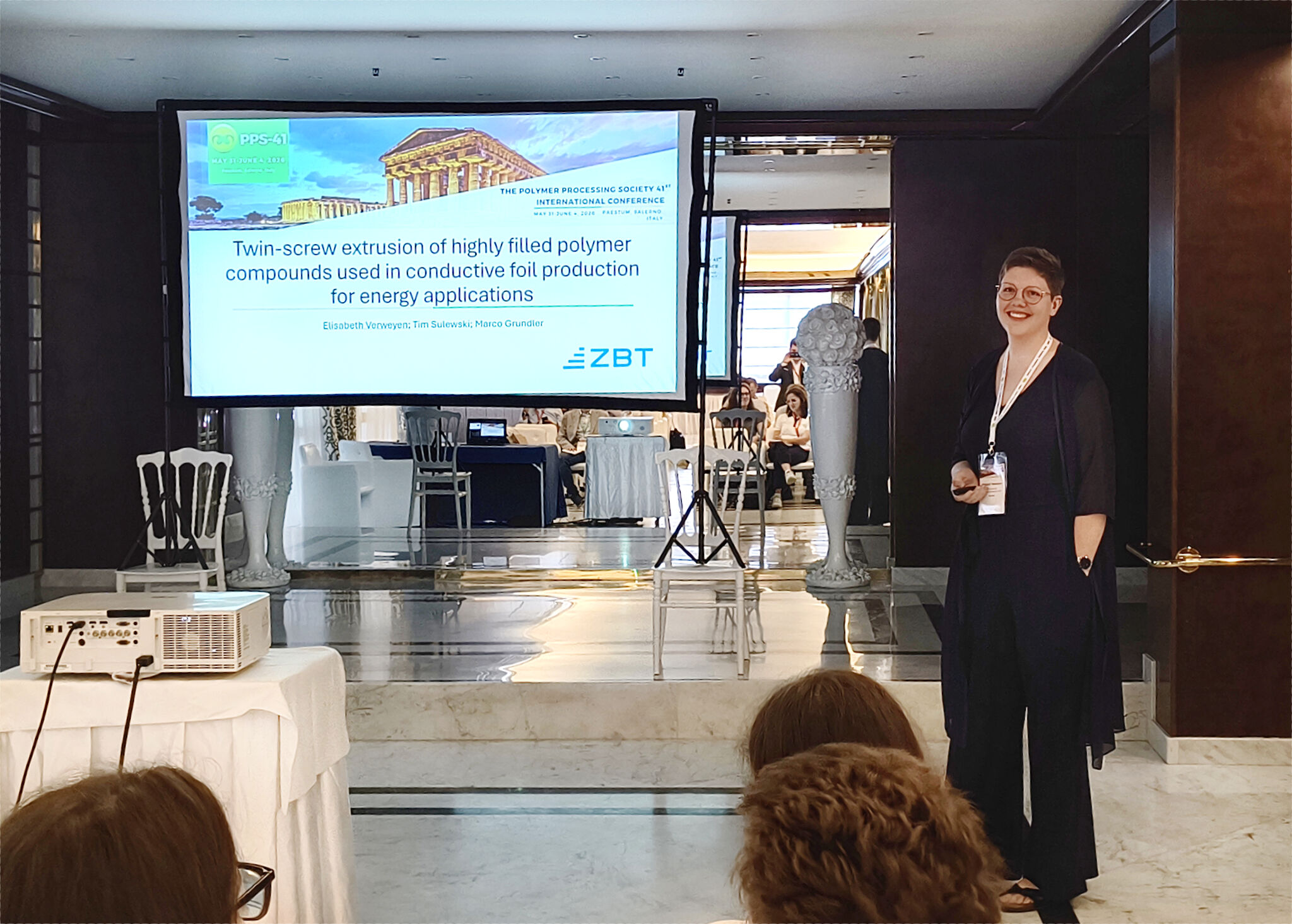
eine Frau hält einen Vortrag auf einer Konferenz
More about the GRETE project

From Basic Research to Industrial Manufacturing

The work of the IGF project TheBiPo builds on these findings. The goal of the project was to develop continuous manufacturing processes for thin, conductive bipolar foils for low-temperature PEM fuel cells. The investigations show that understanding the local processes during compounding is an essential prerequisite for the reproducible production of high-performance bipolar foils. The findings from the project are now being incorporated into the BMWK-funded follow-up project ProBiMa, in which the industrialisation of the continuous extrusion of conductive bipolar foils is being further advanced in collaboration with an expanded industrial consortium.

Through its presentations at PPS-41 and ECCM22, the ZBT shared its research with an international audience of experts in the fields of polymer processing, composite materials, and electrochemical energy technology. This exchange with academia and industry supports the transfer of research results and strengthens the further development of innovative materials and manufacturing processes for future energy systems.

Contact

Project Manager
Research Associate
Fuel Cells and Stacks Department

Elisabeth Verweyen
+49 203 7598-1172

Media
More news