Project start: Development of a multi-way cathode valve for fuel cell systems

Multi-way valves could reduce the number of valves in the cathode path of fuel cell systems, with advantages especially for mobile applications. ZBT and Rheinmetall-Pierburg want to develop such a valve in order to reduce the use of materials and resources and the costs involved in fuel cell production. ZBT is focusing on simulation, material testing, and functional and endurance testing.

Fuel cell systems are complex structures and correspondingly expensive to manufacture. In mobile applications, they should also be as light as possible. There are still many areas where adjustments can be made to make fuel cell systems cheaper, lighter and more durable. ZBT and automotive supplier Rheinmetall-Pierburg have identified the valves on the cathode side, i.e. the oxygen side of fuel cells, as one of these areas.

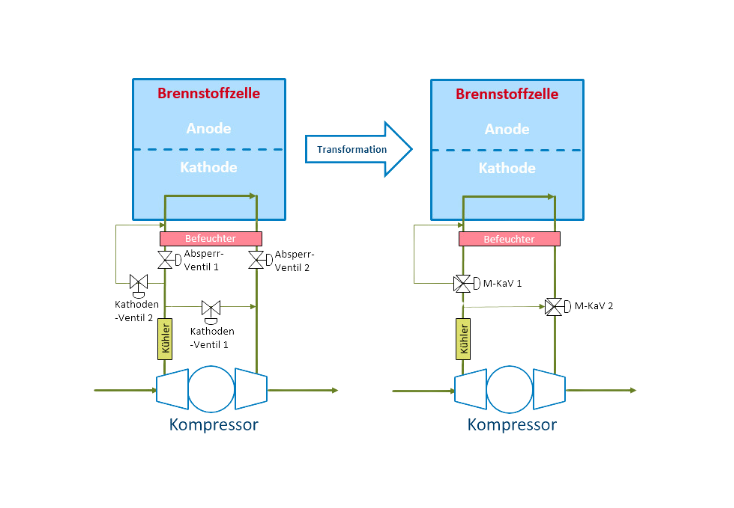
As part of the recently launched M-KaV joint project, a functionally integrated multi-way valve for the cathode path of fuel cell systems is now being developed. Such a valve would allow a significant reduction in the number of valves required in the cathode path, bringing with it further advantages:

  • Reduction in the necessary tubing and cabling
  • Reduction in assembly costs
  • Simplified packaging and reduced installation space
  • Shortening of media paths and thus reduction in flow losses
  • Lower material usage with weight reduction, lower overall costs
  • Extension of service life
Schematische Gegenüberstellung einer traditionellen Ventilanordnung mit der eines Mehrwege-Kathodenventils.

Specific challenges in development result from the close interaction between the valve and the fuel cell. This places particular stresses on the valve and, at the same time, places particularly high demands on the choice of materials, as washouts from the valve could have serious consequences for fuel cell operation. To minimise this risk, the project includes extensive material studies and the development of suitable test cycles.

The overall goal of the project is to develop the valve for use in various fuel cell systems, such as PEM, SOFC and AFC. The valve should be adaptable to the respective system. This should reduce investment and maintenance costs, which in turn will give fuel cells a further boost in competitiveness.

Our project goals at ZBT are:

  • Development of a multi-way valve for regulating the air and exhaust air mass flows in the cathode path of a fuel cell
  • Integration of several functions in one actuator
  • Validation of a simulation model of the valve and simulation of the entire fuel cell system with integrated valve
  • Identification of suitable materials for fuel cell operation with a focus on service life
  • Test operation with a focus on tightness/diffusion
  • Verification of continuous operation under conditions typical for fuel cells
  • Reduction of material and resource use as well as production costs
 

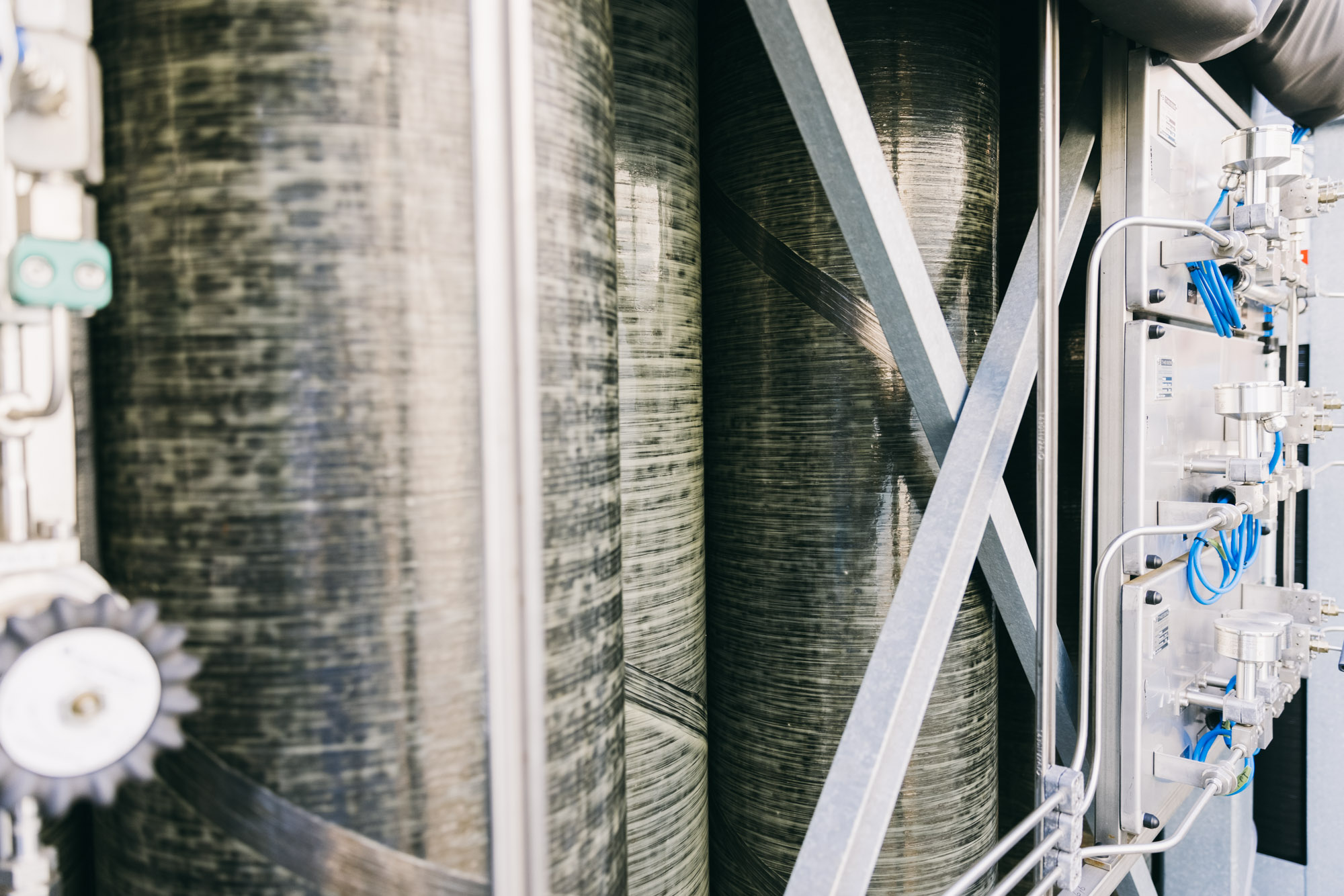
Wasserstoffbehälter und Armaturen

Background

As part of the programme ‘Research, development and innovation measures within the framework of the National Innovation Programme for Hydrogen and Fuel Cell Technology Phase II’ of the Federal Ministry of Digital and Transport (BMDV), new solutions are being developed to further reduce CO2 emissions in the mobility sector, improve fuel cell systems in terms of service life and reduce costs.

NIP II – R&D – Consortium: Multi-path cathode valve
Sub-project: Simulation of system dynamics and material qualification (M-KaV)

Funded by: Federal Ministry of Digital and Transport
Funding code: 03B11038B
Project duration: 1 December 2023 – 30 November 2026

Fuel Cell Systems Department


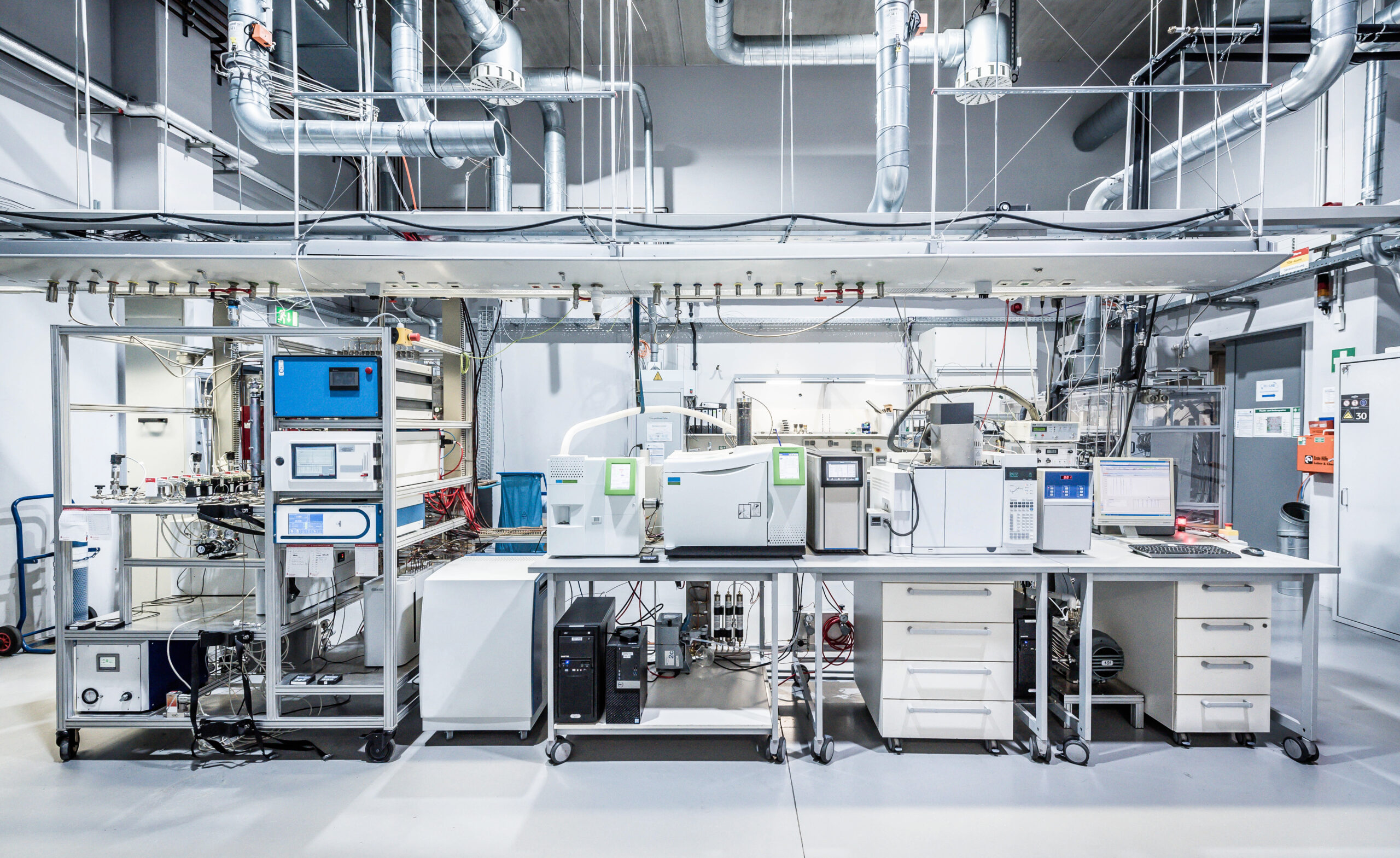
Wasserstoffqualitätslabor Hy-Lab am ZBT

Media