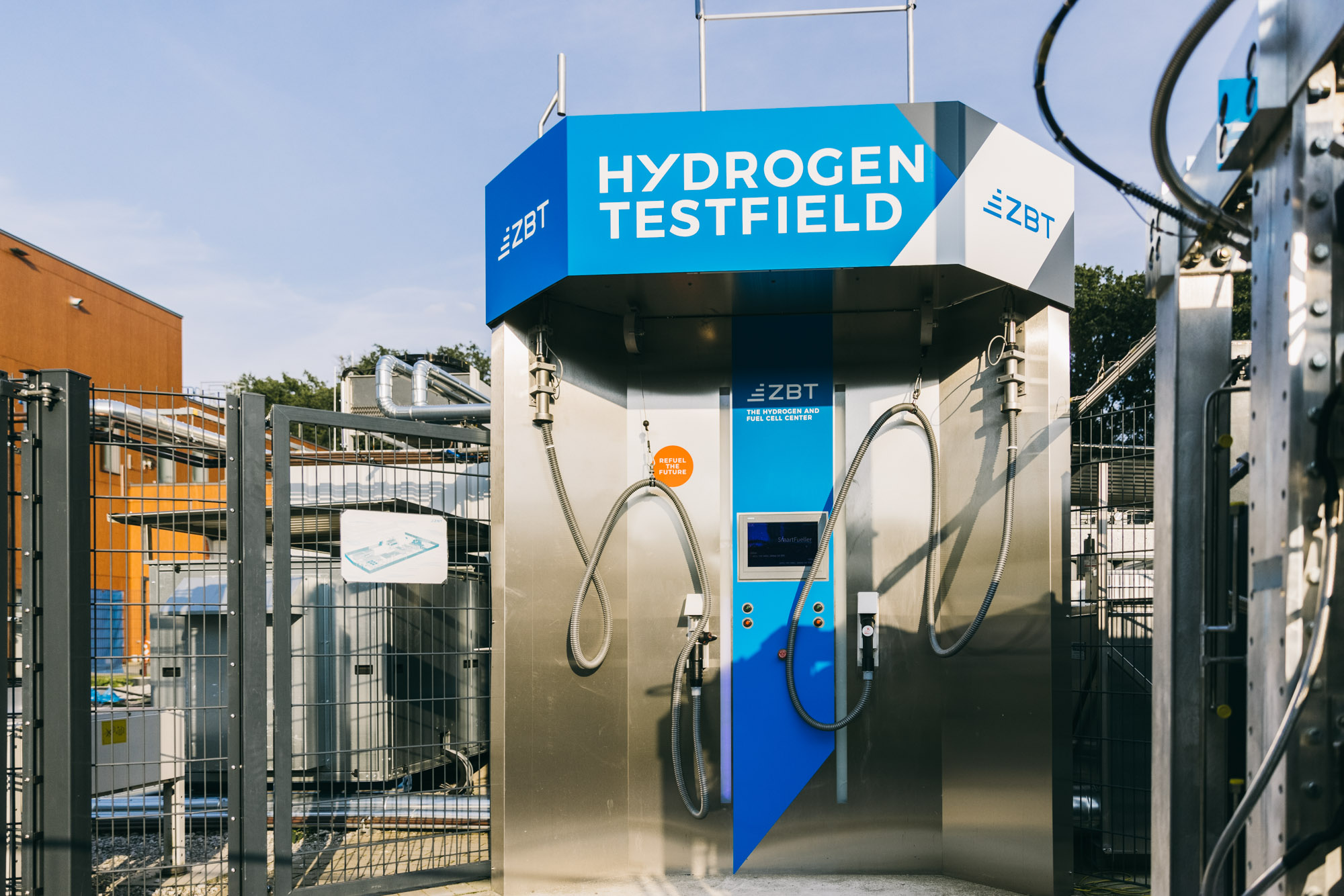
Hydrogen tanks and fittings

Type IV hydrogen storage: New data on thermal behaviour during discharge

ZBT investigates the temperature profile in a 244-litre high-pressure storage tank under real operating conditions.

How does the temperature in a hydrogen storage tank change when hydrogen is withdrawn? A new publication by Lukas Willmeroth, Stefan Bever and Marin Frank experimentally investigates this process using a 244-litre Type IV storage tank at the ZBT’s hydrogen test facility.

Significant temperature differences within the hydrogen storage tank

During discharge, the pressure and temperature of the hydrogen in the storage tank decrease. The ZBT’s measurements reveal a pronounced vertical temperature stratification: in all cases studied, the coldest region was in the lower part of the storage tank, whilst the gas in the upper region remained significantly warmer. In seven of the eight experiments, the local gas temperature reached the lower limit of -40 °C specified for the experiment before the storage tank could be emptied to a low residual pressure.

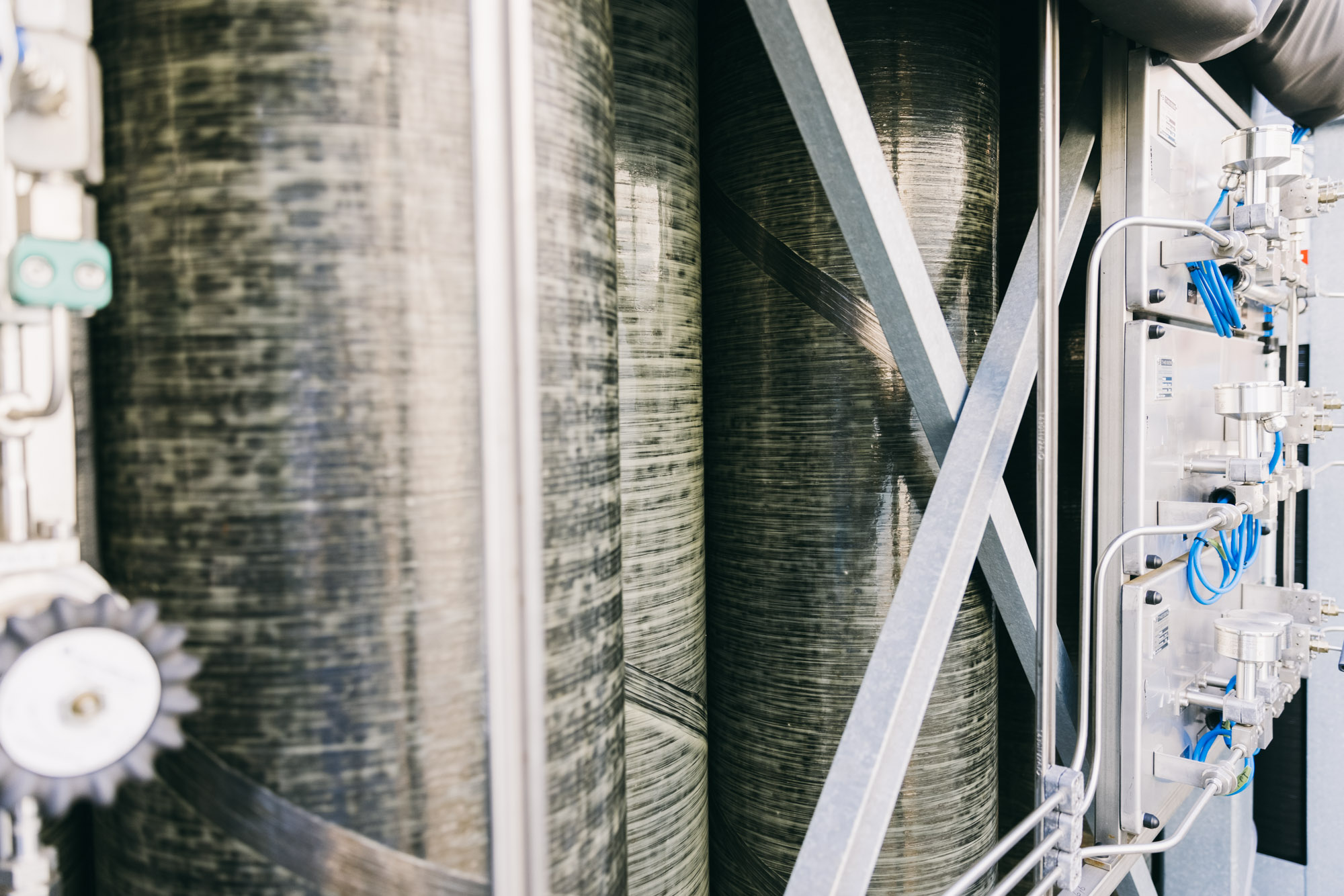
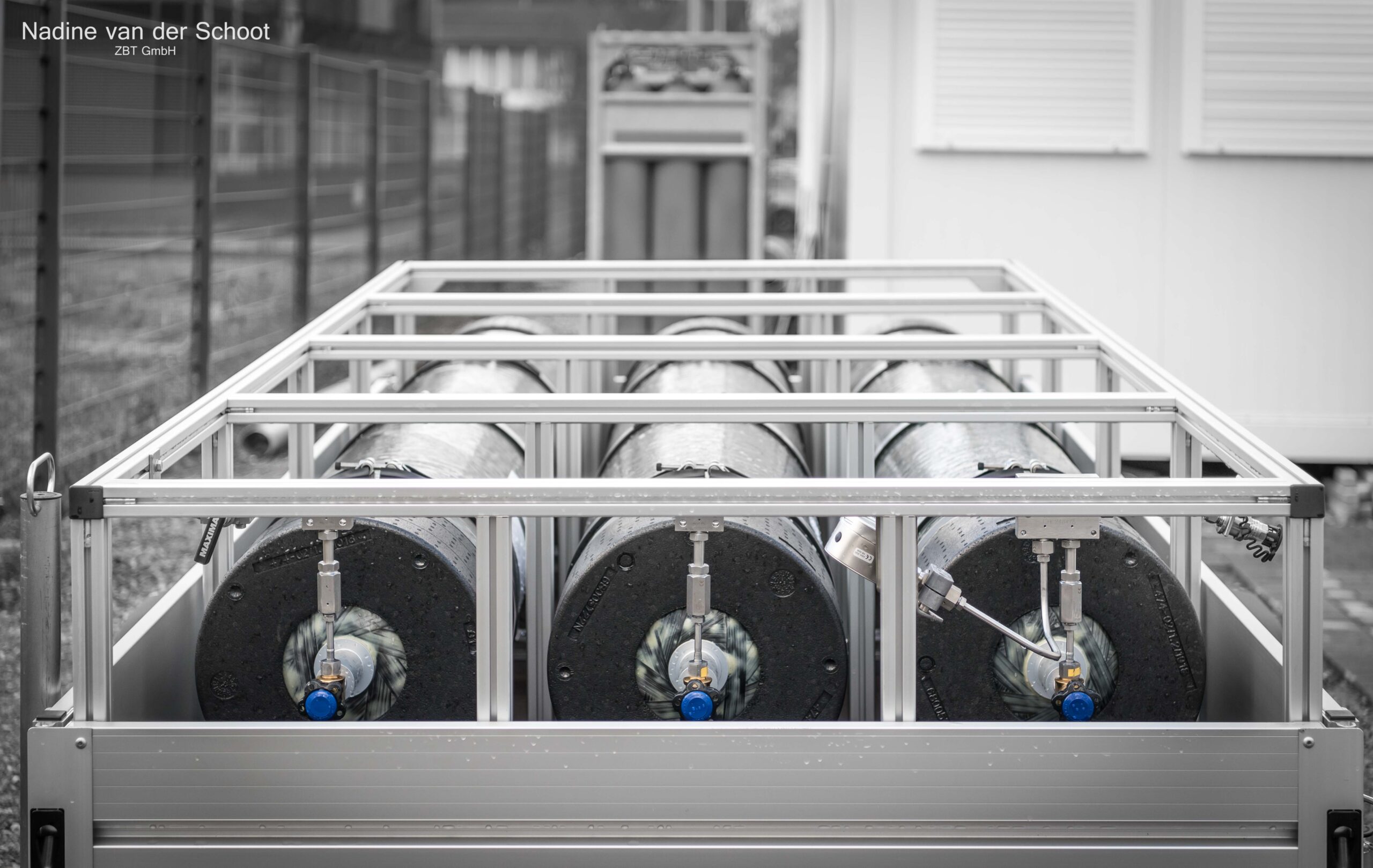
For the experiments, a commercial 70 MPa Type IV storage tank with a volume of 244 litres was instrumented with a total of 16 temperature sensors inside. Unlike many previous studies on smaller storage tanks, the experiments took place outdoors at the ZBT hydrogen test site. The study shows that the thermal effects already described for smaller storage tanks also occur in a significantly larger Type IV storage tank.
Discharge rate and operating strategy play a role

In addition to the discharge rate, the initial and ambient temperatures also influence the temperature behaviour and the amount of hydrogen that can be extracted under the respective conditions. Of particular interest is the comparison of different discharge strategies: in the experiments examined, a rapid discharge at the start followed by a reduced rate made more hydrogen available than the reverse sequence. By contrast, no clear advantage was observed for alternating discharge with repeated interruptions. Given the limited number of eight experiments, the authors explicitly regard these results as qualitative indications for further systematic investigations.

Measurement data, experimental setup and results in detail

How large were the temperature differences within the storage tank? What influence did mass flow, ambient temperature and different discharge sequences have? The full publication contains the experimental setup, the measurement data from the eight discharge experiments and a detailed discussion of the results for mobile and stationary hydrogen storage systems.

to the publication

Contact

Lukas Willmeroth
+49 203 7598-2190
Portrait eines Manns mit Bart und grauem Jacket vor Bäumen