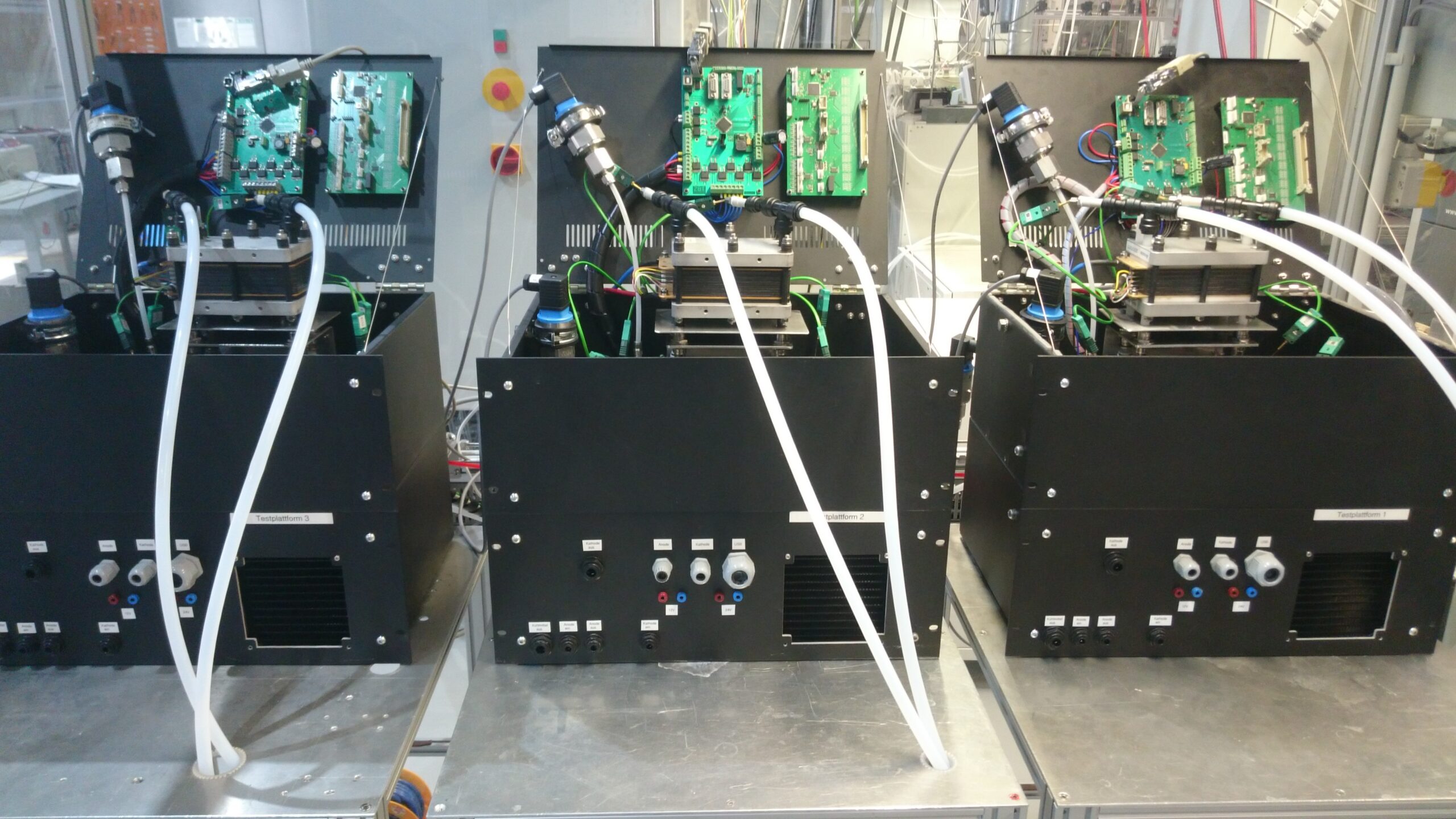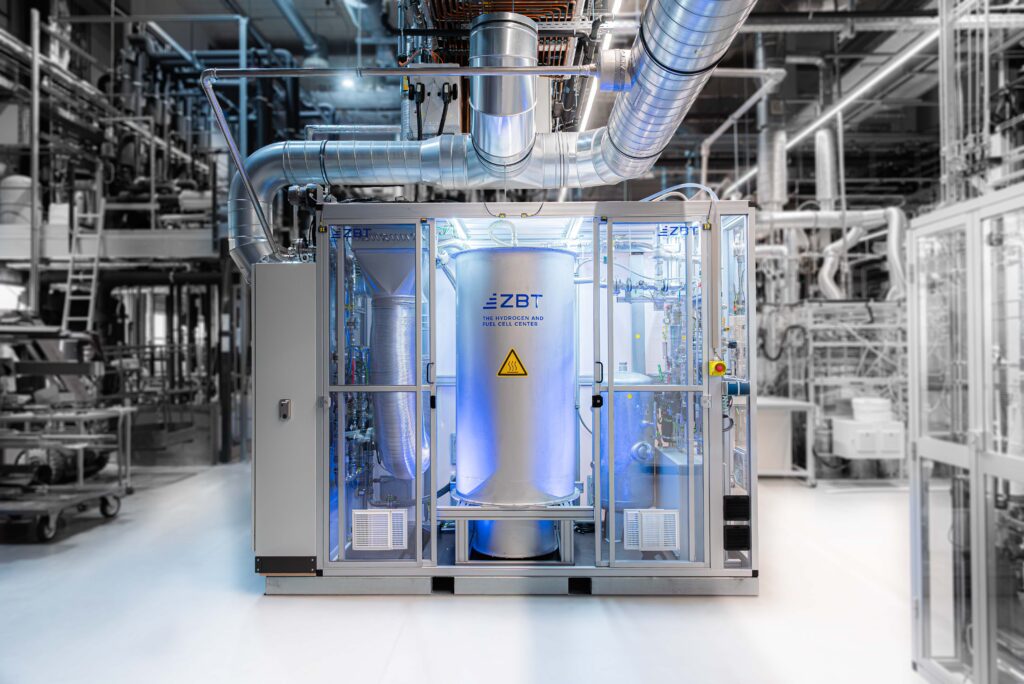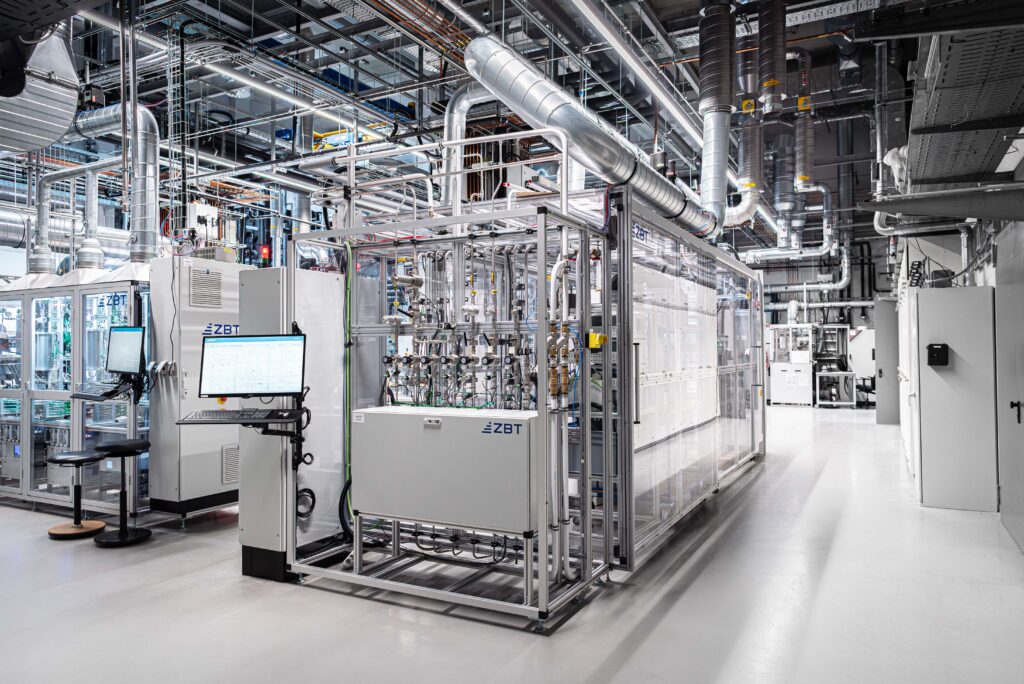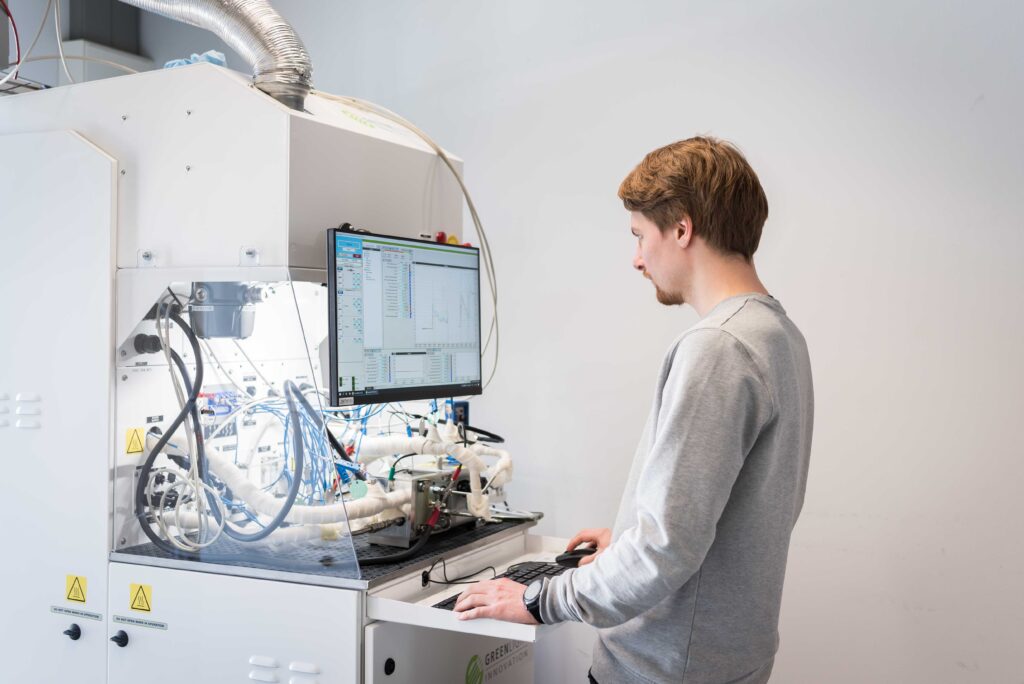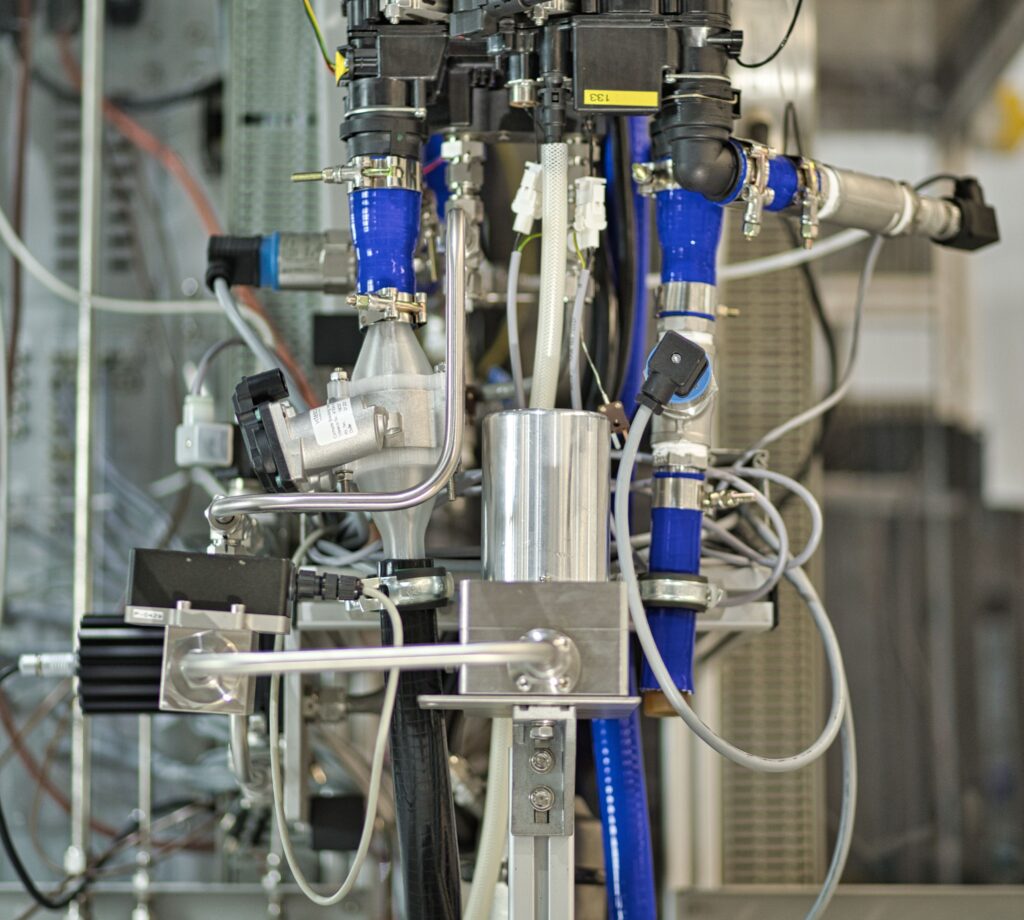
Fuel cell system on a test bench

EISBaEr – Innovative Sensor Technology for More Robust Fuel Cell Systems

ZBT Joins the Project: A novel sensor system for stationary fuel cell systems is designed to monitor relevant parameters in real time and enable precise operational control – for greater performance, efficiency, reliability, and a longer service life for the systems.

The operation of commercially available stationary fuel cell systems is primarily based on traditional control methods, supported by physical models, characteristic maps, and condition monitoring. However, these systems can only realise their full potential with a comprehensive control system that includes continuous performance monitoring. This would require sensor systems that are stable over the long term and sufficiently accurate to provide the necessary data. However, such sensor technology is not available on the market at economical terms.
Goal: Optimised operations management based on real-time data

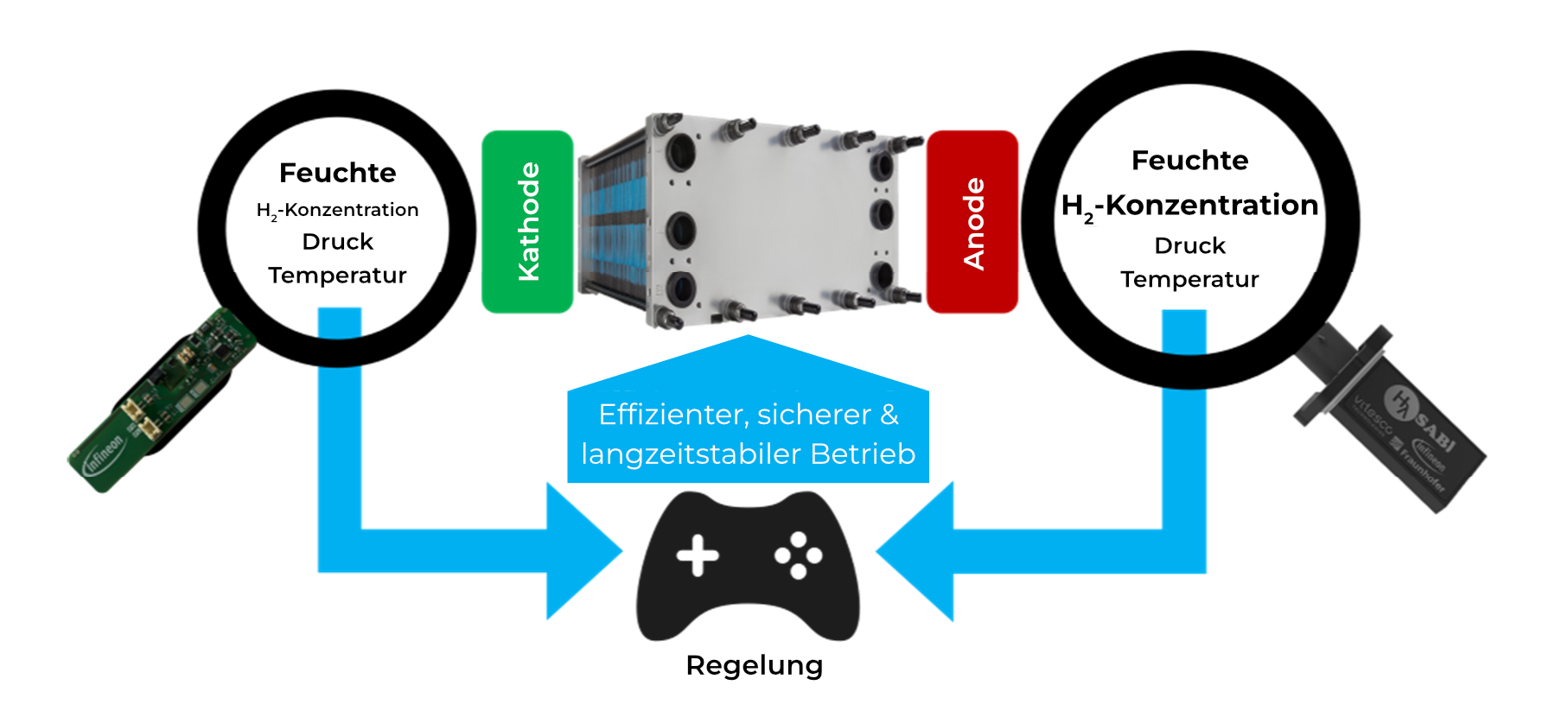
The EISBaEr project aims to develop a sensor system that addresses these challenges. The project is investigating innovative sensor approaches for measuring hydrogen concentration, humidity, and other relevant parameters. The necessary robust sensor housings are also being developed concurrently. The novel sensor system will then be assembled and tested in a fuel cell system.

The new control system, which is based on real-time data, aims to optimise the operation of stationary fuel cell systems in terms of performance, efficiency, reliability, and service life. It is also designed to enable more dynamic load changes and improve operational safety.

Grafische Darstellung eines Projektansatzes

ZBT expertise is in demand

The ZBT has now joined the collaborative project as a new partner and is contributing its expertise in the field of fuel cell systems and system testing. Using a 10-kW system test bench, we will integrate the sensors developed in the project into a real-world fuel cell environment and test them under realistic operating conditions. In addition, the test results will be evaluated using system simulations to assess how much of the sensor technology can be utilised for future operating and control strategies.

Project Information

“EISBaEr – Innovative Sensor Technology to Improve the Efficiency and Lifespan of Fuel Cells for Stationary Power Generation”

Funding: The Federal Government’s 8th Energy Research Program
Project duration: through 31 August 2028
ZBT grant amount: €457,300

Project partners:

Project Sponsor: PtJ – Projektträger Jülich | Forschungszentrum Jülich GmbH

Förderlogo Bundesministerium für Wirtschaft und Energie

CONTACT

Head of the Fuel Cell Systems Division

Dr.-Ing. Ulrich Misz
+49-203-7598-3313

CONTACT

Project manager

Christian Heßke
+49 203 7598-4283
Portraitfoto of Christian Heßke

Our Development Services

From the initial material concept to system maturity – integrated development approaches for electrochemical technologies
 
Development work at the ZBT includes the systematic design, material development, and operational strategy of electrochemical components. The goal is to optimize fuel cell and electrolysis systems for real-world applications across their entire value chain.

Controls
– Operating Strategies for MEA Configurations
– Operating Strategies for Stacks
– Operating Strategies for Components and Complete Systems

Design / CAD / Engineering
– 3D CAD: Metallic Bipolar Plates
– Compound Bipolar Plates

Material Development
– Catalysts and Inks
– Compound Materials and Seal Formulations

The image shows three fuel cell systems in a laboratory setting.
Learn more about our development services

Other current projects