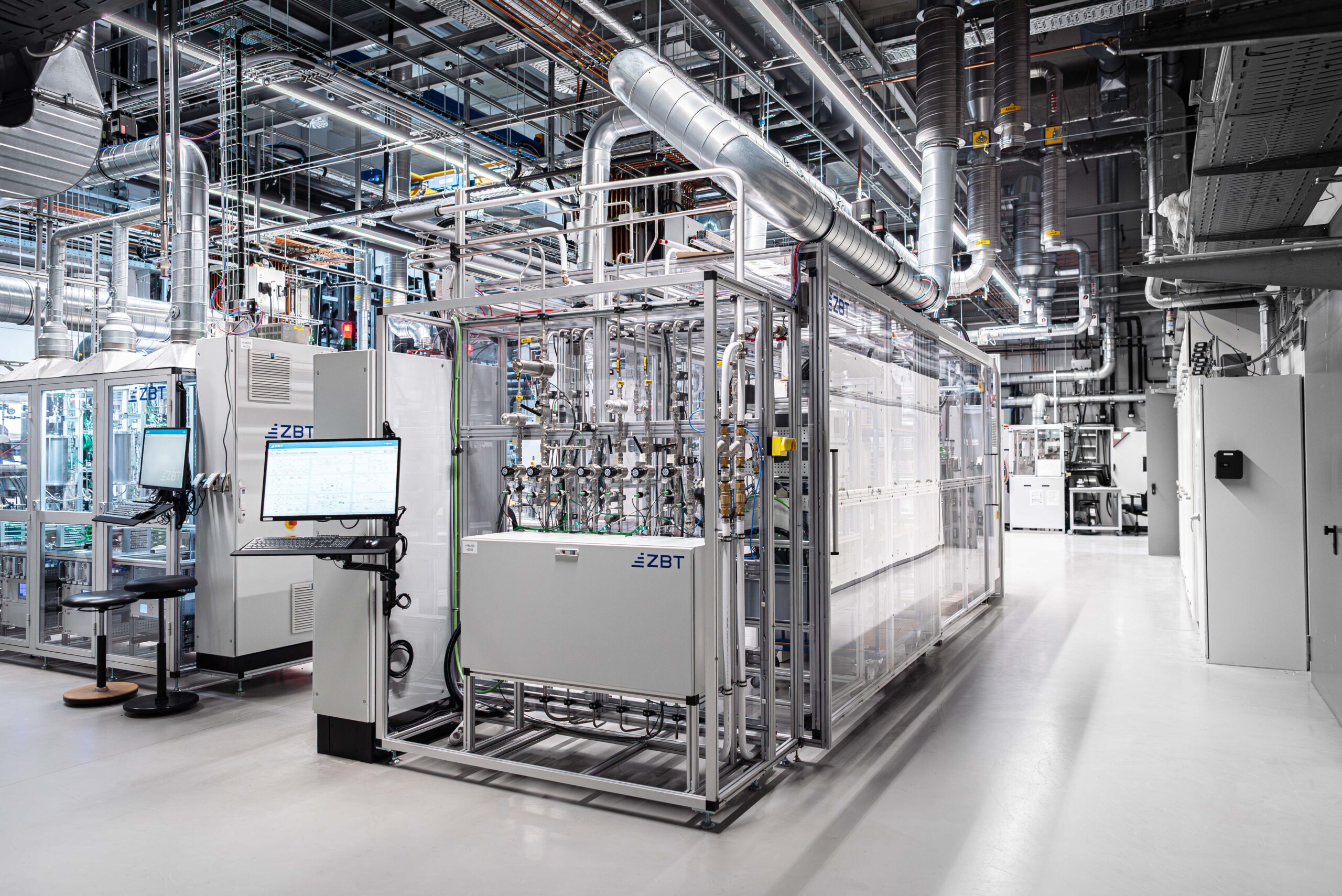
Teststände in einem großen Labor

TRUST – Safe Hydrogen Trailers for Small and Medium-Sized Businesses

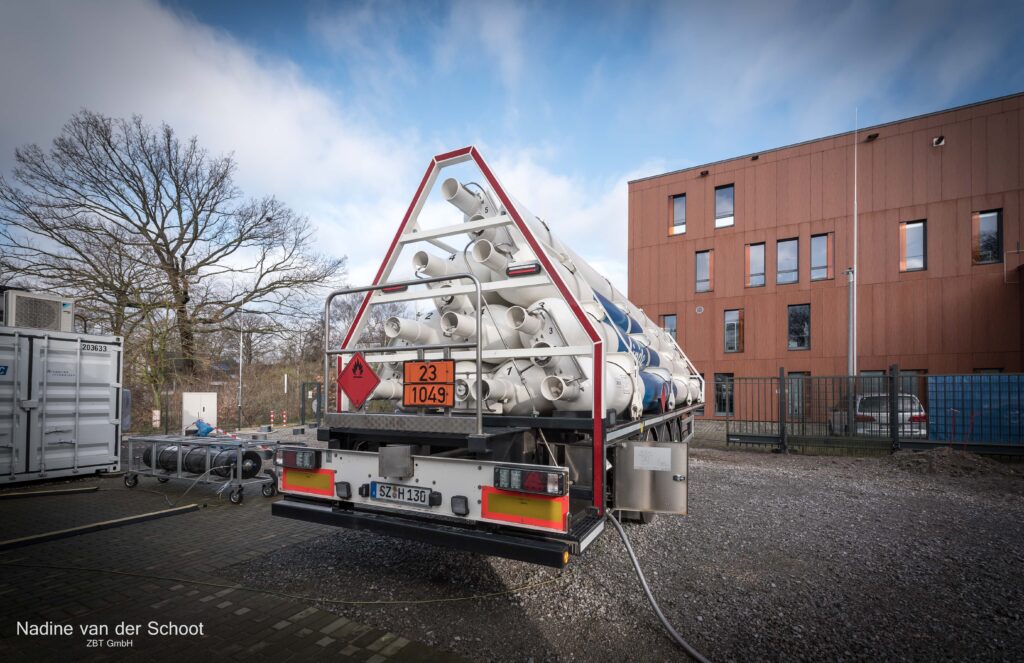
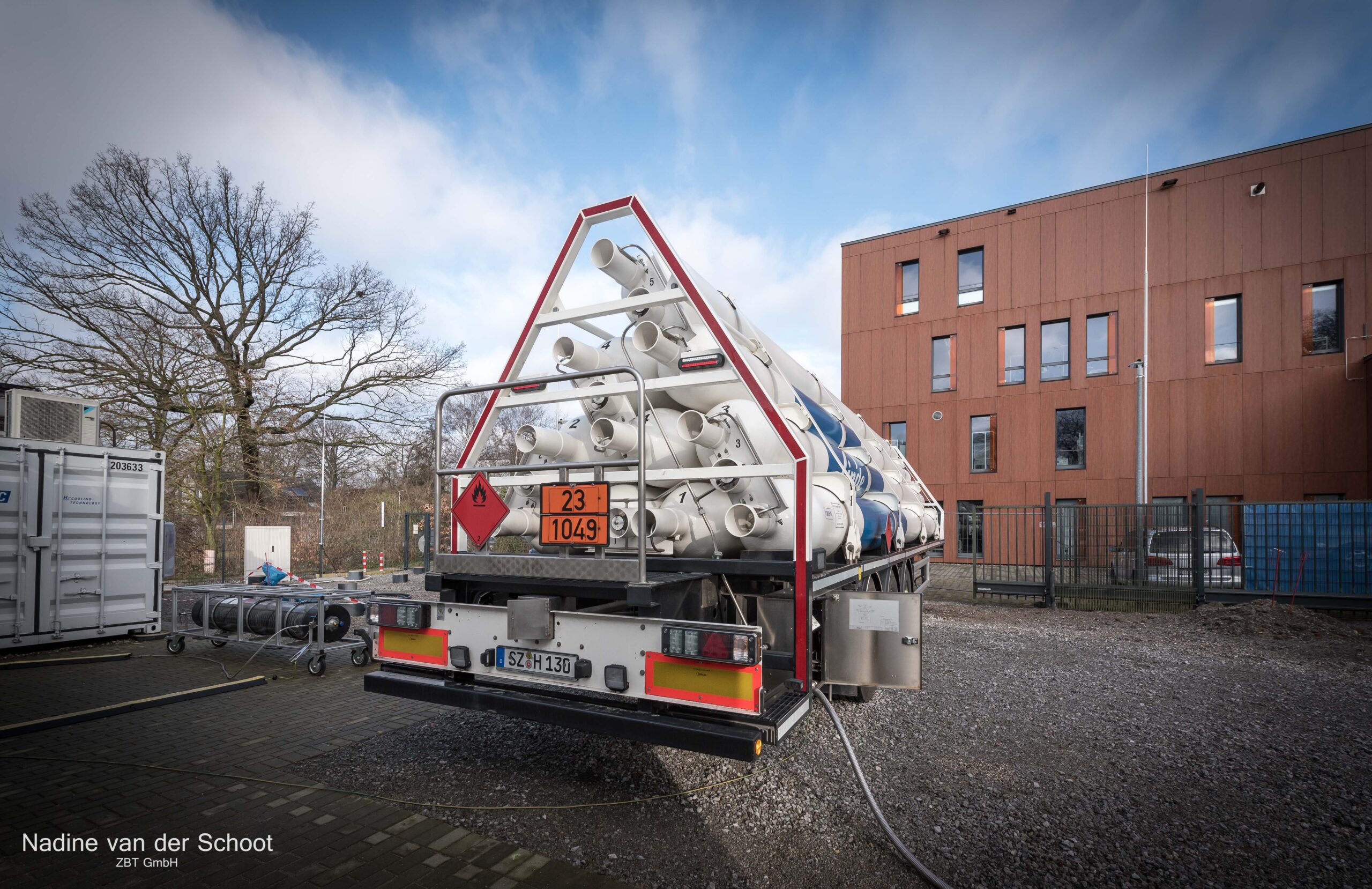
The IGF project TRUST focuses on developing safe refueling procedures for hydrogen trailers. The project focuses on Type IV tanks due to their market dominance and specific safety requirements.

While standardised refueling protocols have already been implemented for hydrogen trucks and passenger cars, no comparable procedures exist for refueling trailers and MEGCs (Multiple-Element Gas Containers). The refueling of such systems is determined by the operator on a case-by-case basis under very conservative operating parameters. The goal of the TRUST (Trailer Refueling Utilizing Simulated Tables) project is to develop practical recommendations, simplified surrogate models, and user-friendly procedures for refueling these systems.
Problem Description

Local temperature peaks (e.g., hotspots) and temperature stratification that develop within the storage facility during the filling process pose problems. Their size, location, and deviation from the average gas temperature in the storage facility depend on both geometric and filling parameters. Exceeding the maximum permitted gas temperatures (usually +85°C) can lead to thermal overload of the liner material. In practice, however, these local temperature phenomena are not detectable and can therefore pose a safety risk.

Simulations as the Basis for Safe Filling Processes

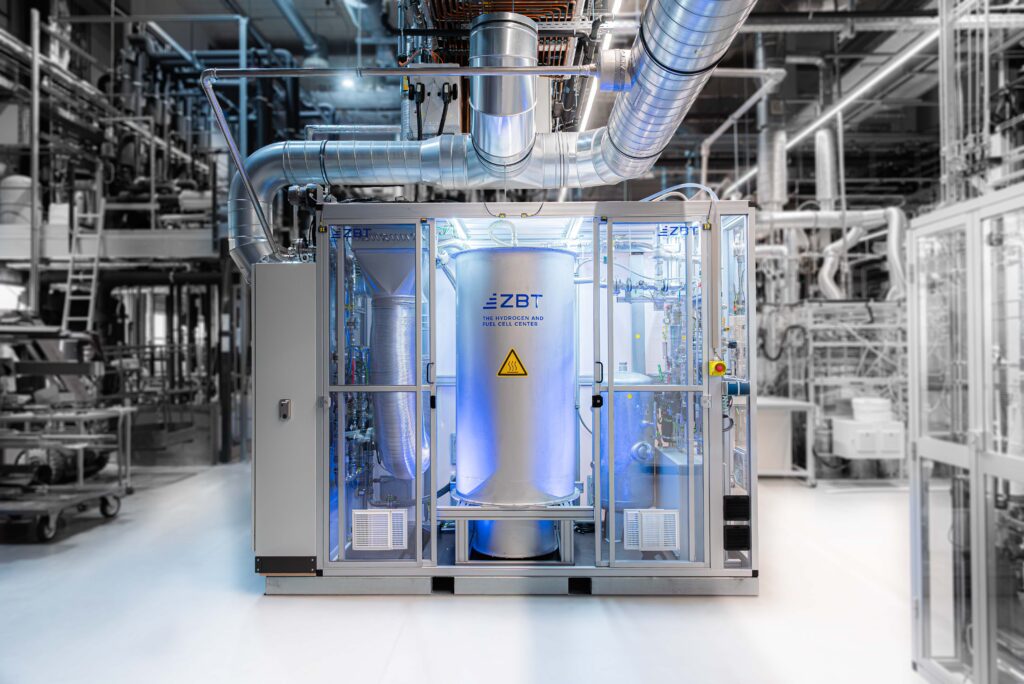
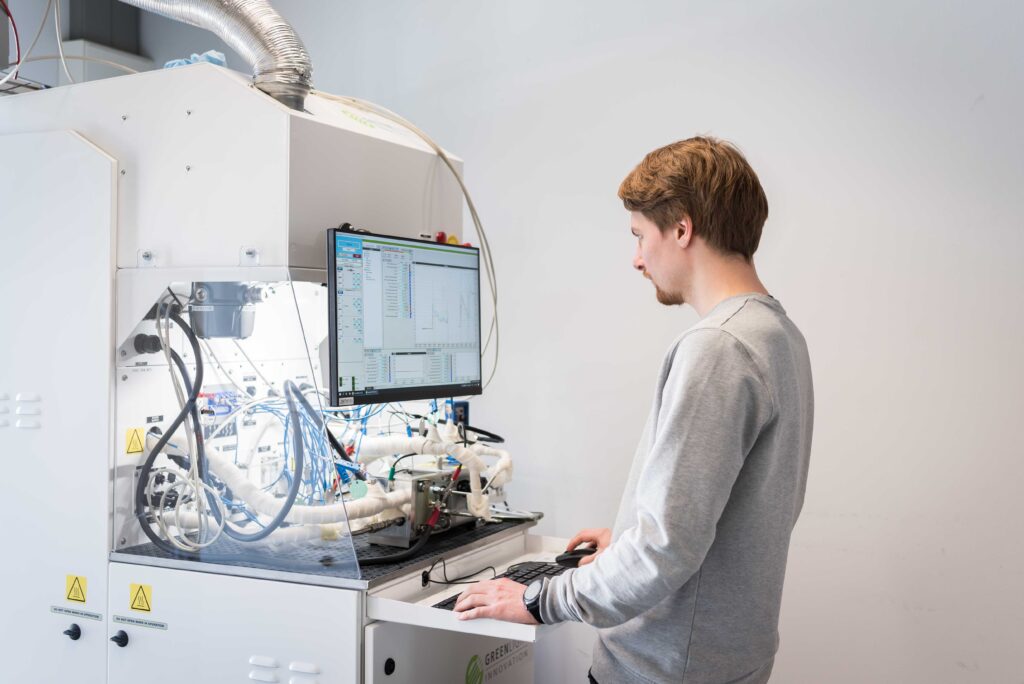
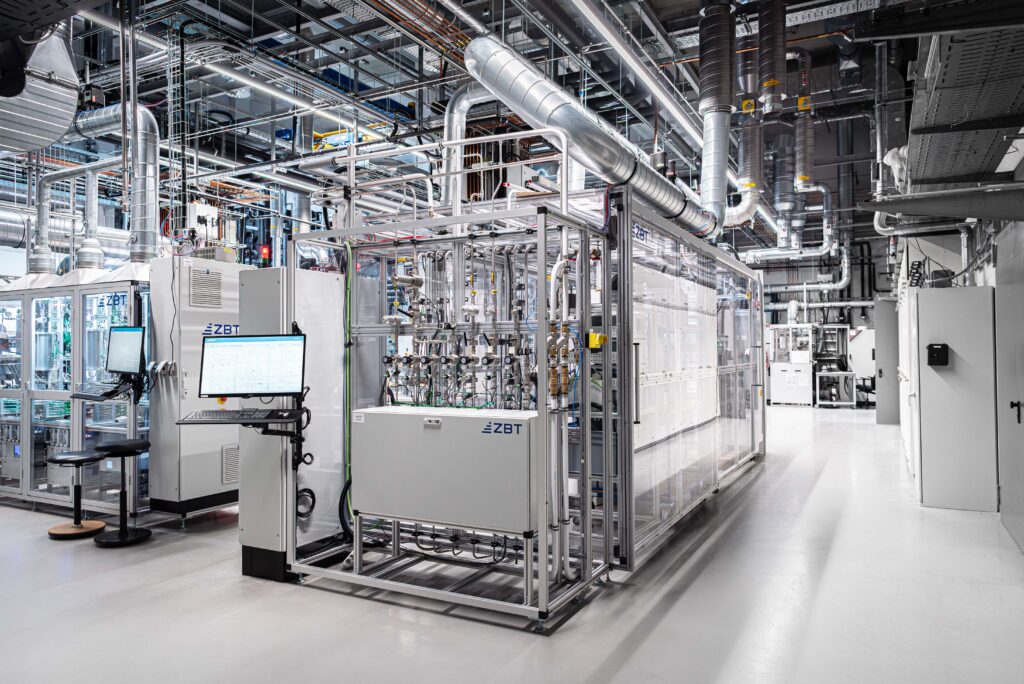
The project aims to use experiments and CFD simulations to investigate the effects of various parameters in greater detail. The hydrogen test facility at the ZBT – The Hydrogen and Fuel Cell Center, provides the necessary platform for conducting the measurements required to validate the simulations. The simulations are carried out at the Chair of Fluid Dynamics (LFD) at the University of Duisburg-Essen, which specialises in large-eddy simulations (LES). LES provides precise predictions of temperature fields, hotspots, and potential boundary layer separations. These simulations are highly computationally intensive and require high-performance computers, which are available to the department. Even on high-performance computers, these simulations take several weeks to complete.

Simplified Models for Practical Application

Results from the LES will be used to validate less computationally intensive calculations based on Reynolds-Averaged Navier-Stokes (RANS) equations, which make it possible to derive simplified 0D/1D models that enable rapid analysis of filling processes. To this end, the existing HRS model the ZBT was utilised, which was developed as a design tool for hydrogen filling stations.

Validation and Verification Tests

In the area of measurements, the ZBT has experience gained through a wide variety of R&D projects (e.g., EU-PRHYDE) that can be utilised in this project. For example, existing test storage tanks equipped with specialised measurement technology to record temperature fields inside the tanks will be used. The facility set up at the hydrogen test site allows for customised, experiment-specific parameterisation to simulate realistic refueling scenarios.

Project information

Project Acronym: TRUST

Project Title: Simulation-Based Development of Procedures for the Safe Filling of Hydrogen Trailers

Project Period: 1 April 2026 – 30 September 2028

Funding Program: IGF Projects

Grant ID: 01IF24633N

Project budget: €524,394.72

Project partners:

Grants

Contact

Hydrogen Infrastructure Project Management

Lukas Willmeroth
+49 203 7598-2190
Portrait eines Manns mit Bart und grauem Jacket vor Bäumen

Skills

The project builds on the ZBT’s extensive expertise in the areas of hydrogen testing infrastructure, measurement and testing technology, and modeling and simulation. This infrastructure and expertise are also available to industry partners through development services and contract research.


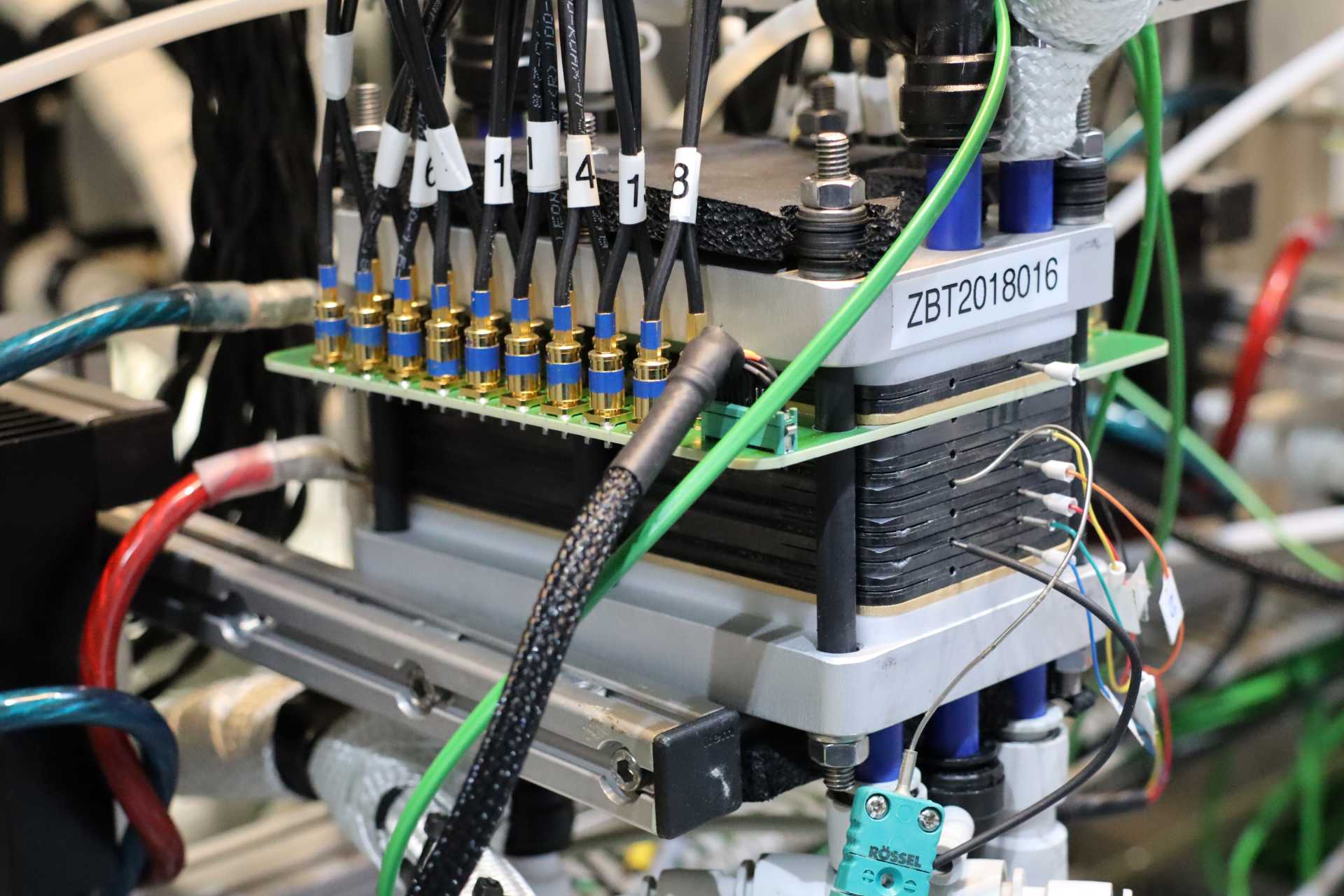
Test bench with a fuel cell stack
Learn more about our services

Media

Copyright: Nadine van der Schoot Copyright: Nadine van der Schoot
Other current projects