Anion exchange membrane electrolysis (AEMEL) offers the potential for highly efficient and cost-effective hydrogen production from renewable energies. This is made possible by combining two established electrolysis technologies: alkaline electrolysis (AEL) and proton exchange membrane electrolysis (PEMEL). This combines the advantages of PEMEL, such as high current densities and dynamic system operation, with an alkaline medium that is less corrosive and thus allows the use of less expensive transition metals instead of expensive precious metals.
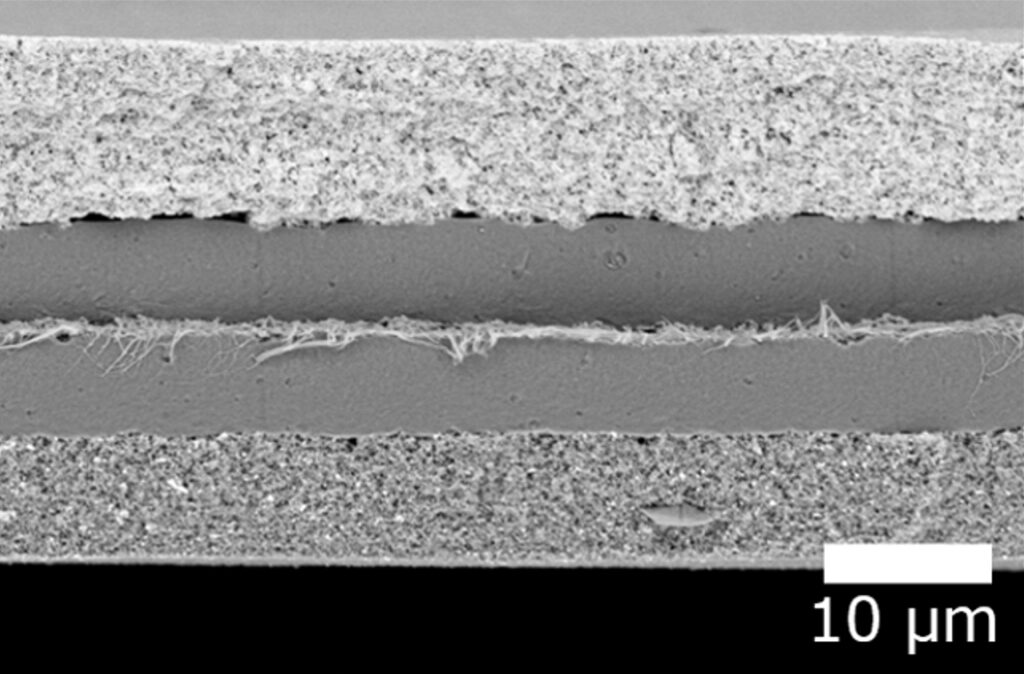
As part of this project, highly active, long-lasting, and cost-effective industrially relevant anodes and cathodes for AEMELs will be developed using electrochemical deposition (galvanic and corrosive) based on catalytically active base metals (e.g., Ni, Fe, Mo) and hydroxides. These electrodes will enable increased performance and durability while reducing material and manufacturing costs. The usability of these electrodes for electrolysis operation will be tested in laboratory cells (≤ 25 cm²), and scalability will be experimentally validated up to an industrially relevant electrode area of 200 cm².
Both corrosive and galvanic deposition are cost-effective, industrially applicable and scalable processes that allow catalytically active alloys with large specific surface areas to be deposited. In combination with nickel and carbon substrates with graded porosity for improved mass transport to the catalyst, electrodes with optimised activity and reduced manufacturing costs are to be developed.
Source:
https://www.w-hs.de/wei/arbeitsgruppenseiten/wasserstoffenergiesysteme/megaem/